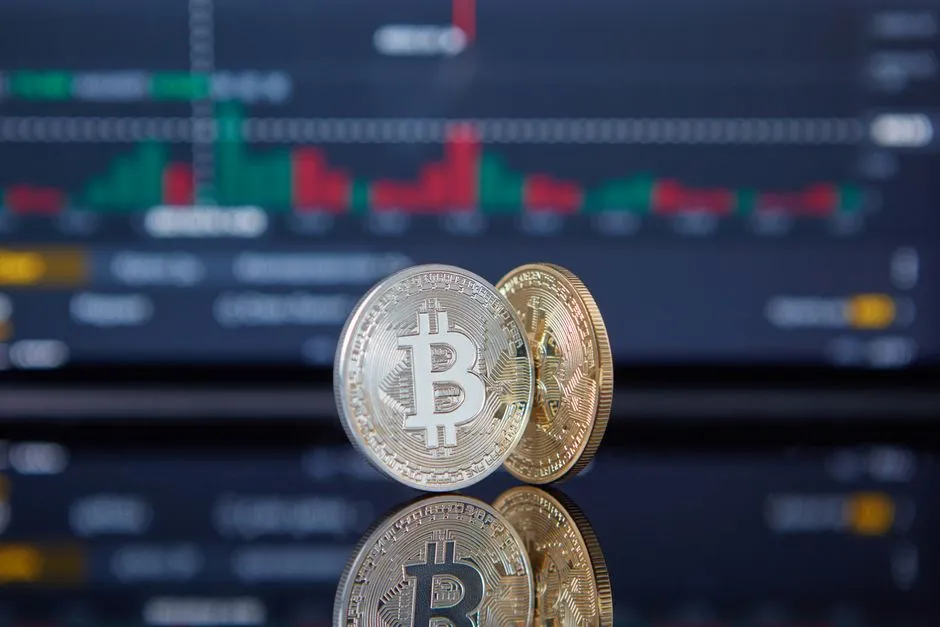
Bitcoin spent the latest session proving that it does not need a single catalyst to regain a sense of order. After a stretch of choppy price action, the leading cryptocurrency steadied around $82,000, holding comfortably above the psychologically important $80,000 level. That move mattered because it suggested buyers were willing to step in even as the broader market weighed a mix of macroeconomic signals, equity volatility, and shifting expectations around Federal Reserve policy.
A Calmer Tone From the Fed
The clearest reason for Bitcoin’s steadiness was the absence of a more aggressive monetary policy signal. When Federal Reserve official Kevin Warsh avoided hinting at an interest-rate hike, traders appear to have eased their expectations for tighter policy. That may sound like a small detail, but in markets that are sensitive to the cost of borrowing, it can have a meaningful impact.
Higher rates tend to make risk assets less attractive by raising the opportunity cost of holding volatile investments. When investors believe rates may rise, they often rotate toward cash, short-duration bonds, or other safer assets. A softer policy stance, or even just the removal of a hawkish scare, can reduce that pressure and allow risk sentiment to improve. For Bitcoin, which often moves in sympathy with growth and technology stocks, that shift in tone was enough to support a firmer price floor.
Why the $80,000 Level Still Matters
Price levels can become self-reinforcing. The $80,000 mark has repeatedly acted as a reference point for traders, with buy interest clustering near it and sell pressure appearing when the market struggles to reclaim it. By holding above that threshold, Bitcoin avoided the kind of rapid de-risking that can follow a clean breakdown. The steadiness around $82,000 suggests that the market is not simply chasing a euphoric rally, but is instead digesting new information and repositioning for the next move.
South Korean Tech Stocks Helped Reset Risk Sentiment
Equity markets also played a supporting role. South Korean technology stocks recovered from a sell-off, reinforcing the idea that global risk appetite was not under sustained pressure. That matters because Bitcoin has increasingly been traded within a broader risk-on, risk-off framework. When technology stocks rally, it often signals that investors are willing to pay up for longer-duration assets and higher-growth prospects. When they sell off, the same investors may reduce exposure to other volatile assets, including crypto.
The recovery in South Korean tech names is especially noteworthy because the region is closely tied to global semiconductor and hardware supply chains. Those industries are central to the artificial intelligence trade that has powered much of the recent equity rally. A rebound in that sector can improve the tone across global markets, making it easier for Bitcoin to hold gains rather than fade with the broader tape.
What This Means for Crypto Traders
For market participants, the setup is one of cautious optimism rather than outright excitement. Bitcoin is not simply reacting to its own narrative in isolation; it is responding to the same macro forces that shape equities, bonds, and currency markets. That makes the next few weeks important. Traders will likely focus on a handful of key factors:
- Federal Reserve commentary: Any new signal about the timing or direction of policy could quickly change the tone for risk assets.
- Inflation and jobs data: Stronger-than-expected economic data can revive rate-hike expectations, while weaker data can strengthen the case for patience.
- Tech stock performance: Continued strength in global technology shares could support Bitcoin, while another sharp sell-off could drag it lower.
- Trading flows: Futures positioning, funding rates, exchange flows, and ETF activity will all help determine whether the current steadiness turns into a breakout or a reversal.
The Bigger Picture
Bitcoin’s steadiness around $82,000 is a useful reminder that crypto prices are rarely driven by a single headline. The move reflected a combination of softer rate-hike expectations, a recovery in global technology stocks, and a market that was not yet ready to abandon higher prices. That does not guarantee a smooth path ahead. A surprise in inflation data, a hawkish policy shift, or a renewed equity sell-off could still challenge the asset’s near-term strength.
Still, the latest session showed that Bitcoin can remain resilient even when the macro environment is uncertain. As long as traders continue to view policy as less aggressive than feared and global risk appetite remains intact, the $80,000 area may continue to serve as a meaningful support zone. The next move will likely depend less on a single event and more on how consistently the market can absorb macro noise without losing confidence in the broader risk trade.
Related read: Bitcoin Holds Above $80,000 as Traders Reassess Fed Rate-Hike Expectations