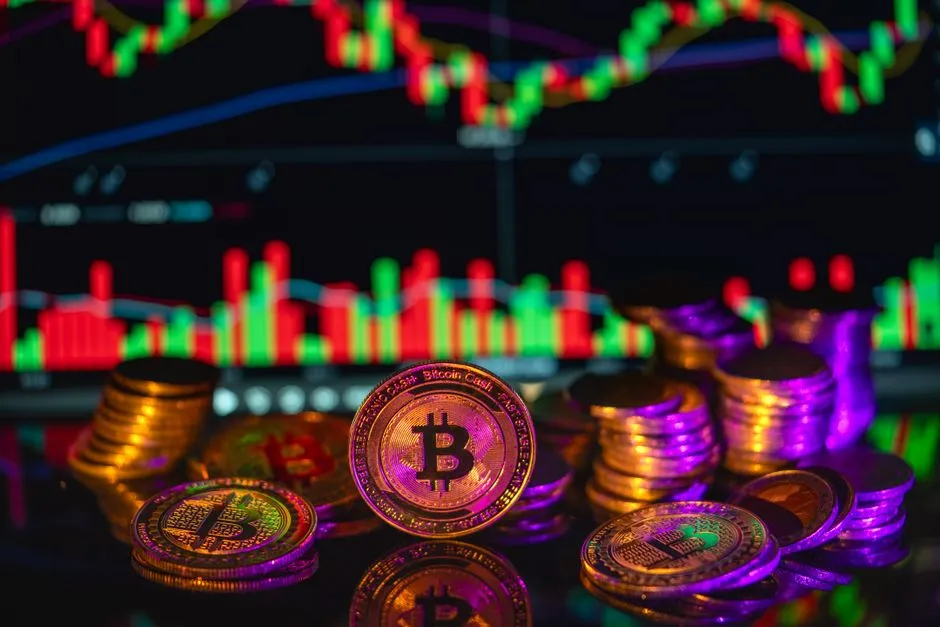
Bitcoin steadied around $82,000 as traders reassessed the outlook for U.S. interest rates and watched a broader recovery in Asian equities. The cryptocurrency’s ability to remain above the $80,000 threshold offered some relief after recent volatility, while comments from Kevin Warsh appeared to give markets little reason to price in an immediate Federal Reserve rate hike.
Bitcoin Finds Support Above $80,000
Bitcoin’s latest move reflects a market searching for direction. After periods of sharp price swings, the digital asset held relatively firm near $82,000 rather than extending its decline. Maintaining the $80,000 level is technically and psychologically important because round-number price points often become areas where traders reassess risk and momentum.
The stabilization does not necessarily signal the beginning of a sustained rally. Instead, it suggests that buyers remain active when prices approach recent support levels. Bitcoin continues to respond strongly to changes in interest-rate expectations, liquidity conditions, equity-market sentiment, and investor appetite for higher-risk assets.
For now, traders appear to be treating the latest price action as a pause while they wait for clearer signals from central banks and economic data. A prolonged hold above $80,000 could strengthen market confidence, while a break below that level may renew concerns about a deeper correction.
Warsh Comments Ease Immediate Rate-Hike Concerns
Interest-rate expectations were a key factor behind Bitcoin’s steadier performance. Markets had been monitoring whether Federal Reserve officials might signal that another rate increase was becoming more likely. However, Kevin Warsh avoided offering clear hints of an imminent hike, helping reduce some of the immediate pressure on risk assets.
When investors anticipate higher interest rates, assets such as Bitcoin can come under pressure. Rising rates typically increase the appeal of cash and fixed-income investments while making speculative positions less attractive. Higher borrowing costs can also reduce the amount of capital flowing into markets, including cryptocurrencies.
By contrast, when traders believe rates may remain unchanged—or eventually move lower—risk sentiment can improve. That does not guarantee a Bitcoin rally, but it can remove one of the obstacles that has weighed on digital assets.
Why Rate Expectations Matter for Crypto
Bitcoin is often described as an alternative monetary asset, but its short-term trading behavior remains closely connected to global liquidity. Investors frequently respond to the same macroeconomic forces across cryptocurrencies, technology stocks, and other growth-oriented assets.
As a result, even a small adjustment in expectations for Federal Reserve policy can lead to significant changes in market positioning. Traders may reduce short positions when a rate hike appears less likely, while long-term investors may become more comfortable adding exposure during periods of price weakness.
Asian Markets Add Support to Risk Sentiment
Bitcoin’s resilience also came as South Korean technology stocks recovered from a recent sell-off. Technology shares and cryptocurrencies often move in similar directions because both are sensitive to changes in investor risk appetite and expectations for future growth.
A rebound in South Korea’s technology sector helped signal that investors were willing to return to riskier assets after the earlier decline. Although the performance of Asian equities does not determine Bitcoin’s direction, stronger regional markets can contribute to a more constructive global trading environment.
South Korea is particularly important to the digital-asset industry because it has a highly active retail trading community and significant participation in cryptocurrency markets. Movements in the country’s technology stocks can therefore influence sentiment beyond traditional equities.
What Bitcoin Traders Are Watching Next
Several factors are likely to shape Bitcoin’s next major move:
- Federal Reserve communication: Future speeches, policy statements, and economic projections could quickly change expectations for interest rates.
- Inflation and labor-market data: Strong economic readings may support a more restrictive policy outlook, while signs of cooling could reduce rate-hike expectations.
- Equity-market performance: Continued strength in technology stocks may support broader demand for risk assets.
- Trading volume and market breadth: A sustainable Bitcoin advance generally requires participation from a wide range of buyers rather than a brief increase in speculative activity.
- Support near $80,000: Holding this level could reinforce the current recovery, while a decisive move below it may shift attention toward lower support zones.
Traders should also be careful not to interpret a single day of stability as confirmation of a new trend. Cryptocurrency markets can remain calm for a short period before reacting sharply to economic data, central-bank remarks, or changes in positioning.
A Delicate Balance for Bitcoin
Bitcoin’s position near $82,000 reflects a delicate balance between supportive market sentiment and ongoing macroeconomic uncertainty. The recovery in South Korean technology stocks provided a positive backdrop, while the absence of fresh rate-hike hints from Warsh helped limit fears of tighter financial conditions.
Even so, the market remains highly sensitive to future Federal Reserve decisions. Bitcoin may continue to consolidate above $80,000 if investors maintain confidence that policymakers will avoid further tightening. A shift toward more aggressive rate expectations, however, could quickly revive selling pressure.
For investors, the latest move reinforces the importance of watching both cryptocurrency-specific developments and the wider economic environment. Bitcoin’s ability to hold above $80,000 is encouraging, but the next sustained direction will likely depend on whether liquidity conditions, equity markets, and central-bank expectations continue moving in its favor.
Related read: Quantum Alliance Warns 6.4 Million Bitcoin Could Face a Future Quantum Computing Threat