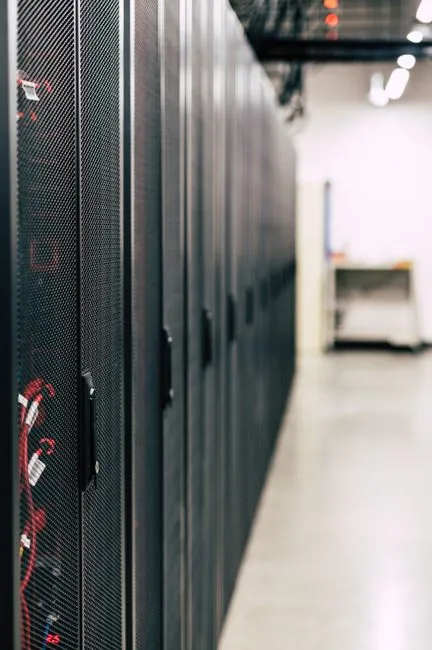
Nscale, the Nvidia-backed company that grew out of Bitcoin mining, has hit a major hurdle in its push to become a serious player in artificial intelligence infrastructure. The company had planned to deliver 23,000 AI chips in the United Kingdom next year, but its grid connection may not be ready until the 2030s. That delay has now reportedly cost Nscale a significant Microsoft AI deal, highlighting a growing reality in the AI boom: access to power is becoming just as important as access to chips.
What happened with the Microsoft deal
The proposed Microsoft deal was meant to be a meaningful milestone for Nscale. It would have helped validate the company’s ability to build, operate, and scale AI computing capacity in the U.K. at a pace that matches the industry’s demand. Nscale had positioned itself as a provider of high-performance AI infrastructure, leveraging its Nvidia backing and its experience from the energy-intensive world of cryptocurrency mining.
But the timeline appears to have collapsed around a simple yet critical issue: electricity. Even if Nscale can secure the hardware, it still needs a reliable grid connection capable of supporting a large AI data center. If that connection is not ready until the 2030s, the company cannot deliver the capacity Microsoft needs in the near term. In an industry where model training, inference workloads, and enterprise AI demand are scaling rapidly, waiting a decade for power is not a viable plan.
Why power is now the bottleneck for AI
For years, the AI race was often framed around chips, model architecture, software stacks, and compute clusters. But the physical constraints of data centers have increasingly come to the fore. AI workloads are extraordinarily power-hungry. A modern AI data center is not just a room full of servers; it is a massive electrical load that requires substantial grid capacity, cooling systems, land, and often long lead times for infrastructure upgrades.
- Chips are only one part of the equation. Even with thousands of high-end accelerators, a data center cannot operate without enough stable power.
- Grid interconnection can take years. In many regions, new data centers must wait for transmission upgrades, substation capacity, and local network reinforcement.
- AI demand is outpacing infrastructure planning. Utilities and grid operators are being asked to connect facilities that draw power at a scale many local networks were not designed to support.
This is why companies like Microsoft, Google, Amazon, and Meta are not only building their own data centers but also investing in power sources, energy procurement, and site selection. The bottleneck is no longer only whether a company can buy enough GPUs; it is whether it can plug them into the grid quickly enough to serve customers.
The U.K. grid connection problem
The United Kingdom has become an important market for AI infrastructure, particularly as governments and enterprises look to build sovereign AI capabilities inside the country. But the U.K. also faces real constraints. Older parts of the grid may not have spare capacity, and new connections can require lengthy planning, engineering, and investment processes. In some cases, data center developers are told they may need to wait years before a suitable interconnection is available.
For Nscale, this is especially painful because its business case depends on speed. AI infrastructure customers want capacity now, not decades from now. If Nscale cannot guarantee that its facility will be powered in time, it becomes difficult to promise delivery dates to large customers. That is likely why the Microsoft deal fell away. Even a well-capitalized, Nvidia-backed company cannot bypass the physical limits of the electricity grid.
What this means for Nscale
Nscale’s story is interesting because it represents a transition from Bitcoin mining to AI computing. Both businesses share a common dependency: large amounts of power and efficient operations. But AI infrastructure is different in one important way. Mining operations often have more flexible revenue expectations tied to coin prices and network difficulty. AI data centers, by contrast, are often built around corporate contracts, enterprise customers, and long-term service commitments. If a customer needs capacity next year, a power connection in the 2030s is not a solution.
Losing the Microsoft deal does not mean Nscale is finished, but it does raise the stakes. The company will need to prove that it can secure power, build out its facilities, and deliver on its promises to other customers. It will also need to manage expectations in a market where competitors are moving quickly. A delay this large can affect not only one contract, but investor confidence, financing costs, and the company’s reputation as a reliable AI infrastructure provider.
Broader implications for the AI infrastructure race
The Nscale setback is a reminder that the AI buildout is a physical project, not just a software or chip story. Companies are competing for land, power, cooling capacity, network access, and skilled labor. In some locations, power availability may determine who wins the next round of AI data center contracts.
For Microsoft and other hyperscalers, the loss of one deal may not be a major strategic problem. They have multiple partners, multiple sites, and the ability to build or buy capacity in different regions. But for the U.K. and other countries trying to attract AI investment, the episode shows that policy and infrastructure planning must keep pace with industry demand. If governments want to position their countries as AI hubs, they need to make it easier for data centers to connect to the grid, secure power, and scale operations without waiting a decade.
The takeaway: electrons are the new moat
Nscale’s loss of the Microsoft AI deal is a clear signal that the next phase of the AI race is being shaped by energy infrastructure. Chips matter. Software matters. Capital matters. But without a timely and reliable power connection, even the most ambitious AI project can stall on the ground.
For Nscale, the challenge now is to turn a setback into a proof point that it can navigate one of the industry’s toughest problems. For the broader market, the lesson is simple: in the AI era, the companies that can secure power early and build efficiently may have as much of an advantage as those with the largest chip orders.
Related read: Nscale’s Microsoft AI Deal Falls Apart as U.K. Power Delays Push Expansion Into the 2030s