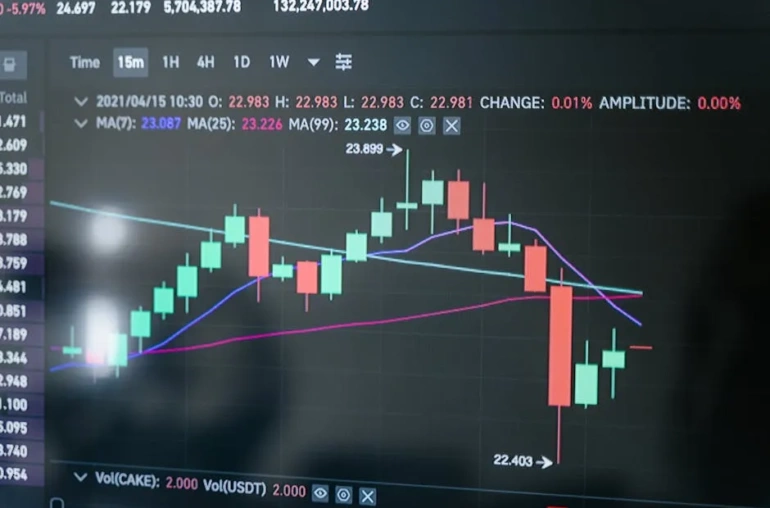
Bloomberg has long been the go-to destination for institutions that need fast, reliable market data. From equity prices to credit spreads, from macro indicators to derivatives positioning, the Terminal has become the operational nerve center for many financial desks. Now, Bloomberg is taking another step into the crypto era by bringing onchain stablecoin data directly into the Terminal through an Allium-powered dashboard.
The move may look technical at first glance, but it is actually a meaningful signal. Stablecoins are no longer just a niche crypto asset class. They are increasingly being treated as payment rails, treasury instruments, collateral tools, and settlement assets. By making stablecoin supply, issuance, transfer activity, and network data available in the same environment where traders, risk managers, and fund managers already work, Bloomberg is helping bring onchain finance closer to mainstream financial analysis.
What Bloomberg just launched
The new dashboard gives Terminal users access to hourly onchain data on stablecoin supply, issuance, transfers, and activity across blockchain networks. In practical terms, that means users can monitor how stablecoin balances are changing, how much is being issued or redeemed, and how assets are moving across chains in near real time.
This is not just another crypto chart. The value lies in the context. For years, onchain data has been available through separate crypto analytics tools, blockchain explorers, and specialized dashboards. But for many institutional users, those tools sit outside the main workflow. If you are a fixed income trader, a treasury manager, or a risk analyst, you do not want to switch between five different platforms just to understand whether stablecoin flows are accelerating, slowing down, or shifting across networks.
By embedding this data inside the Terminal, Bloomberg is reducing friction. The information becomes easier to compare with traditional market data, easier to monitor operationally, and easier to use in day-to-day decision making.
Why stablecoin data belongs in the Terminal
Stablecoins have become one of the most practical intersections of traditional finance and blockchain technology. They are used for cross-border payments, corporate treasury management, exchange settlement, DeFi liquidity, and even as a bridge asset in crypto markets. As their use cases expand, the need for better visibility also grows.
For institutions, stablecoin data can help answer questions that were harder to answer before. Is stablecoin supply growing faster on one network than another? Are issuers expanding redemption capacity? Are transfer volumes spiking in a way that suggests increased payment activity? Are certain chains becoming more dominant as settlement rails? These are not abstract questions. They can matter for liquidity planning, counterparty risk, market timing, and operational strategy.
The data points that matter
The dashboard focuses on several key metrics, and each one matters for a different reason.
- Stablecoin supply shows the total amount of stablecoins in circulation. Rising supply can indicate growing demand for digital dollars or other stablecoin denominations, while falling supply may point to redemptions or a shift into other assets.
- Issuance data helps users understand how much is being minted or backed. This is especially important for assessing issuer behavior and the broader demand for stabilized digital assets.
- Transfer activity reveals how assets are moving across the network. High transfer volume can suggest active payment flows, exchange activity, treasury movement, or DeFi usage.
- Network-level activity gives a view into which blockchains are seeing the most stablecoin use. That matters because stablecoins are not all equally distributed across networks, and different chains serve different use cases.
When these data points are available hourly, they become much more useful for monitoring. Daily snapshots can be helpful, but they often miss short-term shifts. Hourly data allows users to see momentum, catch anomalies, and respond more quickly to changing conditions.
Who benefits from this integration
The most obvious users are crypto-native firms, but the bigger story is that this feature makes stablecoin data more accessible to traditional finance professionals.
For traders and market desks
Traders can use stablecoin flows as a market signal. Stablecoin activity often moves alongside crypto market conditions. A surge in stablecoin transfers can sometimes indicate rising participation, increased buying power, or heightened payment activity. Conversely, a drop in activity may signal caution or a move toward less liquid conditions.
For desks that trade digital assets, stablecoin data can also help with liquidity assessment. If stablecoin balances are moving heavily between exchanges or between chains, that can affect execution quality, funding conditions, and short-term market dynamics. Having that information in the same place as price data makes it easier to act on.
For risk and compliance teams
Risk teams care about exposure, concentration, and counterparty behavior. Stablecoin data can help them monitor where assets are settled, which networks are being used, and whether certain issuers are seeing unusual growth or contraction. That kind of visibility is important in a space where asset movement can happen quickly and across multiple jurisdictions.
Compliance teams may also find value in understanding broader flow patterns. While onchain data is not a substitute for regulatory oversight, it can help institutions build a better picture of activity and identify where their digital asset operations are most active.
For treasury and finance functions
Perhaps one of the most interesting use cases is corporate treasury. As companies explore stablecoins for payments, payroll, and cross-border settlement, they need to understand where stablecoins are being used and how quickly they can be moved or redeemed. Hourly data on supply and transfers can help finance teams monitor liquidity, plan settlements, and evaluate which networks are most practical for their operations.
In other words, this is not just a trading tool. It is becoming an operational tool for businesses that are beginning to treat stablecoins as part of their financial infrastructure.
What hourly onchain visibility changes
The biggest shift is timing. Crypto markets do not pause for business hours, and blockchain networks do not wait for end-of-day summaries. Stablecoin activity can change quickly, especially around market moves, funding events, or payment cycles. Hourly data gives users a more current view of what is happening onchain.
This also improves comparability. When stablecoin data is available in the same interface as traditional financial data, analysts can more easily compare digital asset activity with bank flows, FX movements, commodity prices, and other market signals. That kind of side-by-side analysis is powerful. It allows users to see whether stablecoin growth is broadening, whether certain chains are gaining share, and whether onchain activity is aligning with other financial trends.
The practical limits to keep in mind
That said, onchain data is not perfect. Blockchain networks are fragmented, and stablecoin activity can be complicated by bridged assets, wrapped tokens, private networks, and different standards across chains. A single stablecoin may exist in multiple forms, and not all activity may be equally transparent.
For that reason, stablecoin data should be treated as one input among many, not as a standalone answer. It is most useful when combined with issuer disclosures, exchange data, market context, and broader financial indicators. Still, the fact that this data is now more accessible inside a mainstream platform is a significant step forward.
What to watch next
The next step is to see how institutions actually use this data. If stablecoin flows become a standard part of market monitoring, we may start seeing more commentary around stablecoin supply, network adoption, and cross-chain activity in traditional finance research. We may also see more integration between onchain analytics and broader financial dashboards.
Over time, this could lead to richer tools, more granular reporting, and deeper analysis of how stablecoins are being used across payment, treasury, and settlement markets. If that happens, stablecoins will move even further from the sidelines and into the core of financial data infrastructure.
In the end, Bloomberg’s move is less about adding another crypto feature and more about acknowledging where financial activity is heading. Stablecoins are becoming a real part of the financial system, and institutions need better tools to understand them. By bringing hourly onchain stablecoin data into the Terminal, Bloomberg is making that data easier to monitor, easier to analyze, and easier to use in the same place where financial decisions are already being made.
Related read: Quote.Trade Unveils V6 AI-Powered Dark Pool DEX and Alpha Trading League: What It Means for DeFi Traders