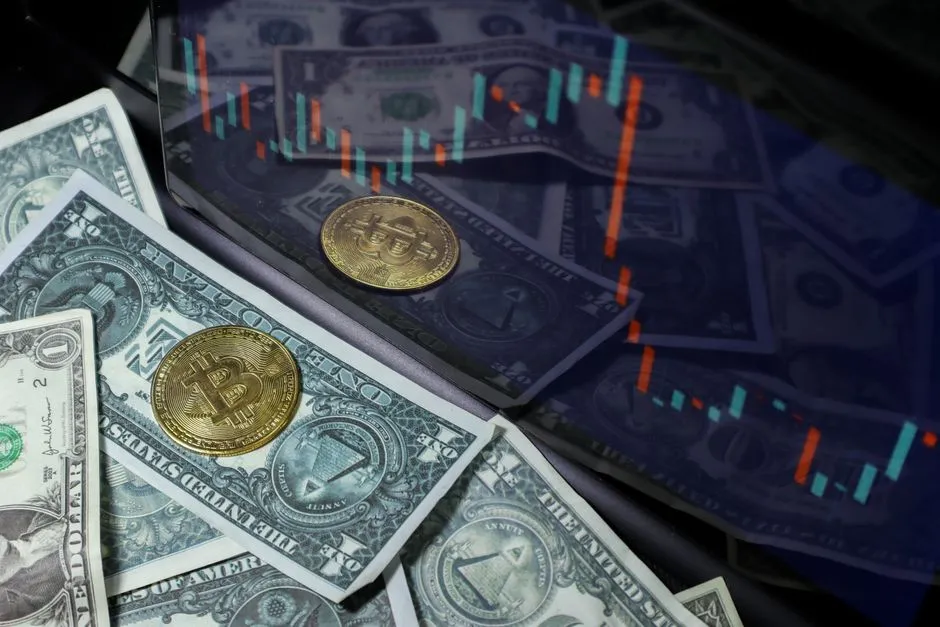
When the dollar index firms up, the first instinct at many trading desks is defensive: trim risk, reduce exposure, and assume Bitcoin will get hit. That reaction feels intuitive, especially when the U.S. dollar has spent months pushing higher while risk assets struggle to build momentum. But looking at the setup heading into Sept. 30, 2026, the more useful framing is that a stronger dollar is a weaker threat to Bitcoin than traders often assume.
The reason is simple: dollar strength is not a single force. It can show up in very different macro environments, and Bitcoin does not react to the dollar the same way every time. What matters is not just whether the dollar is rising, but why it is rising, how yields are moving, and whether global liquidity is expanding or contracting beneath the surface.
Why traders overreact to dollar strength
For years, the dollar and Bitcoin have had a rough negative relationship at certain points in the cycle. When the dollar strengthens sharply, risk assets often sell off, and Bitcoin can be caught in the same bid for safety. That pattern is real, but it is not a law. It is a liquidity story, and liquidity is far more complicated than a single currency index.
A stronger dollar can signal hawkish monetary policy, rising U.S. yields, weak global growth, or even relative fiscal stress in other major economies. In one case, Bitcoin may face real pressure. In another, it may hold up well or even outperform. Traders often compress all of those possibilities into one simple trade: “dollar up, Bitcoin down.” That shortcut works sometimes, but it misses the nuance that separates a temporary liquidity squeeze from a structural shift.
The difference between a risk-off dollar and a hard-asset dollar
One of the biggest mistakes is treating all dollar strength as the same event. If the dollar rises because the Federal Reserve is tightening aggressively and term premium is climbing, that is a risk-off dollar environment. In that case, Bitcoin can absolutely come under pressure, particularly if it is trading with high leverage and thin liquidity.
But if the dollar rises because investors are rotating away from other currencies, because growth is slowing, or because global capital is seeking scarce, non-sovereign assets, the dynamic changes. In that environment, Bitcoin can behave less like a pure risk asset and more like a digital hard asset. The dollar may be stronger, but that does not automatically translate into weakness for Bitcoin.
Bitcoin’s response is becoming more structural
Another reason the old dollar-Bitcoin trade is less reliable is that Bitcoin itself has changed. It is no longer only a speculative crypto asset traded by retail flow and momentum traders. Over the past several years, institutional participation, treasury adoption, stablecoin growth, and broader financial integration have made the asset more resilient to short-term macro noise.
That does not mean Bitcoin is immune to dollar strength. It still cares about liquidity. It still reacts to yields. It still can be sold off when global risk appetite collapses. But the relationship is less mechanical now. A stronger dollar no longer guarantees a weaker Bitcoin, because the demand side of the market has become more diversified and more institutional.
That is why the day-ahead picture on Sept. 30, 2026 deserves a more careful read. The question is not “is the dollar strong?” The better question is “what kind of dollar strength are we seeing, and is it paired with tightening liquidity or expanding liquidity?”
What the September 30 setup suggests
Heading into Sept. 30, 2026, traders should watch several variables rather than relying on the dollar index alone. The first is Treasury yields. If the dollar is rising while long-term yields are falling or staying contained, the threat to Bitcoin is likely softer than the surface move suggests. That can point to relative currency rotation rather than a full risk-off liquidity shock.
The second is central bank tone. If dollar strength is being driven by hawkish rate expectations, then Bitcoin may face more short-term headwinds. But if the dollar is firm while policy expectations are stabilizing, the impact is less severe. The third is global liquidity, which matters even more than the U.S. dollar itself. If global money supply, credit growth, or stablecoin activity is expanding, Bitcoin can often absorb dollar strength better than traders expect.
Finally, market structure matters. Funding rates, spot flows, exchange balances, and stablecoin supply all tell us whether the dollar is translating into real selling pressure for Bitcoin. If leverage is low and liquidity is deep, a stronger dollar is less likely to create a sharp, disorderly move. If leverage is high and liquidity is thin, even a modest dollar rally can trigger an outsized reaction.
Where the real risks are
The bigger risk is not the dollar itself. It is the combination of dollar strength, rising yields, shrinking liquidity, and crowded positioning. That is when Bitcoin can be hit hard, not because the dollar is “evil” or because it is the enemy of every risk asset, but because the broader financial system is tightening at the same time.
There are other risks as well: a macro surprise, a regulatory shock, a liquidity event in credit markets, or a sudden shift in institutional risk appetite. Those are the forces that can overwhelm Bitcoin quickly. Dollar strength alone, without the rest of the system turning hostile, is usually not enough to define the outcome.
A better trading framework
Instead of treating the dollar as the main variable, traders should think in terms of regimes. If the dollar is up and yields are up, Bitcoin faces more pressure. If the dollar is up but yields are down, the move may be more relative and less damaging. If the dollar is down and global liquidity is expanding, that is the most supportive environment. And if the dollar is down but liquidity is still tightening, Bitcoin can still struggle.
That framework is more useful than a simple correlation trade, especially into a date like Sept. 30, 2026, when markets can be sensitive to data, policy signals, and positioning. The dollar may still matter, but it is not the whole story.
Bottom line
A stronger dollar can certainly be a headwind for Bitcoin, but it is not the automatic, existential threat that many traders assume. The real test is whether dollar strength is accompanied by tighter liquidity, rising yields, and deteriorating risk appetite. If it is, Bitcoin can feel the pain. If it is not, the asset may prove more resilient than the surface narrative suggests. In other words, the market is less binary than the tape appears, and the smarter trade is usually to wait for the full macro picture before treating a firmer dollar as a clear signal to sell.
Related read: Binance Starts Migrating Non-Stock Crypto to Spot Accounts Before Funding Accounts Become Stocks Accounts