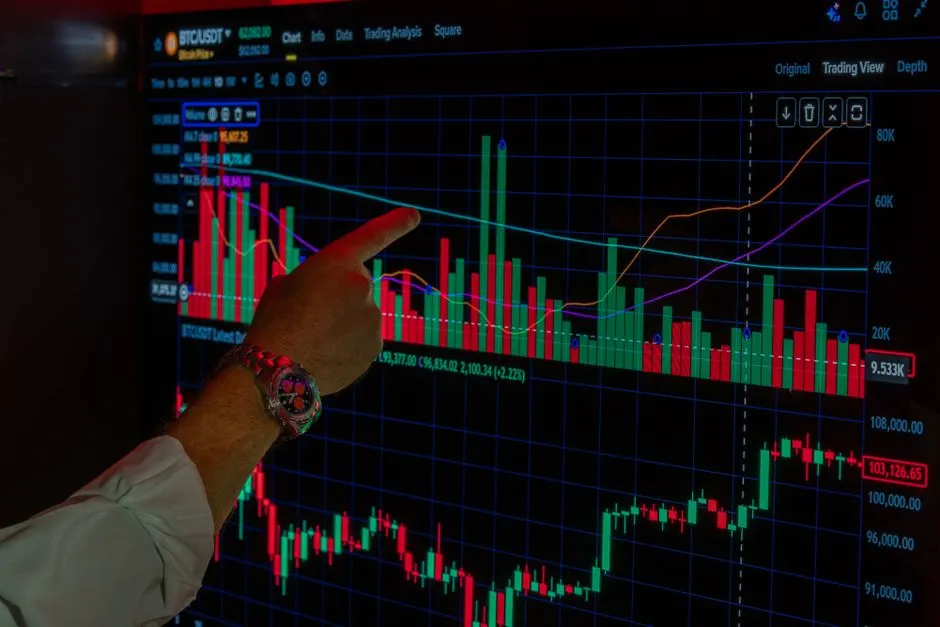
Bitcoin spent Friday’s Asian trading session moving in a noticeably calmer range after a roughly 3% pullback. The move was less dramatic than the earlier decline, but it still carried an important message: traders are not yet ready to push prices higher with confidence. Instead, the market is pausing, reassessing risk, and waiting for clearer signals from both the crypto world and the broader financial system.
The backdrop this week has been shaped by a familiar tension. Bitcoin is still a digital asset with its own supply dynamics, adoption trends, and speculative drivers, but it increasingly trades alongside risk assets. When stock markets wobble, crypto often feels it. When technology stocks come under pressure, Bitcoin can follow. That link has become especially visible as investors grow more sensitive to concerns around artificial intelligence, valuations, and the sustainability of the current market rally.
Why Bitcoin Is Trading Cautiously
After a 3% drop, consolidation is a normal reaction. It gives the market time to digest recent selling and allows participants to decide whether the move was a short-term correction or the start of a deeper pullback. In practical terms, consolidation means buyers and sellers are roughly balanced. Neither side is aggressive enough to force a clear trend.
For Bitcoin, that kind of pause can mean a few things. On one hand, it may simply reflect profit-taking after a strong run. On the other, it may show that investors are becoming more selective. In risk-off moments, even modest weakness in equities can make traders more hesitant to add exposure to high-beta assets like Bitcoin. The result is a market that feels cautious, watchful, and slightly defensive.
AI Fears Are Back in the Stock Market
The broader issue is that stock markets are dealing with a renewed wave of AI-related anxiety. For much of the recent rally, artificial intelligence has been one of the main narratives driving investment enthusiasm. Companies tied to AI chips, cloud infrastructure, data centers, and software innovation have attracted significant capital. But that enthusiasm is starting to meet some tough questions.
What investors are worried about
- Valuation concerns: Many AI-linked stocks have risen sharply, which can make them more vulnerable to disappointment.
- Capital spending pressure: Building AI infrastructure requires enormous investment, and investors want to see returns that justify those costs.
- Monetization doubts: Some businesses are still struggling to turn AI capabilities into clear, scalable revenue.
- Market concentration: When a small group of high-flying names carries a large part of the index, the overall market becomes more fragile.
- Disruption fears: Investors are also worried about which parts of the economy may be pressured by rapid AI adoption, from software to services to traditional tech models.
None of these concerns are new, but they have a way of resurfacing whenever the market gets stretched. That is what is happening now. The tone is not necessarily one of panic, but it is clearly more skeptical than it was a few weeks ago. Traders are asking whether the AI trade still has room to run, or whether the best of it may already be priced in.
The Crypto-Stock Market Connection
This is where Bitcoin becomes relevant. Even though Bitcoin is not a stock, it often behaves like a high-risk asset. When liquidity is strong and sentiment is optimistic, it can rally alongside growth stocks. When risk appetite fades, it can soften with them. In that sense, Bitcoin is not immune to the same macro and sentiment-driven forces that affect the broader market.
That does not mean Bitcoin simply copies the stock market. It can decouple, especially when there is strong institutional interest, clear regulatory developments, or a shift in on-chain activity. But in the short term, the correlation is hard to ignore. If investors begin rotating out of high-valuation tech names, risk-off positioning can spill into crypto. If the market stabilizes and confidence returns, Bitcoin may find fresh support.
What to Watch Next
From here, the key question is not just where Bitcoin trades in the next few hours, but what tone the broader market sets. A few factors will likely matter most:
- Equity market direction: If tech-heavy indexes stabilize, risk assets may regain some momentum.
- AI-related headlines: Earnings, product announcements, and commentary from major technology firms can quickly shift sentiment.
- Liquidity conditions: Investor appetite for risk is closely tied to interest rates, dollar strength, and expectations for central bank policy.
- Bitcoin’s technical response: If the current consolidation holds, it may set the stage for a renewed attempt higher. If it breaks downward, short-term pressure could intensify.
In other words, Bitcoin is now trading in a broader context. The asset’s own fundamentals still matter, but so does the mood in the rest of the financial system.
Conclusion
Bitcoin’s consolidation after a 3% loss looks less like a breakdown and more like a moment of uncertainty. The market is trying to understand whether recent weakness is temporary or the beginning of a larger shift. With AI-related concerns resurfacing in stock markets, investors are becoming more careful about where they put their money. For now, that has left Bitcoin in a holding pattern: not aggressively bullish, not clearly broken, but firmly shaped by the broader risk environment. The next move will likely depend on whether confidence returns to growth assets or whether doubt continues to build across the market.
Related read: CoinDCX Denies $16 Million Wallet Hack as On-Chain Analysts Flag Suspicious Outflows