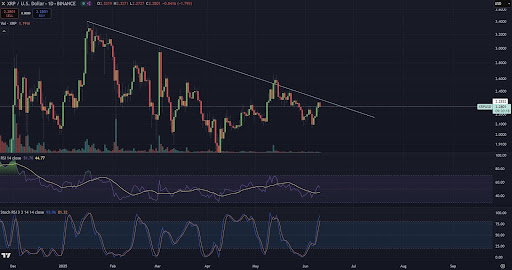
Bitcoin surged to approximately $83,300 as stronger-than-expected third-quarter corporate earnings helped lift US stock markets and improve sentiment across risk assets. The rally, however, proved difficult to sustain. After reaching its intraday high, Bitcoin reversed near its 21-day trend line, highlighting the resistance traders are watching closely.
The move reflected a broader shift in market mood. Investors responded positively to robust earnings reports from major US companies, while a decline in oil prices helped reduce some concerns surrounding inflation and business costs. Together, these developments created a more supportive environment for equities and cryptocurrencies, at least temporarily.
Strong Corporate Earnings Support Risk Assets
US stocks gained as companies delivered solid third-quarter results. Earnings reports are important because they provide investors with a clearer view of how businesses are handling consumer demand, borrowing costs, labor expenses, and economic uncertainty.
When corporate earnings outperform expectations, markets often interpret the results as evidence that companies remain resilient. This can encourage investors to move into higher-risk assets, including technology shares, growth stocks, and cryptocurrencies such as Bitcoin. The positive reaction in equities helped create momentum that carried into the crypto market.
Bitcoin frequently trades alongside broader risk assets during periods when investors are optimistic. Although cryptocurrency markets have their own catalysts, Bitcoin can still respond quickly to changes in stock prices, interest-rate expectations, and overall appetite for risk.
Bitcoin Reaches $83,300 Before Pulling Back
Bitcoin climbed to around $83,300 during the rally, marking a strong response to the improving market backdrop. The move suggested that buyers were willing to step in as confidence increased across financial markets.
However, the cryptocurrency later gave back part of its advance. The reversal took place near the 21-day trend line, a technical level that many traders use to assess short-term momentum. A sustained move above this line can signal that buyers are gaining control, while rejection at the same level may indicate that sellers are still active.
The pullback does not necessarily invalidate the broader recovery attempt. Instead, it shows that Bitcoin continues to face technical resistance after its latest move higher. Traders will likely monitor whether the price can reclaim and hold above the trend line or whether another test of lower support levels develops.
Why Falling Oil Prices Matter to Markets
Oil prices also played a role in the day’s market dynamics. Lower energy prices can ease pressure on households and businesses, particularly when fuel and transportation costs have been contributing to inflation concerns.
For investors, falling oil prices can have several effects. Consumers may have more disposable income when gasoline and heating costs decline, while companies can benefit from lower operating and shipping expenses. At the same time, energy-sector shares may face pressure if lower prices reduce expected revenue and profit margins.
From a macroeconomic perspective, cheaper oil can influence expectations for inflation and monetary policy. If energy prices remain subdued, investors may become more confident that inflationary pressures are moderating. That can support risk assets by reducing concerns about aggressive interest-rate increases, although the effect depends on the wider economic data.
Bitcoin’s Connection to Stock Market Sentiment
Bitcoin is not directly tied to corporate earnings in the same way as a stock, but it is increasingly influenced by the same forces that drive traditional markets. Liquidity, interest rates, institutional positioning, and investor confidence can all affect both asset classes.
When stocks rise on strong earnings, traders may become more willing to add exposure to Bitcoin. Conversely, disappointing economic data or a sudden decline in equities can quickly lead to profit-taking in crypto markets. This relationship is not always consistent, but it has become an important factor in short-term Bitcoin price analysis.
The latest rally also demonstrates how quickly sentiment can change. Bitcoin moved higher as investors responded to supportive news, but the rejection near a key technical level showed that enthusiasm alone may not be enough to produce a sustained breakout.
Key Levels Traders May Watch Next
After Bitcoin’s move to $83,300, market participants are likely to focus on several signals:
- The 21-day trend line: A clear break and close above this level could strengthen the short-term bullish case.
- Recent support zones: Buyers will want to see Bitcoin hold above nearby support if the pullback continues.
- Trading volume: A breakout supported by rising volume is generally viewed as more convincing than a move driven by thin activity.
- US stock performance: Continued strength in equities could provide a favorable backdrop for Bitcoin, while a sharp stock-market reversal could weigh on crypto.
- Energy and inflation data: Further changes in oil prices may influence expectations for interest rates and liquidity.
These factors can help traders distinguish between a temporary price spike and the beginning of a more durable trend. Still, technical indicators are best considered alongside economic data and market positioning rather than used in isolation.
What the Move Means for Bitcoin Investors
The jump to $83,300 reinforces Bitcoin’s ability to respond quickly when broader market sentiment improves. Strong corporate earnings and softer oil prices offered investors reasons to become more optimistic, creating a favorable setting for the cryptocurrency’s advance.
At the same time, the reversal near the 21-day trend line serves as a reminder that volatility remains a defining feature of digital assets. A single session can produce a sharp rally, but confirmation often requires Bitcoin to hold its gains over multiple trading periods.
Investors should therefore pay attention to both price action and the wider macroeconomic environment. Corporate earnings, inflation expectations, interest-rate policy, stock-market momentum, and commodity prices can all shape Bitcoin’s next major move. As always, cryptocurrency prices can change rapidly, and market participants should assess risk carefully before making investment decisions.
Bitcoin’s latest rally shows that improving confidence in traditional markets can quickly spill into crypto. Whether the move develops into a sustained breakout will depend on Bitcoin’s ability to overcome technical resistance while the broader economic backdrop remains supportive.
Related read: JPMorgan Forecasts 10% Annual Bitcoin Returns Over the Next Decade