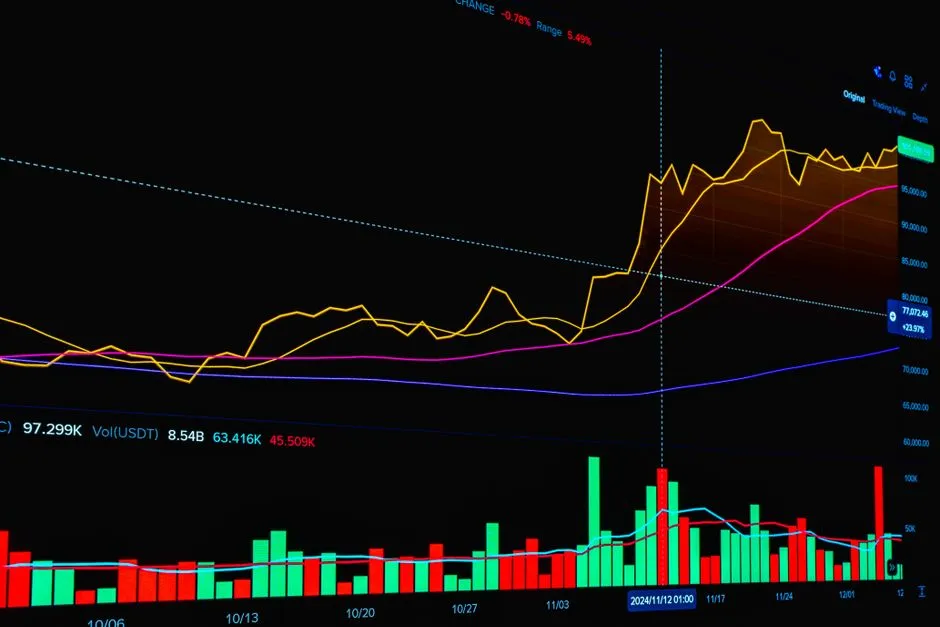
Bitcoin Faces Resistance as Bond Yields Move Higher
Bitcoin’s latest attempt to recover lost momentum has stalled near the $83,000 level, where persistent selling pressure has created a clear barrier for bulls. Despite movements in broader equity markets, BTC price action has remained confined to a relatively narrow range, suggesting that traders are waiting for a stronger catalyst before committing to a decisive move.
The rejection is significant because Bitcoin has recently traded as part of the broader risk-asset environment. When stocks rise and investor confidence improves, cryptocurrencies often benefit from increased demand for higher-risk investments. However, that relationship weakened as U.S. bond yields reversed higher, creating renewed pressure across markets.
Why Rising U.S. Bond Yields Matter for Bitcoin
Bond yields are closely watched by investors because they influence borrowing costs, portfolio allocation, and the relative appeal of riskier assets. When Treasury yields rise, traditionally safer investments can offer more attractive returns. This can reduce the incentive to hold volatile assets such as Bitcoin, particularly when traders are already concerned about economic uncertainty.
Higher yields can also tighten financial conditions. More expensive borrowing may weigh on corporate investment, consumer activity, and market liquidity. For Bitcoin, which often responds strongly to changes in liquidity and investor sentiment, this can translate into slower buying activity and greater sensitivity to negative news.
The recent reversal in yields therefore provided an important backdrop to Bitcoin’s inability to break higher. Even though equities were part of the market conversation, the shift in bond markets signaled that investors were not uniformly embracing risk.
The $83,000 Sell Wall Keeps BTC in a Tight Range
Bitcoin’s inability to move decisively above $83,000 points to a concentration of sell orders around that level. A “sell wall” occurs when a large amount of supply is positioned at a specific price or within a narrow range. If buying demand is not strong enough to absorb that supply, the market may repeatedly approach the level before retreating.
This type of price action can create a frustrating environment for traders. Buyers may be encouraged by each move toward resistance, while sellers use those rallies to reduce exposure or lock in gains. The result is a compressed trading range in which Bitcoin moves back and forth without establishing a clear trend.
Repeated rejection at the same level can eventually weaken bullish momentum, especially if trading volume declines during each recovery attempt. On the other hand, resistance can also become less effective if buyers continue testing it and gradually absorb the available supply. The next sustained move above or below the current range may therefore carry more importance than any individual intraday wick.
Equities Are Not Providing a Strong Enough Tailwind
Bitcoin has often benefited when equity markets show strength, particularly when gains reflect improving risk appetite. In this case, however, the connection has been less supportive. The performance of stocks alone has not been enough to overcome the impact of rising yields and the hesitation visible in the digital-asset market.
This divergence suggests that traders are evaluating several signals at once rather than relying solely on equity performance. A positive session in stocks may offer limited support if bond yields are climbing, liquidity is tightening, or investors are concerned about the outlook for inflation and interest rates.
For Bitcoin to regain stronger upside momentum, market participants may look for a combination of improving liquidity, stabilizing yields, and sustained demand above key resistance levels. Without that confirmation, short-term rallies may continue to attract sellers.
Key Levels and Market Signals to Watch
Traders will likely focus on whether Bitcoin can reclaim and hold the $83,000 area rather than simply trade above it briefly. A convincing breakout would generally require strong volume, follow-through, and evidence that buyers are willing to defend the new support zone.
If repeated attempts continue to fail, attention may shift toward lower support levels within the current range. A breakdown accompanied by rising volume could indicate that sellers are gaining control, while a gradual pullback on light volume might simply reflect consolidation before another test of resistance.
- Resistance near $83,000: A major area where selling pressure has repeatedly emerged.
- Trading volume: Strong volume can help confirm whether a breakout or breakdown has meaningful participation.
- U.S. Treasury yields: Further increases could continue to weigh on speculative assets.
- Equity-market breadth: Broad, sustained stock-market strength would be more supportive than gains concentrated in a few companies.
- Liquidity and macroeconomic data: Inflation, employment, and central-bank expectations may influence the next major move.
What Comes Next for Bitcoin?
Bitcoin’s current setup is defined by hesitation. The cryptocurrency has not collapsed, but neither has it produced the momentum needed to clear the $83,000 sell wall. As bond yields move higher and equity markets provide only limited support, traders are likely to remain selective and sensitive to macroeconomic developments.
A successful breakout could restore confidence and encourage momentum-focused buyers to return. Conversely, another rejection may reinforce the view that Bitcoin needs more time to consolidate before attempting a larger move. Until price breaks out of its established range with convincing confirmation, the market may continue to favor short-term trading over a clear directional trend.
For investors and traders, the broader lesson is that Bitcoin’s performance cannot be assessed in isolation. Bond yields, equity sentiment, liquidity conditions, and technical levels are all shaping the market at the same time. Monitoring how these factors interact will be essential as BTC searches for its next decisive move.
Related read: Nscale’s Microsoft AI Deal Falls Apart as U.K. Power Delays Push Expansion Into the 2030s