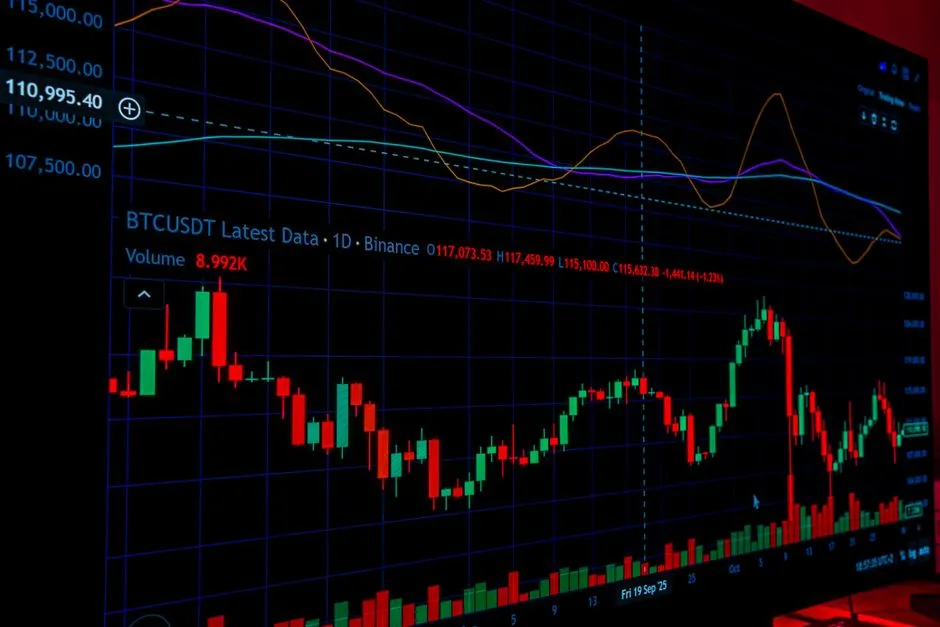
Bitcoin struggled to build upward momentum as sellers defended the $83,000 level, keeping the cryptocurrency locked in a narrow trading range. Although equities also faced renewed pressure, BTC did not find enough support from broader risk markets to break through the resistance zone.
The latest price action highlights a familiar challenge for Bitcoin: when macroeconomic conditions become less favorable, even strong market narratives can fail to generate sustained buying. With U.S. Treasury yields reversing higher and equities losing momentum, traders appeared reluctant to push aggressively into risk assets.
Why $83,000 Became a Key Barrier
The $83,000 area acted as a visible sell wall, meaning a large concentration of sell orders was positioned around that price. Each attempt to move higher was met with fresh supply, limiting Bitcoin’s ability to extend its advance.
Sell walls can have an important psychological effect on the market. When traders repeatedly see price rejected at the same level, short-term buyers may become more cautious, while some existing holders choose to take profits near resistance. This can create a feedback loop in which buying interest weakens precisely when the market needs additional volume to break higher.
Bitcoin’s inability to clear the level does not necessarily signal a complete change in its broader trend. However, it does suggest that buyers currently lack the conviction needed to overcome overhead resistance. Until that changes, BTC may remain vulnerable to further consolidation or a pullback toward nearby support zones.
Rising Bond Yields Create a Headwind for Risk Assets
U.S. bond yields were another important factor influencing market sentiment. When Treasury yields rise, government bonds can become more attractive relative to assets that carry greater volatility, including stocks and cryptocurrencies.
Higher yields can also affect expectations around interest rates and financial conditions. If investors believe borrowing costs may remain elevated for longer, they often reduce exposure to speculative assets. Bitcoin, despite its growing institutional presence, continues to trade partly as a risk-sensitive asset, particularly during periods of macroeconomic uncertainty.
The reversal in yields therefore added pressure to an already hesitant market. Instead of providing a supportive backdrop for Bitcoin, the bond market signaled caution. Traders were forced to weigh the potential for continued monetary restraint against the possibility of stronger demand for higher-risk assets later in the cycle.
Equities Failed to Provide Support
Bitcoin’s price action also failed to improve alongside equities. In previous periods, a stronger stock market has helped reinforce confidence across risk markets, encouraging traders to allocate capital to assets such as Bitcoin. This time, however, equity weakness offered little support.
The relationship between Bitcoin and equities is not fixed. Correlations can change depending on liquidity, investor positioning, interest-rate expectations, and developments specific to the cryptocurrency market. Still, when both stocks and Bitcoin struggle at the same time, it can indicate that investors are broadly reducing risk rather than rotating capital between individual asset classes.
What Traders Are Watching Next
Market participants will likely focus on whether Bitcoin can remain above its short-term support levels while continuing to challenge the $83,000 resistance zone. A decisive move above that barrier, supported by strong trading volume, could signal that buyers have absorbed the available supply and are prepared to target higher levels.
On the other hand, repeated rejection could increase the probability of a deeper retracement. Traders may then watch for signs of renewed demand, including stronger spot buying, improving liquidity, and a more favorable backdrop across bonds and equities.
Key Factors to Monitor
- Bitcoin’s reaction near $83,000: Continued rejection would reinforce the importance of the sell wall.
- U.S. Treasury yields: Further increases could keep pressure on speculative assets.
- Equity-market direction: A recovery in stocks may improve broader risk appetite.
- Trading volume: A breakout without meaningful volume could be vulnerable to failure.
- Investor positioning: Overcrowded trades can increase volatility in either direction.
Bitcoin Remains Trapped Between Momentum and Resistance
For now, Bitcoin remains caught between persistent buying interest and a well-defended resistance level. The market has not shown enough strength to push decisively above $83,000, while rising bond yields and softer equities are limiting enthusiasm among risk-oriented investors.
The next major move may depend less on Bitcoin-specific news and more on the wider financial environment. If yields stabilize and equities recover, buyers could regain confidence and make another attempt at resistance. If macroeconomic pressure continues, Bitcoin may need to establish a stronger base before making its next sustained advance.
Until a clear breakout or breakdown occurs, the market is likely to remain sensitive to short-term changes in liquidity, sentiment, and macroeconomic expectations. The $83,000 level remains the central test for Bitcoin bulls, while the behavior of bond yields may determine how much support they receive.
Related read: Chinese Suspect Arrested in Bangkok Over Alleged $75 Million Crypto Crime Network