Bitcoin has spent much of its life as the asset class that refuses to behave. Sharp rallies, violent drawdowns, and wild intraday swings made it both exciting and frustrating to trade. For years, volatility was not just a feature of Bitcoin — it was the main event. Traders built strategies around its chaos, and market makers made a living pricing the uncertainty that came with every large candle.
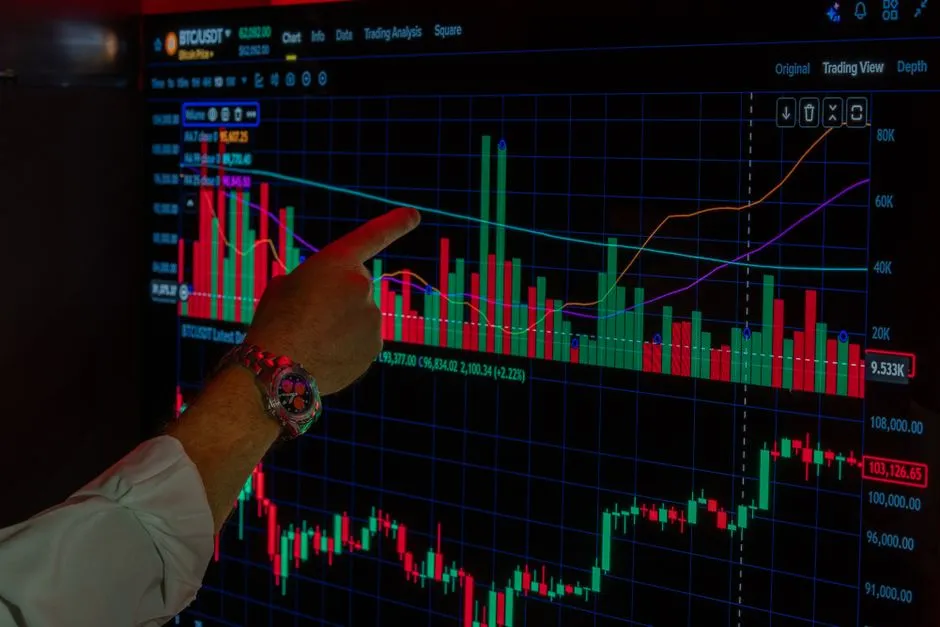
Now, the atmosphere has changed. Bitcoin’s price action has become noticeably quieter, with volatility compressed to what many are calling a cycle low. Instead of the explosive moves that once defined the market, traders are dealing with a prolonged tug-of-war: buyers and sellers are locked in a stalemate, neither side able to establish a clear trend. The result is a range-bound market that feels almost calm by Bitcoin’s historical standards.
Why Bitcoin has gone so quiet
Low volatility does not usually appear out of nowhere. It tends to emerge when market participants stop agreeing on direction. In Bitcoin’s case, the current compression reflects a balance between caution and positioning. Some traders are still waiting for stronger macroeconomic clarity, while others are already positioned in ways that limit their willingness to push price further in either direction.
That kind of equilibrium can be uncomfortable. When price moves in a tight range, there is less room for aggressive bets. Traders who once thrived on large daily swings now find themselves watching a market that seems to be holding its breath. The absence of a clear winner does not mean the market is inactive, but it does mean that conviction is thinner and faster momentum is harder to sustain.
What compressed volatility means for traders
For many professional traders, volatility is the raw material they need to make money. When it disappears, strategies that once worked well begin to fray. Breakout traders lose their edge, momentum systems generate fewer signals, and options or futures traders face tighter spreads and less premium to capture.
In a quiet market, small moves can feel significant, but they often lack follow-through. That creates a frustrating environment where traders are forced to choose between patience and impatience. Patience can preserve capital, but it can also feel like missing the market. Impatience can lead to overtrading, especially when traders are trying to force an edge in conditions that do not support it.
Where traders are looking for bigger payoffs
As Bitcoin’s volatility narrows, some traders are not simply sitting on the sidelines. Instead, they are shifting their risk appetite elsewhere. The search is not necessarily for safer assets, but for more explosive ones. In this environment, traders are increasingly chasing names that offer the possibility of 5x or 10x payoffs — moves that feel almost impossible in a large, mature asset but are far more plausible in smaller, higher-beta markets.
That rotation makes sense from a behavioral standpoint. When the main market becomes too calm, traders do not always reduce risk. Sometimes they increase it in different places. They look for assets with less liquidity, thinner order books, and greater sensitivity to narrative, sentiment, or short-term positioning. In those markets, a small shift in attention can produce outsized price moves.
The appeal of asymmetric upside
The phrase “5x or 10x payoffs” appeals to traders because it represents asymmetry. A smaller position in a highly speculative asset may offer the chance for a large gain relative to the risk taken. For some, that is an attractive trade, especially if they believe the current market structure is temporary and a new catalyst could quickly change the tone.
That said, this kind of rotation is not without risk. The same conditions that allow for explosive upside can just as easily produce sharp downside. Smaller assets can be more volatile in both directions, and liquidity can disappear quickly when sentiment turns. What feels like an opportunity to escape Bitcoin’s quiet phase can become a trap for traders who are not disciplined in their entry, sizing, and exit.
What this rotation says about the broader market
One of the more interesting developments is that Bitcoin is no longer automatically the center of gravity for speculative risk. For a long time, when traders wanted exposure to crypto volatility, Bitcoin was the default. Today, the leadership may be shifting. Traders are willing to look beyond the flagship asset in search of more dramatic moves, which suggests that the market is becoming more segmented.
That segmentation can have important implications. If smaller or more speculative assets keep attracting attention while Bitcoin remains range-bound, it may indicate that the current quiet phase is not universal. It is possible that volatility is not disappearing from the crypto complex as a whole — it is simply moving to different corners of the market.
At the same time, Bitcoin still tends to set the tone when a major catalyst appears. If macro conditions shift, liquidity improves, or a strong macroeconomic event changes investor risk appetite, the quiet range around Bitcoin could break with force. In that scenario, the compression that has defined the recent period may prove to be a setup rather than a trend.
How traders should navigate this environment
The key challenge right now is adaptation. Traders who continue to rely on the same playbook that worked during high-volatility phases may find themselves out of step with current conditions. A few practical considerations matter more than usual:
- Expect less, not more. A quiet market often punishes traders who expect large moves every day. Adjusting expectations can reduce emotional trading.
- Watch the range, not just the price. In a low-volatility environment, support and resistance become more important because price tends to respect boundaries until something breaks them.
- Be careful with leverage. Tight ranges can create the illusion of safety, but leverage can turn a small move against a position into a serious drawdown.
- Size speculative trades carefully. If you are chasing higher-beta assets for the chance at outsized gains, position sizing is essential. A 5x or 10x opportunity is only useful if you can survive the downside path to get there.
- Prepare for a breakout. Volatility compression often precedes expansion. Traders who stay alert to shifts in volume, sentiment, and liquidity may be better positioned when the market finally chooses a direction.
The bottom line
Bitcoin’s recent quietness is not simply a dull stretch in an otherwise normal market. It reflects a deeper shift in how traders are allocating risk. With Bitcoin’s volatility squeezed to a cycle low, some participants are looking elsewhere for the kind of dramatic moves they have grown accustomed to. The search for 5x or 10x payoffs is less about abandoning Bitcoin and more about adapting to a market environment where the old sources of volatility are temporarily muted.
For now, the tug-of-war remains unresolved. Buyers and sellers are still locked in, and the market lacks a clear catalyst to break the stalemate. But in crypto, calm periods rarely last indefinitely. The quiet phase may be a pause, a reset, or a setup — and for traders, the real question is not just where the next big move will come from, but whether they are positioned to recognize it when it appears.
Related read: Toyota Finance Opens Tokenized Bond to Retail Investors Through Mobile Payment App