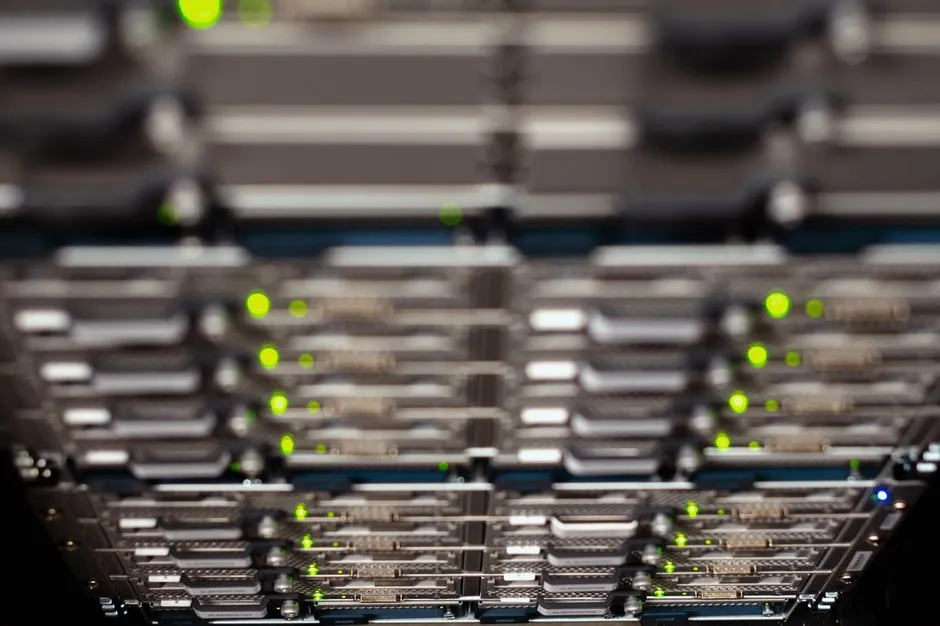
Keel Infrastructure has taken a decisive step away from Bitcoin mining in the United States, decommissioning all of its U.S. Bitcoin mining sites as it repurposes the locations for artificial intelligence and high-performance computing workloads. The move is significant not only for one company, but for the broader mining industry, because it highlights how quickly the economics of compute-intensive operations can shift. What once made sense as a Bitcoin mining campus may now be even more valuable as an AI-ready data center.
A Strategic Reset for a Changing Market
For several years, Bitcoin mining operators built and acquired facilities around a simple but powerful model: secure land, power, cooling, and hardware, then convert electricity into hashpower. The business worked when network difficulty was manageable, power costs were favorable, and mining hardware could be deployed quickly. But the landscape has changed. Bitcoin mining has become more competitive, more capital-intensive, and more sensitive to energy prices. At the same time, demand for AI and high-performance computing has risen sharply, creating a new source of revenue for operators with existing infrastructure.
Keel Infrastructure’s decision to shut down its U.S. Bitcoin mining sites is a clear signal that the company is repositioning itself around that demand. Rather than continuing to operate facilities as mining farms, the company is turning them into spaces designed for AI workloads. That shift can be attractive for several reasons. AI data centers often require high-density computing, reliable power, advanced cooling, and strong connectivity. Many of those requirements overlap with what a mature Bitcoin mining site already has. In other words, the company is not starting from scratch. It is leveraging assets it already owns or controls.
Why AI Data Centers Are Attracting Mining Operators
The appeal of AI infrastructure is easy to understand once you look at the underlying economics. AI workloads can generate strong, recurring revenue, especially when they are tied to enterprise clients, cloud providers, or specialized computing services. Compared with Bitcoin mining, which is exposed to network difficulty, price volatility, and hardware depreciation, AI data center contracts can offer more predictable cash flow. For an operator with an existing campus, that stability can be more valuable than short-term mining margins.
There is also a timing advantage. Building a new data center from the ground up can take years, particularly in the United States, where site selection, permitting, grid connections, and construction timelines can be challenging. An operator that already has a powered facility may be able to move faster. The land, power capacity, cooling systems, and physical security are already in place. That can reduce both capital costs and development risk.
What This Means for Bitcoin Miners
Keel Infrastructure’s pivot is likely to be watched closely by other mining companies. It does not mean that Bitcoin mining is disappearing, but it does suggest that the industry is maturing. Operators are no longer just focused on accumulating hashpower. They are thinking about long-term asset value, energy efficiency, and the ability to adapt their facilities to new markets.
This is especially important in regions where power costs have risen or where grid constraints make it harder to justify mining operations. In those cases, a site that can be converted to AI or high-performance computing may become more attractive than one that continues to run miners. The decision is not just about Bitcoin; it is about maximizing the return on expensive infrastructure in a competitive compute market.
The Bigger Picture: Energy, Land, and Compute
The transition from Bitcoin mining to AI infrastructure also reflects a broader trend in the energy and data center sectors. The same resources that once supported hashpower—land, power, cooling, and network access—are now being viewed through a different lens. AI computing is not just another workload; it is a fast-growing industry with significant capital investment behind it. That makes existing sites more valuable, especially when they can be repurposed without the delay and expense of new construction.
For investors and industry observers, the story is less about one company leaving Bitcoin and more about the flexibility of mining assets. The best operators are the ones that can evaluate their portfolios honestly and decide when a facility is better suited to a different kind of compute demand. Keel Infrastructure appears to be making that call now, shifting its U.S. footprint toward AI and high-performance computing while stepping back from its Bitcoin mining operations.
Conclusion
Keel Infrastructure’s decision to decommission its U.S. Bitcoin mining sites and redirect them toward AI and high-performance computing is a meaningful marker of change in the crypto infrastructure space. It shows that the most valuable asset in this business may not be the mining hardware itself, but the underlying infrastructure that can be adapted to new opportunities. As AI demand continues to grow, more operators may find themselves asking the same question: Is our facility better suited for Bitcoin, or is it time to pivot toward the next generation of computing workloads?
Related read: Crypto for Advisors: Closing the Advice Gap in Digital Asset Planning