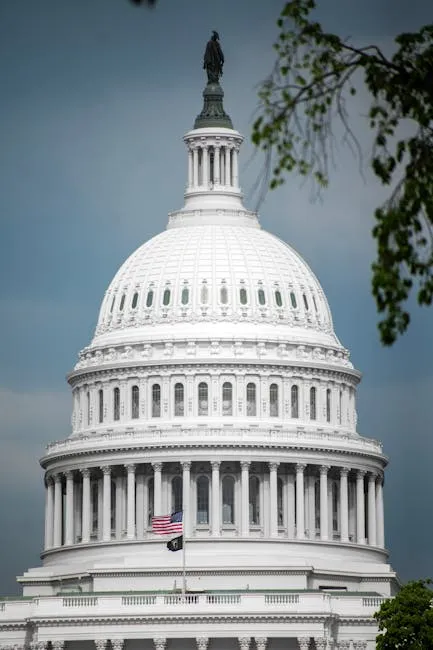
United States Faces Critical Deadline for Crypto Legislation
Senator Cynthia Lummis has issued a stark warning to the United States Congress regarding the future of digital assets. According to recent statements, the country stands at a pivotal juncture, with only a window until 2030 remaining to pass the CLARITY Act. The Senator emphasizes that failing to enact this legislation could jeopardize the nation’s financial standing in the global economy. This is not merely a political debate; it is a matter of economic survival and stability for the American financial system.
Understanding the CLARITY Act
The CLARITY Act represents a comprehensive legislative framework designed to regulate cryptocurrency and digital assets within the United States. Its primary goal is to provide regulatory certainty for businesses, investors, and financial institutions operating in the blockchain space. However, the path to passing such legislation has been fraught with challenges, including varying interpretations of technology and political hesitation.
The Act aims to distinguish between asset classes, ensuring that traditional financial regulations apply where necessary while fostering innovation where appropriate. Without clear guidelines, the financial sector often finds itself in a gray area that discourages long-term investment and development. Senator Lummis argues that delaying this clarity allows uncertainty to fester, potentially driving capital away from the United States toward more regulated jurisdictions with friendlier environments.
The Risks of Delaying Regulation
The core of Senator Lummis’ argument rests on the concept of opportunity cost. By delaying the CLARITY Act, the United States risks losing its competitive edge in the digital asset industry. Major economies, including those in Europe and parts of Asia, are actively developing their own regulatory frameworks. If the U.S. does not secure a clear path by 2030, it could find itself playing catch-up in a technology race that determines the future of finance.
Furthermore, the lack of regulation poses risks to consumer protection and market integrity. Without a legal framework, the potential for fraud, market manipulation, and systemic risk increases. Financial institutions are generally risk-averse; they are less likely to embrace blockchain technology without a solid legal foundation. This hesitation can stifle innovation and slow down the adoption of decentralized finance (DeFi) solutions that could revolutionize banking and payments.
Why the 2030 Deadline Matters
The 2030 horizon is not arbitrary; it aligns with broader technological adoption cycles and infrastructure development timelines. By 2030, the integration of blockchain technology into traditional finance is expected to be mainstream. Missing the deadline could mean that the U.S. financial system remains disconnected from the evolving global economy. This disconnection could lead to a scenario where American businesses are at a disadvantage when dealing with international counterparts who have already adapted to the digital economy.
Moreover, the 2030 mark serves as a reminder of the urgency required in legislative processes. Congress often operates on short-term cycles, which can lead to short-sighted decisions. Senator Lummis is urging stakeholders to look beyond the immediate election cycles and consider the long-term implications of inaction. The window to influence the legislative landscape is closing, and every passing month reduces the margin for error.
Global Competition and Financial Leadership
The United States has historically been a leader in global finance. Maintaining that leadership requires a regulatory environment that encourages growth rather than one that stifles it. The CLARITY Act is viewed as a tool to ensure that the U.S. remains a haven for innovation. If the Act is not passed, other nations may step into the void, setting the standards that the U.S. will eventually have to adopt anyway.
International cooperation in crypto regulation is also becoming more important. The U.S. must work with allies to create a harmonized global standard. If the U.S. falls behind, it complicates cross-border transactions and could lead to regulatory fragmentation that hurts American consumers and businesses. Senator Lummis highlights that the financial future of the nation is intertwined with its ability to adapt to the digital age proactively.
Conclusion
The warnings from Senator Cynthia Lummis serve as a crucial call to action for policymakers, industry leaders, and investors alike. The CLARITY Act is more than a piece of legislation; it is a defining moment for the future of finance in the United States. The 2030 deadline represents a critical threshold where inaction could lead to significant economic consequences. To secure a prosperous financial future, the U.S. must prioritize clarity, innovation, and stability. As the world moves forward into an increasingly digital era, the decisions made in Congress over the next few years will shape the economic landscape for decades to come.