The cryptocurrency market is constantly in motion, and few assets capture trader attention quite like XRP. Recently, the token has been trading in the narrow band around $1.04, a level that has become a focal point for both long-term holders and short-term speculators. As June progresses, market participants are closely monitoring a trio of critical developments: the gradual cooling of ETF inflows, increased on-chain activity from large holders, and the looming technical importance of the $1 price floor. Understanding how these factors intersect is essential for anyone trying to navigate the current market landscape.
The Psychological and Technical Weight of the $1 Level
In trading, round numbers often carry more weight than pure mathematics would suggest. The $1 mark for XRP is no exception. Historically, this level has acted as a sturdy floor during periods of consolidation, providing buyers with a clear entry point while giving sellers a natural exit zone. When price action approaches such a psychological barrier, order books tend to thicken. Limit buy orders accumulate, creating a cushion that can absorb sudden sell pressure.
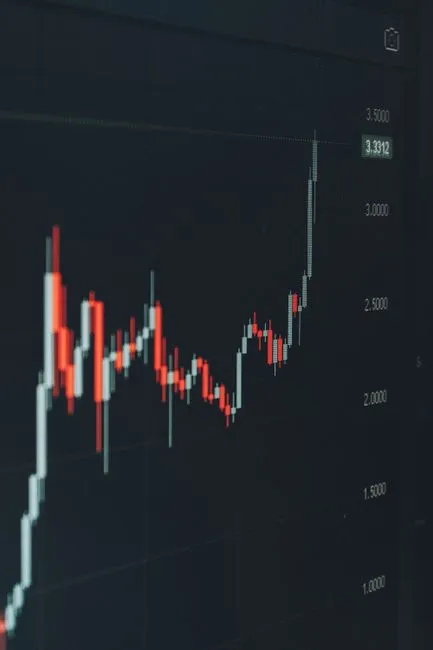
From a technical standpoint, traders are watching for confirmation of whether this support will hold or break. A clean bounce off $1.00 would likely signal renewed bullish momentum, potentially opening the door for a retest of higher resistance zones. Conversely, a decisive close below this threshold could trigger stop-loss cascades, pushing the asset into deeper corrective territory. The market is essentially in a holding pattern, waiting for a catalyst to break the stalemate.
ETF Flows: Positive but Losing Steam
Exchange-traded funds have become a major driver of liquidity in the digital asset space. For XRP, June has started with positive net inflows, which is a healthy sign for overall market structure. Institutional and retail investors alike use these vehicles to gain exposure without managing private keys or navigating complex exchanges. However, recent data suggests that the pace of these inflows is beginning to slow.
When ETF buying pressure decelerates, it often reflects a broader shift in sentiment. Traders may be taking profits after a recent run, or they might be adopting a wait-and-see approach amid macroeconomic uncertainty. Slower inflows do not necessarily mean an impending crash, but they do reduce the immediate buying pressure that helps prop up prices. In environments where ETF momentum fades, price action tends to rely more heavily on spot market dynamics and on-chain behavior.
Whale Activity and On-Chain Signals
While ETF flows paint the institutional picture, on-chain data reveals what the largest holders are doing behind the scenes. Recent blockchain analytics show a noticeable increase in withdrawals from major exchanges by addresses commonly classified as whales. These are accounts holding substantial amounts of XRP, and their movements often influence short-term price volatility.
Whale withdrawals can be interpreted in a few different ways. Some traders view them as a bullish signal, assuming large holders are moving assets to cold storage for long-term holding. Others see it as a precursor to over-the-counter sales or strategic positioning ahead of potential market swings. The key lies in volume and timing. If withdrawals continue while spot buying pressure remains thin, it could create temporary supply imbalances that test the resilience of the $1 support level. Traders who monitor wallet activity alongside traditional charting tools often find themselves better positioned to anticipate sudden shifts in momentum.
What Traders Should Watch Next
Navigating a market at a critical juncture requires a balanced approach. Rather than guessing the next big move, experienced participants focus on confirmation signals and risk management. Here are a few practical points to keep in mind:
- Volume Confirmation: Price breaks mean very little without accompanying volume. A move above or below $1 needs to be backed by significant trading activity to be considered valid.
- ETF Reporting Cycles: Weekly and monthly ETF flow reports will provide clarity on whether institutional interest is stabilizing or continuing to fade.
- On-Chain Clusters: Tracking exchange balances and large wallet movements can offer early warnings of potential supply shifts.
- Broader Market Context: XRP rarely moves in a vacuum. Bitcoin trends, regulatory news, and macroeconomic data all play a role in shaping short-term price action.
Final Thoughts
The current XRP market setup is a classic example of how multiple forces converge to create a pivotal moment. With the price hovering near $1.04, ETF inflows showing positive but decelerating momentum, and whale wallets actively moving coins off exchanges, traders are left weighing probabilities rather than certainties. The $1 support level will likely serve as the deciding factor for the near-term direction. If it holds, the path of least resistance may tilt upward. If it fractures, a deeper consolidation phase could be ahead. As always, disciplined position sizing, clear exit strategies, and a focus on confirmed signals will separate reactive traders from those who can navigate the chop with confidence.