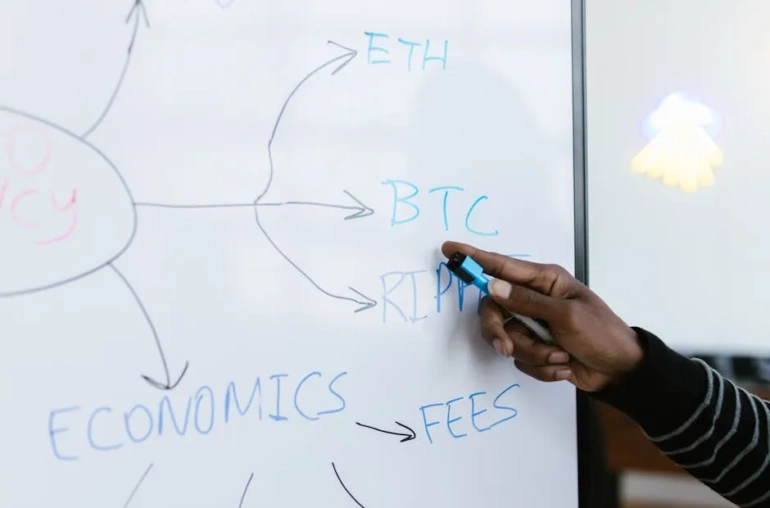
The way young people learn about cryptocurrency is changing, and it is not happening inside lecture halls. A recent OKX survey suggests that many students are eager to understand crypto, blockchain, and digital assets, but they are not getting enough guidance from traditional education systems. Instead, they are turning to social media, YouTube, podcasts, forums, and online communities to fill the gap.
That shift matters because crypto is no longer a niche topic confined to tech conferences or speculative trading groups. It has become a subject that touches finance, business strategy, technology, law, and even everyday payments. For students, understanding crypto can feel less like an optional extra and more like a basic part of modern digital literacy. Yet the formal education system is still catching up slowly.
A clear demand, a limited supply
The OKX poll points to a simple reality: students want crypto classes. They are curious about how blockchain works, how decentralized finance functions, how digital assets are built, and how these technologies may reshape industries. That curiosity is not surprising. Many students are entering a job market where tech companies, banks, consulting firms, and startups increasingly expect familiarity with digital assets, tokenization, and decentralized systems.
But demand has not been matched by supply. A separate review found that only about 28% of accredited US business schools offered blockchain courses. That is a surprisingly low number when considering how much blockchain and crypto are discussed in business media, investor reports, and professional conversations. In other words, a large share of business education is still treating crypto as a minor topic, if it is treated at all.
The result is a gap. Students who want structured learning are often left to piece together their education from fragmented sources. Some may take online courses. Others may read whitepapers or follow industry newsletters. But many rely heavily on social media, where information can be fast, informal, and sometimes misleading.
Why social media became the classroom
Social media is attractive because it is accessible. A student can watch a five-minute explainer video, join a Discord server, follow a finance creator on X, or read a thread that breaks down a new protocol. There is no tuition fee, no enrollment deadline, and no need to wait for a university to update its curriculum. For a generation that learned much of its digital life through platforms, that feels natural.
There is also a cultural component. Crypto has always grown through communities. Early adopters shared knowledge in forums, chat groups, and conferences. Social media simply expanded that model. Today, a student in a small city can access the same conversations as someone in a major financial hub, at least on the surface. That openness can be empowering, especially when formal institutions are slow to respond.
But the same speed and accessibility that make social media useful also make it risky. Crypto content online often comes from creators with incentives that are not always aligned with the learner. Some explain a concept well. Others promote a token, use hype-driven language, or oversimplify complicated ideas. For a student without a strong foundation, it can be hard to separate education from marketing.
The problem with informal learning
Learning from social media can work for basics, but it often lacks structure. A university course, even an imperfect one, usually provides a sequence: definitions, readings, case studies, assessments, and feedback. Social media rarely offers that consistency. A student may understand a meme or a market update but still struggle with fundamentals like cryptography, incentive design, tokenomics, regulation, or risk management.
This matters because crypto is not just about price charts. It is a technology stack and an economic system. Understanding it requires more than knowing what a coin is or how to buy and sell it. Students need to understand how consensus mechanisms work, why decentralization matters, how smart contracts can fail, how regulatory environments differ by country, and how digital assets fit into broader financial planning.
Without that depth, the risk is not just confusion. It can also lead to poor decisions. A student who learns crypto only through hype-driven content may enter the space with unrealistic expectations. They may chase narratives instead of understanding underlying mechanics. They may ignore security practices, underestimate volatility, or fail to recognize scams. In a fast-moving industry, those mistakes can be costly.
What universities and business schools should do
The solution is not to dismiss social media as a learning tool. Students are already there, and for many of them, it is where the latest ideas are being discussed. The better approach is for institutions to meet students where they are while adding structure and credibility.
Business schools could integrate blockchain and crypto into core courses rather than treating them as niche electives. Accounting programs could explore tokenized assets and digital ledger systems. Marketing programs could study how Web3 communities build brand loyalty. Finance programs could examine how digital assets interact with traditional markets. Law programs could cover regulatory frameworks, investor protection, and cross-border issues.
There is also value in practical learning. Crypto is an applied field. Students benefit from building small projects, analyzing real protocols, studying token launches, or simulating portfolio decisions. Case studies matter too. Examining both successes and failures helps students understand that the industry is experimental, competitive, and still evolving.
A balanced approach to student education
The most effective path is probably a blend of formal and informal learning. Formal education can provide frameworks, critical thinking, and accountability. Social media and online communities can provide speed, peer discussion, and exposure to current trends. The challenge is teaching students how to use both responsibly.
That means media literacy is just as important as technical knowledge. Students need to learn how to evaluate sources, understand conflicts of interest, verify information, and recognize when a claim is based on data versus speculation. They also need to understand that crypto education is not a one-time lesson. The space changes quickly, so continuous learning is essential.
For educators, this means staying current without chasing every trend. The goal is not to teach students every token or every new app. The goal is to teach them how to analyze new ideas critically. That kind of skill will remain useful even as the technology evolves.
The bigger picture
The fact that students want crypto classes but are learning through social media is a sign of both opportunity and disconnect. It shows that the next generation is interested in digital assets. It also shows that traditional education has not yet positioned itself as the first place students go for reliable crypto knowledge.
If institutions continue to lag, the educational gap will widen. Students will keep learning from the most accessible sources available, and those sources will not always be the best ones. On the other hand, if schools and businesses adapt, they can help shape a more informed and responsible generation of crypto users, builders, and professionals.
Ultimately, crypto education should not be about creating hype or producing traders. It should be about building understanding. That means teaching how the technology works, how the markets function, how risks are managed, and how these systems may influence the future of finance and business. When students have access to clear, structured, and honest education, they are better equipped to participate in a digital economy that is only growing in importance.
Related read: The Open-Weight AI Cybersecurity Paradox: What the Hugging Face Hack Reveals