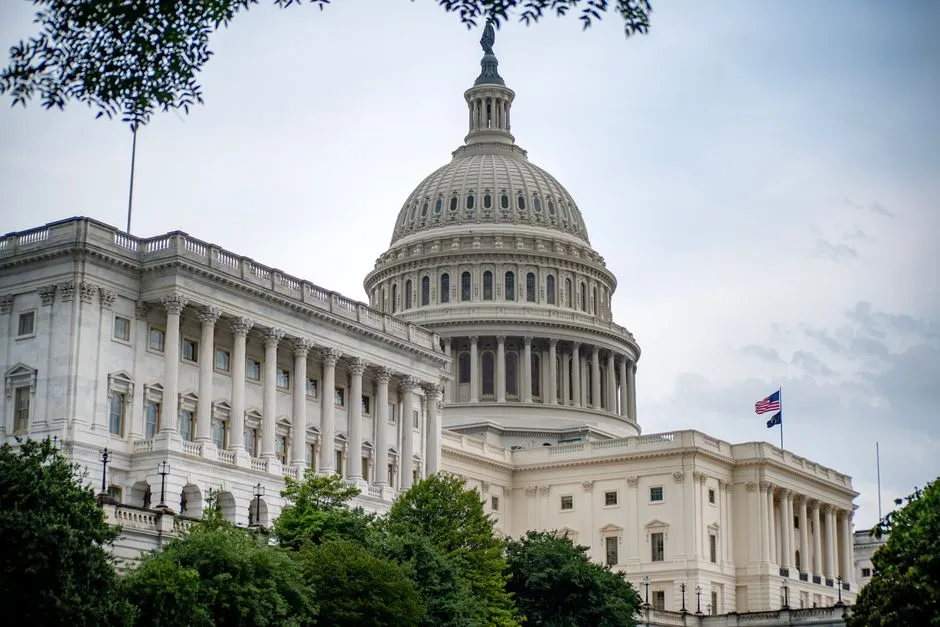
One of the most prominent voices in Washington’s crypto policy debate has finally run out of patience. U.S. Senator Lummis, a long-time negotiator on the Crypto Clarity Act, has said that Democrats are unwilling to stop requesting additional revisions to the bill. Her comment signals a major friction point in an effort that has been in the works for more than five years and has become one of the most watched policy fights in digital asset regulation.
For those outside of Capitol Hill, the statement may sound like ordinary legislative disagreement. But in the world of crypto market structure, it is much more than that. The bill has been framed as a potential turning point for the industry, offering a chance to clarify what falls under the jurisdiction of the U.S. Securities and Exchange Commission and what belongs to the Commodity Futures Trading Commission. That distinction has been a source of confusion for years, and many in the sector have argued that it has kept innovation uncertain, enforcement unpredictable, and international competitiveness at risk.
Why the Crypto Clarity Act Has Become a Marathon
The Crypto Clarity Act is not a small technical fix. It is an attempt to build out a broader framework for how digital assets are treated under U.S. law. Over the years, the proposal has drawn attention from a wide range of stakeholders, including exchanges, wallet providers, stablecoin issuers, venture investors, and consumer advocates. Each group has its own concerns, and each has tried to shape the language in a way that protects its interests while still moving the bill forward.
That is what makes the process so difficult. A market structure bill like this one is not just about one company or one token category. It touches on how assets are classified, how products are launched, how enforcement actions are handled, and how the U.S. compares with other jurisdictions that may be moving faster on digital asset regulation. In other words, the stakes are high, and the margin for error is small.
Senator Lummis has been central to this effort, and her public frustration suggests that the bill has reached a difficult negotiation stage. In policy work, saying that you have “run out of gas” on new revisions is a strong signal. It does not necessarily mean the process is over, but it does mean that the negotiator believes the core of the bill has already been shaped and that continued back-and-forth may now be doing more harm than good.
What Lummis’s Comment Really Means
When a senior lawmaker says the opposing side “won’t quit” asking for more, it usually reflects a broader sense of exhaustion. After more than five years of work, every additional request can feel less like a necessary improvement and more like a delay tactic. That is especially true when the bill has already gone through multiple rounds of discussion, compromise, and redrafting.
The comment also highlights a common challenge in cross-party legislation. One side may feel that the bill is ready to move forward, while the other believes that key protections, definitions, or regulatory boundaries still need to be tightened. In the case of crypto market structure, those details can be extremely consequential. A single phrase can change how an asset is treated, how a platform is regulated, or how a future enforcement case might be understood.
For Democrats, continued revisions may be framed as a way to ensure consumer protection, financial stability, and stronger oversight. For pro-innovation advocates, however, the concern is that endless tinkering can stall the bill, create uncertainty, and ultimately push the U.S. behind other countries that are more decisive in setting digital asset policy.
The Pressure to Keep Expanding the Bill
One of the most interesting aspects of this fight is the pressure to make the bill do more over time. Market structure legislation often begins as a focused effort to clarify jurisdiction and then expands to cover broader questions. That can happen for good reasons. If a bill is meant to modernize the regulatory environment, it may need to address stablecoins, custody, licensing, market manipulation, and the treatment of digital assets in existing financial frameworks.
But expansion also creates risk. The more issues a bill takes on, the more room there is for disagreement. A narrower bill may be easier to pass, while a broader bill may better reflect the complexity of the industry. The Crypto Clarity Act sits in the middle of that tension, and Lummis’s remarks suggest that the current push for additional changes has crossed a line in her view.
This is not just a partisan issue. It is also an industry issue. Companies building in the U.S. have spent years operating in a gray area. They have had to guess how regulators will treat certain products, how future rules might apply, and whether their business model will survive the next enforcement action. That uncertainty is expensive. It slows hiring, complicates fundraising, and makes it harder for American firms to compete globally.
What Is at Stake for the Crypto Industry
If the bill continues to stall, the industry may face a prolonged period of regulatory ambiguity. That could have real consequences. Smaller firms may struggle to survive without clarity. Larger firms may face uneven enforcement. Investors may grow wary of a market where the legal treatment of assets can shift depending on who is in charge at any given time. And policymakers may find it harder to build a stable, predictable framework if negotiations remain stuck in the same cycle.
On the other hand, if the bill moves forward, it could represent a meaningful step toward a more mature U.S. crypto economy. A clearer market structure could help exchanges, payment companies, and digital asset platforms operate with more confidence. It could also give regulators a stronger foundation for enforcement, reducing the need for ad hoc actions and improving legal predictability.
The challenge is getting there without compromising the bill into something that no longer reflects the realities of the market. That is where the current dispute becomes especially important. The bill needs to be strong enough to satisfy regulators and consumer advocates, but flexible enough to remain practical for a fast-moving industry.
Can the Bill Still Move Forward?
Nothing about Lummis’s comments means the process is dead. Legislative negotiations often appear close to collapse before a final compromise emerges. That said, the tone of the message is significant. When a key negotiator publicly says she is out of room for more revisions, it changes the dynamics of the conversation. It puts pressure on the other side to either narrow its demands or accept that the bill may not be ready for the next step.
From here, the path forward likely depends on whether both sides can identify the minimum set of revisions that are truly necessary. If Democrats can agree to a final round of changes that addresses their core concerns without reopening the entire bill, there may still be a realistic chance for progress. If not, the bill could face another long period of uncertainty, one that would be difficult for the industry to absorb.
The larger lesson is that crypto regulation in the U.S. has become less about whether clarity is needed and more about how much political capital is left to achieve it. The industry has waited long enough for a workable framework, and the current impasse shows just how hard it is to balance innovation, oversight, and compromise in one of the most complex regulatory debates of the decade.
Related read: Revolut Customer Data Exposure via Fake Government Email: What Happened and Why It Matters