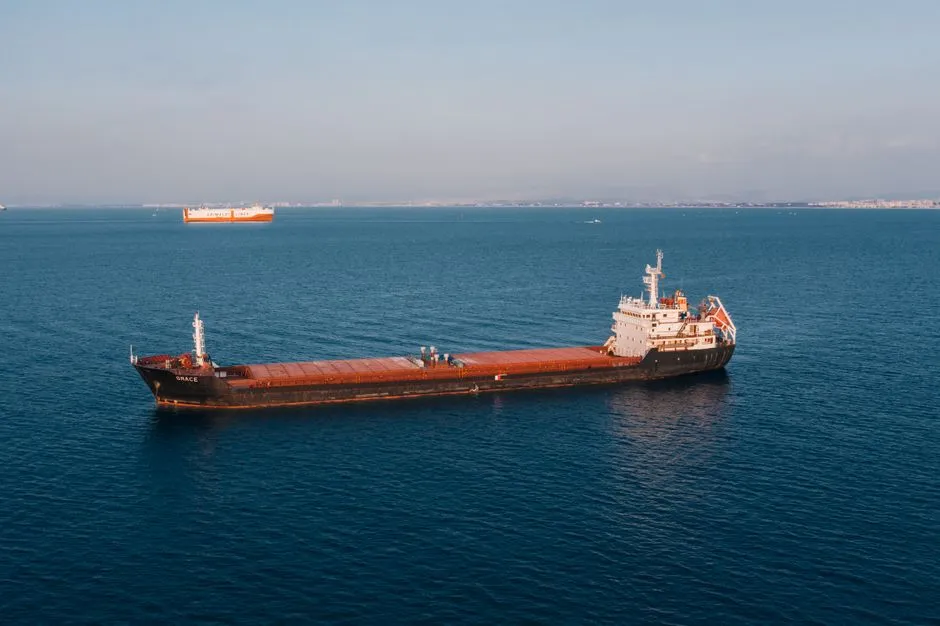
The global shipping industry has long been the quiet backbone of international commerce. From raw materials to consumer electronics, the vast majority of what we buy and sell moves across oceans aboard massive commercial vessels. Yet, despite moving trillions of dollars in goods annually, the actual ownership of these ships has remained locked behind high financial barriers. That is changing. Ethra Ship has officially launched a blockchain protocol designed to bring a multi-billion-dollar maritime asset class onto the digital ledger, fundamentally reshaping how investors and operators interact with high-value shipping infrastructure.
The Hidden Giants of Global Trade
When people think of alternative investments, they usually picture real estate, private equity, or perhaps collectibles. Commercial shipping rarely makes the list, even though a single modern cargo vessel can easily cost between $30 million and $120 million. These are not small purchases. They require deep pockets, complex financing, and years of industry relationships to acquire. For decades, this has kept maritime asset ownership strictly in the hands of large corporations, sovereign wealth funds, and established shipping conglomerates.
The traditional model works, but it is notoriously illiquid. Selling a ship is a months-long process involving brokers, inspections, legal paperwork, and bank approvals. There is no centralized exchange, no real-time pricing, and very little transparency for outside investors. This structural friction is exactly what blockchain technology is uniquely positioned to solve.
Introducing Ethra Ship’s Blockchain Protocol
Ethra Ship is not launching this infrastructure from a purely theoretical standpoint. The protocol is backed by four years of hands-on maritime operations, giving the team a practical understanding of the industry’s logistical, financial, and regulatory complexities. By mapping real-world vessel ownership and operational data onto a secure blockchain, Ethra Ship is creating a bridge between heavy industrial assets and modern digital finance.
How the Tokenization Model Works
At its core, the protocol relies on asset tokenization. Instead of requiring a single buyer to purchase an entire $80 million container ship, the vessel’s value is represented by digital tokens on the blockchain. These tokens can be divided, traded, and settled with a level of speed and transparency that traditional maritime finance simply cannot match. Investors can acquire fractional ownership stakes, receive proportional revenue shares from shipping contracts, and transfer their positions without navigating the labyrinth of conventional maritime brokerage.
- Fractional Access: High-value maritime assets are broken down into smaller, tradable units, lowering the capital requirement for entry.
- On-Chain Transparency: Ownership records, operational data, and revenue distribution are logged immutably, reducing disputes and administrative overhead.
- Enhanced Liquidity: Tokenized assets can be traded on secondary markets, allowing investors to exit positions without waiting for a full vessel sale.
Breaking Down the Barriers to Entry
The maritime industry has historically operated in silos. Information flows slowly, contracts are heavily paper-based, and financing structures are rigid. By introducing a blockchain protocol, Ethra Ship is effectively democratizing access to an asset class that has always favored institutional players. This does not mean the operational side of shipping is being handed over to retail traders. The actual navigation, maintenance, and chartering of vessels remain firmly in the hands of licensed professionals and established maritime operators. What changes is the capital structure and the ownership model.
This separation of operational management and financial ownership is a critical distinction. Investors gain exposure to the revenue streams of global trade without needing to understand how to read a nautical chart or manage a crew. Meanwhile, shipping companies gain access to a broader pool of capital, potentially accelerating fleet expansion and modernization.
What This Means for Investors and the Industry
For the broader financial ecosystem, the tokenization of commercial shipping represents a significant step forward in the real-world asset (RWA) movement. We are already seeing similar experiments in real estate, private credit, and commodities. Shipping, however, brings unique challenges: international regulations, fluctuating fuel costs, geopolitical routing changes, and heavy insurance requirements. A blockchain protocol that can successfully integrate these variables into a transparent, tradable format sets a powerful precedent for other heavy industries.
Investors should approach this development with both optimism and due diligence. While the technology offers undeniable advantages in transparency and liquidity, regulatory frameworks around tokenized real-world assets are still maturing across different jurisdictions. Ethra Ship’s four-year operational track record provides a necessary foundation of credibility, but participants will need to carefully review the legal structures, compliance mechanisms, and risk disclosures associated with the protocol.
The Future of On-Chain Real-World Assets
The launch of Ethra Ship’s blockchain protocol is more than a niche experiment in maritime finance. It is a practical demonstration of how distributed ledger technology can be applied to massive, tangible industries. As global supply chains continue to evolve, the ability to tokenize, trade, and manage high-value physical assets on-chain will likely become a standard feature of modern capital markets.
Whether you are a seasoned investor looking to diversify beyond traditional equities, or simply an observer tracking the intersection of blockchain and heavy industry, this development marks a clear shift in how value is created, tracked, and exchanged. The oceans have carried the world’s trade for centuries. Now, thanks to projects like Ethra Ship, the financial infrastructure supporting that trade is finally catching up to the digital age.