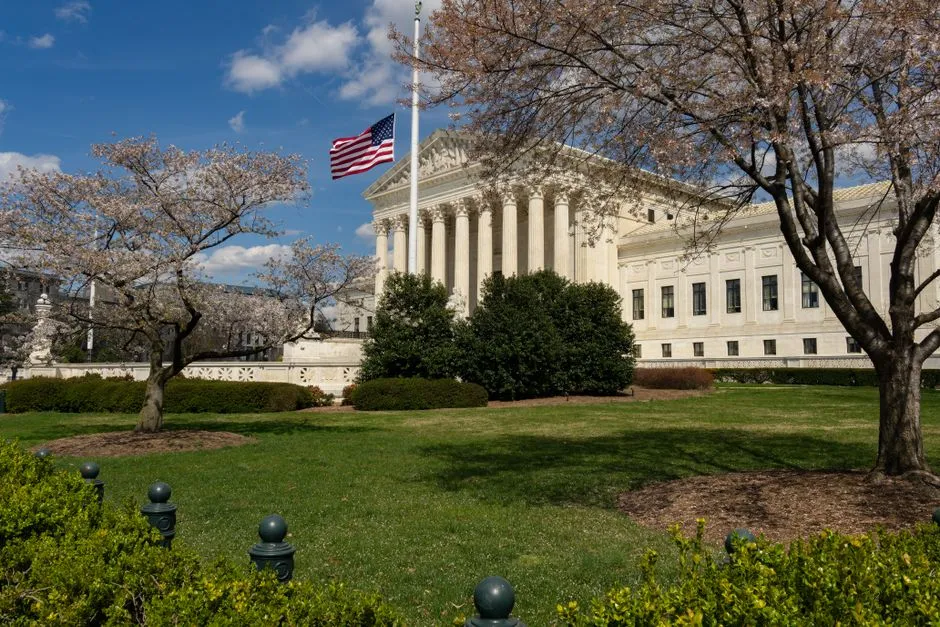
The United States Supreme Court has delivered a significant ruling that reinforces the independence of the Federal Reserve. In a closely divided 5-4 decision, the high court blocked President Donald Trump’s effort to remove Federal Reserve Governor Lisa Cook from her position. The ruling preserves the current composition of the Fed’s Board of Governors and sends a clear message about the legal boundaries between the executive branch and the nation’s central bank. As political pressure mounts over interest rate policy, this decision ensures that monetary decisions remain grounded in economic data rather than political maneuvering.
The Background of the Dispute
Lisa Cook, an economist and academic, was appointed to the Federal Reserve Board to bring a fresh perspective to monetary policy. Her tenure has coincided with a period of economic uncertainty, inflationary pressures, and ongoing debates over how quickly or slowly the Fed should adjust borrowing costs. The Trump administration, seeking to accelerate efforts toward lower interest rates, argued that Cook’s approach was out of step with the White House’s economic agenda. This led to a legal challenge aimed at removing her from the board.
However, the removal of a Fed governor is not a straightforward executive action. Federal Reserve governors are appointed through a statutory process designed to insulate monetary policy from short-term political cycles. The administration’s move sparked immediate legal and institutional concerns about the erosion of central bank independence and the precedent it could set for future economic governance.
The Supreme Court’s 5-4 Ruling
When the case reached the Supreme Court, the justices were deeply divided. The 5-4 majority concluded that the president does not hold unilateral authority to dismiss a Federal Reserve governor without meeting specific statutory conditions. The ruling effectively upheld the legal framework that protects Fed governors from arbitrary removal, ensuring that Cook remains on the board for the duration of her term.
What the Decision Means for the Board
The narrow margin highlights the ideological and legal tensions surrounding executive power and institutional independence. Legal experts note that the decision reaffirms long-standing precedents that treat the Federal Reserve as an independent agency within the executive branch, not a political arm of the White House. By maintaining the board’s current balance, the Court has prevented a sudden shift in voting power that could have altered the direction of monetary policy.
Implications for Monetary Policy and Interest Rates
With Lisa Cook staying on the board, the Federal Reserve maintains its current voting structure. This has direct consequences for how interest rate decisions are made in the coming months. The administration’s push for lower rates stems from a desire to stimulate borrowing, support housing markets, and ease debt servicing costs. However, the Fed’s mandate requires it to balance growth with price stability and maximum employment.
By preserving the board’s composition, the Supreme Court’s ruling ensures that rate decisions will continue to be driven by economic indicators rather than political timelines. Markets generally respond positively to predictable, data-driven monetary policy. Investors and economists alike recognize that sudden policy shifts tied to election cycles or executive pressure can introduce volatility and undermine long-term growth. Key takeaways from the ruling include:
- Policy Continuity: The Fed can maintain its current rate trajectory without disruption from sudden board changes.
- Market Stability: Financial markets typically favor institutional predictability, reducing the risk of abrupt volatility.
- Inflation Management: The central bank retains the flexibility to adjust rates based on real-time economic data rather than political demands.
Why Federal Reserve Independence Matters
The independence of the Federal Reserve is not just a bureaucratic formality; it is a cornerstone of modern economic stability. Since its establishment, the Fed has been structured to operate at arm’s length from direct political control. This design allows policymakers to make difficult but necessary decisions—such as raising rates to cool inflation or cutting rates to prevent recessions—without facing immediate political retaliation.
Historical examples show that when central banks are forced to align with short-term political goals, the results often include currency devaluation, surging inflation, and market instability. The Supreme Court’s decision reinforces the principle that monetary policy requires expertise, continuity, and freedom from partisan interference. Protecting that independence ultimately benefits everyday consumers, businesses, and the broader financial system.
What Happens Next?
While the immediate legal battle over Lisa Cook’s position has concluded, the broader conversation about the Federal Reserve’s role in the economy will continue. The administration may explore other avenues to influence monetary policy, such as public pressure, legislative proposals, or future appointments. Meanwhile, the Fed will focus on navigating a complex economic landscape marked by shifting inflation trends, labor market dynamics, and global financial developments.
For businesses, consumers, and investors, the ruling provides a measure of reassurance. It signals that the mechanisms governing interest rates and financial stability remain intact. As the economy moves forward, the Fed’s ability to operate independently will likely play a decisive role in shaping growth, employment, and price stability in the years ahead.
The Supreme Court’s decision to block the removal of Federal Reserve Governor Lisa Cook is more than a legal victory for one individual; it is a reaffirmation of institutional balance. By drawing a clear line between political ambition and economic stewardship, the ruling helps preserve the Federal Reserve’s capacity to serve the broader public interest. In an era of rapid economic change, that independence remains one of the most valuable assets in the American financial system.