For a few years, Sam Bankman-Fried seemed like the kind of figure the crypto world wanted to believe in. He was presented as a thoughtful founder, a socially conscious investor, and a leader who might help bring mainstream credibility to an industry still searching for its identity. That image collapsed quickly after FTX, once one of the largest cryptocurrency exchanges in the world, revealed itself to be built on shaky foundations, questionable accounting, and a level of risk-taking that many investors had no idea they were exposed to.
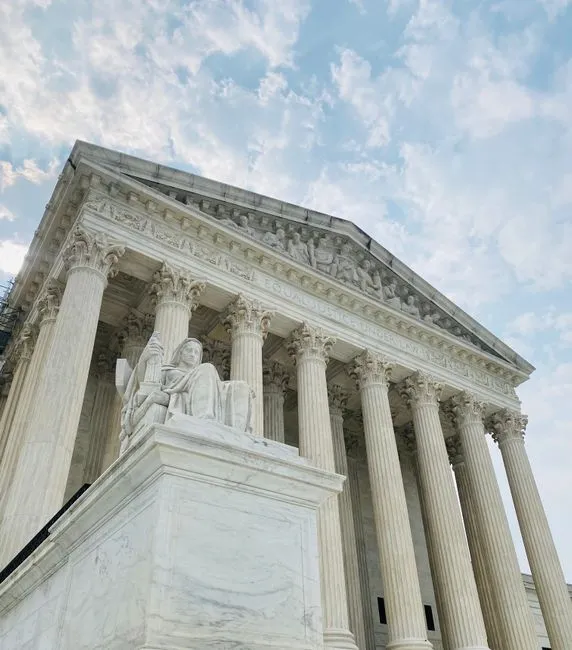
Today, the story has moved from trading floors and crypto conference stages to courtrooms and correctional facilities. Bankman-Fried is imprisoned, and the unfolding legal drama surrounding the FTX collapse appears to be waiting on what may be its final major act: a decision from the U.S. Supreme Court. Whether the Court chooses to take the case, or declines to get involved, will shape how the next chapter of this story is remembered.
From crypto hero to cautionary tale
The rise of FTX was one of the most dramatic stories in modern crypto. The exchange quickly became a household name, attracting retail investors, institutional attention, and a level of brand recognition that few competitors could match. It was not just a platform for buying and selling digital assets; it was positioned as an infrastructure play, a potential gateway for the future of finance.
That reputation made the eventual collapse all the more shocking. When FTX ran into severe liquidity problems, the damage was not limited to one company. It spread across the broader crypto market, exposing how closely the industry’s largest players were connected. Investors lost funds, counterparties were left scrambling, and institutions that had built strategies around FTX products were forced to rethink their risk exposure almost overnight.
At the center of it all was Bankman-Fried, whose leadership style and public persona had become inseparable from the exchange itself. When the truth emerged about the scale of the problems, the fall was not just professional. It became legal, personal, and symbolic. His case quickly transformed into one of the defining stories of crypto’s transition from speculative excess to a more regulated reality.
What the Supreme Court appeal really decides
When a high-profile case reaches the stage where the U.S. Supreme Court is being asked to weigh in, it is easy for the public to assume that the justices are about to rehash every detail of what happened. In reality, that is rarely how the process works.
The Supreme Court does not usually function as a second fact-finding body. It is not generally concerned with reweighing evidence, re-evaluating witness credibility, or determining whether a defendant’s intentions were as bad as prosecutors argued. Instead, the Court tends to focus on specific legal questions. It may examine whether lower courts applied the law correctly, whether procedural errors affected the outcome, or whether a particular legal standard should be clarified or revisited.
It is not a retrial
That distinction matters. If the Supreme Court were to accept the case, it would not necessarily mean that Bankman-Fried is getting a fresh trial or a full do-over. It would mean that the Court believes the legal issues presented are significant enough to warrant national review. In that sense, the outcome may be just as consequential for legal precedent as it is for the individual at the center of the case.
For observers following the FTX saga, this is where the story becomes more nuanced. The public narrative has often focused on the fraud, the collapse, and the personal failure at the heart of it. But the Supreme Court stage is less about spectacle and more about legal architecture. The questions it may consider are likely to be narrower, technical, and potentially far-reaching for future cases.
Why the case still matters beyond Bankman-Fried
Even if the immediate legal outcome is specific to one individual, the broader implications are difficult to ignore. The FTX collapse changed how regulators, investors, and institutions think about risk in crypto. It highlighted the dangers of weak governance, opaque balance sheets, and the absence of clear separation between customer assets and corporate funds.
In many traditional financial systems, exchanges and brokerages operate under strict capital requirements, reporting standards, and oversight mechanisms. Crypto, by contrast, has often moved faster than the regulatory frameworks meant to contain it. The FTX crisis made that gap visible in a way that could not be easily dismissed. It showed that even the largest and most prominent platforms could fail in ways that wiped out billions in value and damaged confidence across the entire sector.
The legal proceedings surrounding Bankman-Fried have therefore become more than a criminal case. They have also become a test case for how the legal system responds to failures in a fast-moving, globally connected digital asset market. If the Supreme Court reviews the case, its reasoning could influence how future crypto-related prosecutions, civil actions, or regulatory enforcement cases are structured and challenged.
What happens if the Court declines?
There is also a strong possibility that the Supreme Court simply declines to take the case. That would not mean the legal drama has failed or that the lower court outcome is being questioned. It would mean that the existing ruling stands as the final word on the issues before the Court.
In such a scenario, the case would effectively move into the next phase of the legal process. Depending on the circumstances, that could involve sentencing matters, post-conviction motions, or the practical realities of serving a prison sentence. The public may not see another dramatic courtroom moment, but the consequences would still be very real.
A denial of review would likely be interpreted as a sign that the legal questions raised do not meet the threshold for national importance, or that the lower courts handled them within existing legal boundaries. For the broader crypto community, that outcome could also serve as a reminder that even the most prominent figures in the industry are not above the reach of the law once the facts are established.
The final act may be quieter than expected
One of the most interesting aspects of this story is how it has evolved from a flashy, high-profile saga into a much more procedural and legalistic process. The early stages were filled with public statements, market reactions, media speculation, and a sense of disbelief. The later stages have been slower, more technical, and less entertainment-driven.
That shift is fitting. The FTX collapse was not just a scandal; it was a structural failure. The lessons it produced are not likely to be resolved in a single headline. They will be worked out over time through regulation, investor behavior, corporate governance reforms, and a more cautious approach to risk in digital asset markets.
As the case waits on its final legal act, the broader story is already clear. The FTX era ended not with a clean exit, but with a reckoning. Sam Bankman-Fried’s journey from celebrated founder to imprisoned defendant has become one of the defining narratives of modern crypto, and the Supreme Court’s next move may determine how that story is framed in the years ahead.
Related read: Robinhood Crypto Volume Jumps 61% in August Despite 38% Year-Over-Year Decline