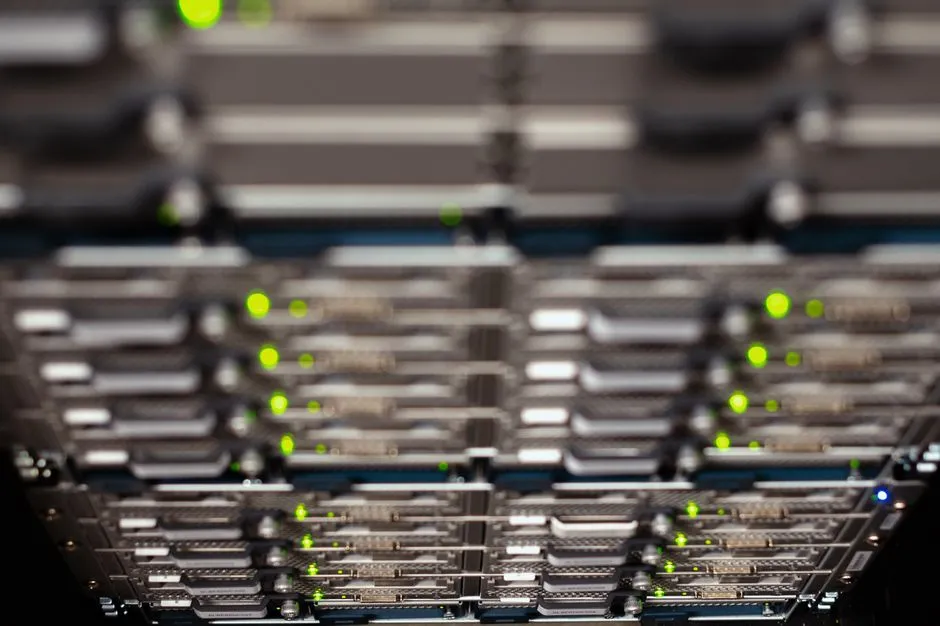
Keel Infrastructure has taken a major step away from Bitcoin mining in the United States, decommissioning all of its U.S. Bitcoin mining sites as it shifts its focus toward artificial intelligence and high-performance computing workloads. The move is significant not just for the company, but for the broader mining industry, because it highlights a growing reality: the infrastructure built for crypto mining is increasingly being seen as a foundation for something much larger — the compute economy of the AI era.
Bitcoin mining has historically been closely tied to energy availability, land access, and industrial power infrastructure. Miners spent years finding locations with cheap electricity, reliable grid connections, room for large-scale hardware, and the ability to expand operations quickly. Those same qualities are now extremely valuable to companies building AI data centers. In other words, the assets that made a Bitcoin mining site profitable may now make it even more valuable for a different kind of workload.
Why Keel Infrastructure Is Making the Shift
At first glance, shutting down Bitcoin mining sites may seem like a rejection of crypto. But the decision is more likely driven by economics, demand, and long-term positioning. AI and high-performance computing workloads require intensive computing power, advanced cooling, and continuous uptime. Companies that already own or operate large facilities with the necessary power capacity can benefit from repurposing those sites rather than starting from scratch.
For Keel Infrastructure, the transition suggests that the company is aiming to move from a mining-focused model to a broader compute infrastructure model. That kind of shift can open new revenue streams, especially as AI demand continues to grow across multiple industries. Instead of relying on one type of workload, the company can potentially serve a wider range of customers with different computing needs.
From Bitcoin Nodes to AI Workloads
Bitcoin mining and AI training are not the same thing, but they share some important infrastructure requirements. Both are compute-intensive. Both require reliable power. Both benefit from scalable facilities and efficient thermal management. As a result, a mining facility that was once optimized for hash rate can sometimes be retooled to support GPU clusters, networking equipment, and other hardware used in AI and high-performance computing.
This does not mean every mining site can be converted easily. Some locations may need upgrades to power delivery, cooling systems, network connectivity, or physical layout. But the core advantage remains: the company already has a site, likely with existing power access and operational experience. In a market where building new data centers can take years, having an existing facility can be a major strategic benefit.
What This Means for the Bitcoin Mining Industry
Keel Infrastructure’s decision is part of a larger trend in the mining industry. As AI demand rises, more mining companies and data center operators are exploring ways to diversify their businesses. Some are expanding into colocation services, cloud computing, or enterprise workloads. Others are focusing on energy trading, power optimization, or hybrid infrastructure models that can support multiple types of compute activity.
The shift also reflects the changing relationship between Bitcoin mining and the broader data center economy. For years, Bitcoin mining was often viewed as a standalone industry. Today, it is increasingly seen as part of a larger infrastructure ecosystem. Mining operators have become skilled at managing power-intensive facilities, maintaining hardware at scale, and operating in competitive energy markets. Those capabilities are valuable in the AI era, even if the underlying workloads are different.
Power Is the New Premium Asset
One of the biggest reasons for this transition is power. AI data centers consume enormous amounts of electricity, and securing reliable grid capacity is one of the hardest parts of building new facilities. Mining sites, especially those that were built in industrial or energy-rich areas, may already have access to the kind of power infrastructure that is difficult to replicate quickly.
This gives established operators an edge. While new data center developers may spend years negotiating grid access, permitting, and construction, companies that already control high-power sites can move faster. That speed matters in a market where AI demand is expanding rapidly and companies are competing to secure compute capacity as soon as possible.
The Bigger Picture: Crypto Infrastructure Meets AI Demand
The story of Keel Infrastructure is not just about one company changing direction. It is about the evolving role of crypto-mining infrastructure in a world where AI is consuming more computing power than ever before. The same physical assets that supported Bitcoin mining — land, power, cooling, and operational expertise — are now being repositioned to meet the needs of a new generation of technology workloads.
This transition may not be smooth for every operator. Some facilities may be better suited to AI workloads than others. Some companies may choose to sell assets, while others may continue mining in select regions. But the direction of travel is clear: the industry is no longer just about Bitcoin. It is about compute, power, and the ability to deliver high-performance infrastructure at scale.
A Lesson in Adaptability
Keel Infrastructure’s decision also serves as a reminder that the mining industry has always required adaptability. Energy prices change. Hardware evolves. Regulatory environments shift. Companies that survive and grow are often the ones that can pivot when conditions change. By moving into AI and high-performance computing, Keel is positioning itself for a market that may offer more diversified opportunities than Bitcoin mining alone.
At the same time, the move does not necessarily signal the decline of Bitcoin mining. It does show, however, that mining infrastructure has become valuable beyond its original purpose. The ability to repurpose sites for AI and HPC workloads gives operators more flexibility and strengthens their long-term strategic position.
Looking Ahead
As AI continues to reshape the technology landscape, more companies are likely to explore similar transitions. Mining operators with strong power access, experienced teams, and scalable facilities could find themselves in a powerful position to serve the growing demand for compute capacity. The next phase of this industry may not be defined only by hash rate, but by how effectively operators can leverage their infrastructure for the workloads that matter most in the AI era.
Keel Infrastructure’s exit from U.S. Bitcoin mining is a clear sign of that shift. By repurposing its sites for AI and high-performance computing, the company is betting on a future where infrastructure flexibility, power access, and operational scale are the most valuable assets of all. Whether that approach becomes a model for the broader industry or simply a smart company-specific play remains to be seen, but the direction is unmistakable: the mining industry is evolving into a broader compute infrastructure business, and AI is driving much of that change.
Related read: Dartmouth Endowment’s Crypto Exposure Falls to About $12 Million as ETF Prices Slide