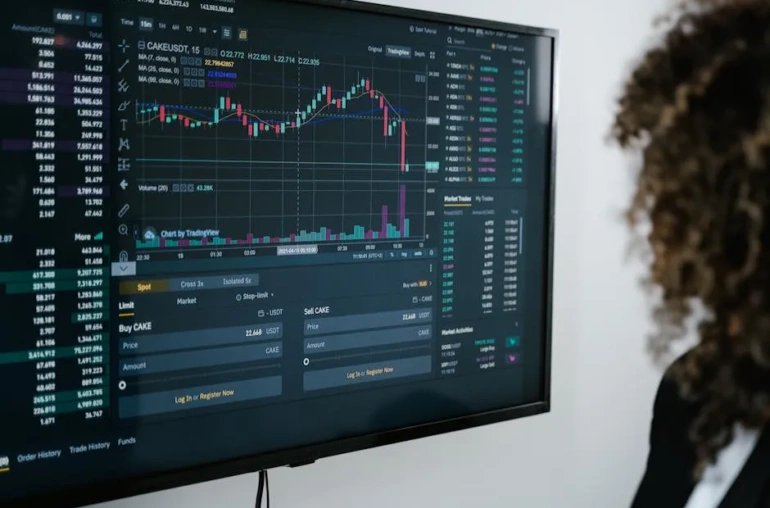
Keel Infrastructure has made a notable move in the evolving world of digital infrastructure: the company has shut down all of its U.S. Bitcoin mining sites and is redirecting those locations toward AI and high-performance computing workloads. At first glance, this may look like a retreat from crypto, but a closer look suggests something more strategic. The company is not abandoning the data center business. Instead, it is trading one type of compute-heavy operation for another, positioning itself where demand, revenue potential, and long-term infrastructure value may be stronger.
A Full Exit From U.S. Bitcoin Mining
The decision to decommission every U.S. Bitcoin mining site is significant because it goes beyond a single facility or a temporary pause. It signals a full-scale operational shift. Bitcoin mining has long been built around a simple but demanding model: secure power, maintain hardware, manage heat, and keep hash rate running as efficiently as possible. When Bitcoin prices rise or difficulty adjusts in a miner’s favor, that model can be highly profitable. But when market conditions tighten, energy prices climb, or hardware becomes less competitive, margins can shrink quickly.
For Keel Infrastructure, repurposing its sites for AI and high-performance computing suggests a desire to move into a more diversified and potentially more stable revenue stream. Rather than relying on the cyclical nature of Bitcoin mining, the company is aiming to host workloads that may offer different economic characteristics, including longer-term contracts, enterprise demand, and higher value per megawatt in some cases.
Why AI and High-Performance Computing Are Pulling Infrastructure Providers
The AI boom has created intense demand for data center capacity. Training large language models, running inference workloads, and supporting advanced analytics all require substantial compute power, fast networking, and reliable electricity. High-performance computing, or HPC, has similar needs, especially for scientific modeling, simulation, rendering, and other resource-intensive tasks. In many regions, finding suitable data center space with the right power capacity can be difficult, which makes existing infrastructure even more valuable.
That is where Keel’s move becomes especially interesting. The company already has sites in the U.S. that were built for continuous, power-intensive operations. Those sites likely have the physical and electrical foundations that are critical for data center work. Converting an existing facility is often more efficient than starting from scratch, particularly when land, grid access, cooling, and connectivity are already in place.
The Strategic Logic Behind Repurposing Mining Sites
Power, Space, and Cooling
One of the biggest advantages of Bitcoin mining sites is their existing relationship with electricity. Mining facilities are designed to run around the clock, and they often have robust power delivery systems. AI and HPC workloads may have different performance requirements, but the core need for consistent, high-capacity power remains. If Keel can adapt its sites to meet the specific needs of AI customers, it can preserve much of the underlying value of the infrastructure.
Cooling is another major factor. Both Bitcoin mining and AI data centers generate substantial heat, so facilities that are already engineered for thermal management may have a head start. The challenge is that AI workloads can place different demands on cooling, networking, and rack density. Still, the foundation is far more valuable than an empty plot of land or a generic warehouse.
From Hashrate to Compute Revenue
Bitcoin mining revenue is closely tied to the price of Bitcoin, network difficulty, and operational efficiency. AI and HPC revenue, on the other hand, is often tied to capacity utilization, service agreements, and the ability to attract enterprise or research customers. That can create a more predictable income stream, especially if Keel secures long-term leases or hosting contracts. For an infrastructure provider, that kind of stability can be just as important as peak profitability.
There is also a broader market signal here. AI workloads are not a temporary fad. Even if the pace of innovation slows or the market matures, demand for compute is unlikely to disappear. Cloud providers, research institutions, and technology companies all need physical infrastructure to run their workloads. By moving into this space, Keel is aligning itself with a growth sector that has strong long-term tailwinds.
What This Means for Bitcoin Miners and Data Center Operators
Keel’s decision may not be unique, but it is still worth paying attention to. It reflects a growing reality in the industry: Bitcoin mining and data center operations are increasingly intertwined. Many miners have explored energy arbitrage, where they use the same power infrastructure for mining when Bitcoin is profitable and for other workloads when it is not. Others have fully converted facilities into data centers. Keel’s move appears to represent a more decisive version of that trend, with a complete U.S. exit from Bitcoin mining in favor of AI and HPC.
This does not necessarily mean that Bitcoin mining is losing relevance. Mining remains an important part of the Bitcoin ecosystem, and many operators continue to focus on efficiency, scale, and cost control. But it does suggest that some infrastructure providers are reassessing where the best long-term value lies. In a market where power costs, hardware depreciation, and revenue volatility can all affect profitability, diversification becomes an attractive strategy.
A Broader Signal for the Crypto Industry
The crypto industry has often been viewed through the lens of speculation, but infrastructure is where much of the real-world impact happens. Mining sites, data centers, and energy systems are physical assets that require capital, planning, and operational discipline. When companies like Keel Infrastructure choose to repurpose their facilities for AI and HPC, it shows that the resources built for crypto can serve wider technological needs. That flexibility can be a major advantage.
It also highlights how quickly the digital economy is changing. A site built for Bitcoin mining a few years ago may now be better suited to support AI workloads. That kind of adaptability is valuable in an industry where demand can shift rapidly. For investors, operators, and industry observers, the key takeaway is not that Bitcoin is being abandoned. The key takeaway is that infrastructure is becoming a strategic asset that can be redirected toward the most valuable use case.
Keel Infrastructure’s shift from U.S. Bitcoin mining to AI and high-performance computing is a clear example of how the industry is evolving. It is a move that combines practical asset management with a bet on the continued growth of compute-intensive workloads. If the company can successfully convert its sites and attract the right customers, this transition could become a model for other operators looking to future-proof their infrastructure in a rapidly changing market.
Related read: Xora Finance Connects Stellar and XRP Ledger With Native Settlement