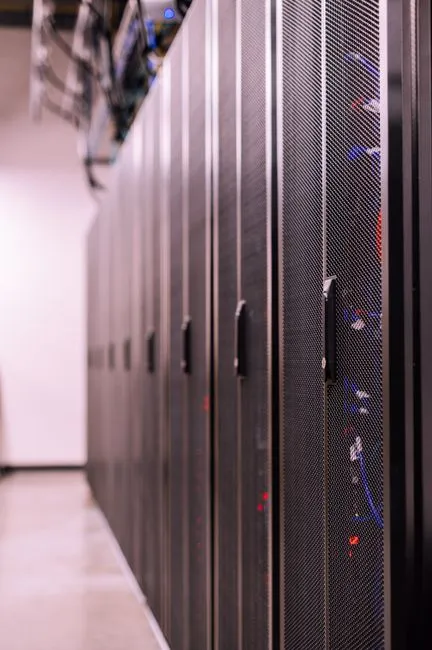
Bitcoin miners may be facing a more complicated business environment, but a growing shift toward artificial intelligence could create an unexpected opportunity. As communities and voters across the United States push back against new data center developments, Bitcoin mining companies that already operate large-scale facilities may gain an advantage over AI firms starting from scratch.
The opportunity is rooted in infrastructure. Bitcoin miners have spent years building or acquiring sites with access to substantial electricity, cooling systems, high-capacity networking, and industrial-scale computing environments. Although these facilities were designed primarily for cryptocurrency mining, some operators are now exploring how they can be adapted for artificial intelligence workloads.
Why Data Center Restrictions Matter
The rapid growth of artificial intelligence has created enormous demand for computing power. Training and operating advanced AI models requires specialized graphics processing units, reliable power supplies, sophisticated cooling, and data center capacity close to major network connections. Technology companies are racing to secure these resources, but new facilities are becoming more difficult to build.
In several parts of the United States, local residents and elected officials have raised concerns about the impact of large data centers. Common objections include high electricity consumption, pressure on local power grids, water usage for cooling, noise, and the potential effect on household utility bills. Some communities are responding with stricter zoning rules, longer approval processes, or temporary restrictions on new developments.
These obstacles can make it expensive and time-consuming for AI companies to develop new capacity. Projects may require years of planning, environmental reviews, grid negotiations, and construction before they become operational. Existing Bitcoin mining sites, by contrast, may already have many of the basic characteristics needed for high-performance computing.
Bitcoin Miners Already Have Critical Infrastructure
Bitcoin mining is an energy-intensive industry. Large mining operators typically locate their facilities near affordable and reliable sources of electricity. They also invest in transformers, substations, cooling equipment, power management systems, and industrial buildings capable of supporting thousands of machines.
That infrastructure does not automatically make a mining site suitable for AI, but it can provide a valuable starting point. Rather than developing an entirely new campus, an AI company or mining operator may be able to repurpose part of an existing facility. This could shorten construction timelines and reduce some of the regulatory and logistical hurdles involved in launching a new data center.
For mining companies, the strategy also offers a way to diversify revenue. Bitcoin mining income can be highly volatile because it depends on the cryptocurrency’s price, network difficulty, transaction activity, and the cost of electricity. AI hosting or high-performance computing services could provide a second source of income that is less directly tied to the digital asset market.
Why the Transition Is Not Simple
Despite the apparent advantages, converting a Bitcoin mining operation into an AI data center is not a straightforward process. The hardware used for Bitcoin mining is highly specialized. Application-specific integrated circuit machines, commonly known as ASICs, are designed to perform one task: solving the computational problems required by the Bitcoin network.
AI workloads require a different class of equipment. They generally depend on powerful GPUs or other accelerators capable of handling parallel calculations, large memory requirements, and constantly changing software frameworks. Replacing mining hardware with AI servers can require significant capital, and the equipment itself may be subject to supply constraints and long delivery times.
Cooling is another major consideration. Some AI systems generate substantial heat and may require advanced air cooling or liquid-cooling systems. A facility built for Bitcoin mining may need extensive modifications to support these requirements. Networking is equally important, since AI customers often need high-speed, low-latency connections between servers and access to reliable data transmission infrastructure.
Power Access Could Become a Competitive Advantage
Electricity remains one of the most important advantages Bitcoin miners can offer. AI data centers consume large amounts of power, and securing sufficient capacity is becoming increasingly difficult in regions where grid demand is already rising.
Mining companies that have negotiated long-term power agreements or established relationships with utilities may be better positioned to support new computing workloads. Their experience managing energy consumption may also help them adjust operations according to grid conditions and market prices.
However, power availability alone is not enough. AI customers typically require strict uptime guarantees, stable operating conditions, strong cybersecurity, and compliance with demanding technical standards. Mining operators looking to compete in the AI market will need to demonstrate that they can deliver enterprise-grade reliability rather than simply provide access to electricity and physical space.
The Broader Impact on Bitcoin Mining
The move toward AI could reshape the economics of Bitcoin mining. Some operators may dedicate their best sites to AI workloads if those contracts generate more predictable or attractive returns. Others could use a flexible model, switching between Bitcoin mining and AI computing depending on market conditions, energy prices, and customer demand.
This flexibility may become especially valuable during periods when Bitcoin mining margins are under pressure. After scheduled reductions in Bitcoin’s block reward, miners often face increased competition and a greater need to control operating costs. Alternative uses for their facilities could help companies remain profitable while preserving their ability to participate in the Bitcoin network.
At the same time, the expansion into AI could introduce new risks. AI customers may expect long-term service commitments, specialized technical support, and substantial investments in equipment. A failed conversion or weak demand for hosting services could leave miners with expensive infrastructure that does not perform as expected.
What to Watch Next
The success of this strategy will depend on several factors: the pace of AI demand, the availability of suitable computing hardware, local electricity policies, and the willingness of mining companies to invest beyond their traditional business model. Regulatory treatment will also matter. Repurposing an existing facility may be easier than building a new one, but it may still require permits, environmental reviews, and community approval.
Investors should also distinguish between genuine AI infrastructure businesses and companies using AI language primarily for marketing. A credible transition should include clear plans for hardware deployment, cooling upgrades, customer contracts, power capacity, and expected revenue. Without those details, claims about becoming an AI data center may remain speculative.
U.S. resistance to new data centers could therefore create an opening for Bitcoin miners, but the advantage is not guaranteed. Existing facilities, power access, and operational experience give miners a potentially valuable head start. Still, adapting those assets to meet the demanding requirements of artificial intelligence will require substantial capital, technical expertise, and careful execution. The companies that succeed will likely be those capable of combining energy management and digital asset experience with the reliability and specialization expected by the AI industry.
Related read: Nomura Reportedly Weighs Sale of Crypto Unit Laser Digital After European Losses