A U.S. fusion startup has made a claim that sounds like it belongs in a science fiction novel: it says it has turned mercury into gold. If the claim is accurate and can be scaled, it would be a remarkable scientific breakthrough. But beyond the physics and chemistry, it also raises a surprisingly practical question for markets and monetary debate: what happens to gold’s status as the world’s traditional store of value if its supply can be increased in a way that was never possible before?
For Bitcoin supporters, the answer may be less about panic and more about opportunity. A potential “infinite mint bug” in the physical gold supply could actually strengthen the case for Bitcoin as a more reliable digital gold. Not because gold suddenly becomes useless, but because scarcity, predictability, and verifiable supply rules may become even more important.
What is the alleged “infinite mint bug”?
The phrase “infinite mint bug” is, of course, a metaphor. Gold has always been produced through mining and refining, but those processes are limited by geology, energy, capital, and time. You cannot simply print more gold the way a central bank can expand a fiat currency supply. That physical limitation has been central to gold’s monetary reputation for centuries.
The idea that a fusion startup has transmuted mercury into gold challenges that assumption. If it is true, the implication is that gold may no longer be as scarce as the market has historically assumed. It would not necessarily mean unlimited gold overnight, but it could mean a new source of supply that is not constrained in the same way as conventional mining.
That is the key point. Gold’s value has never depended only on its industrial uses or aesthetic appeal. It has also depended on the belief that its supply is finite and difficult to expand. If that belief weakens, the monetary narrative around gold could shift.
Why gold’s scarcity has mattered for so long
Gold became money not because it was the only shiny metal, but because it had a useful combination of properties. It is durable, divisible, portable, recognizable, and relatively rare. More importantly, new gold enters the market slowly. Mining is expensive, energy-intensive, and subject to diminishing returns. That gives gold a kind of structural scarcity.
For investors, central banks, and sovereigns, that scarcity matters. Gold is not just a commodity; it is a monetary asset. It is used as a reserve, a hedge against currency debasement, and a symbol of wealth across cultures. Its appeal is partly emotional, but it is also deeply economic. The belief that gold supply cannot be arbitrarily expanded gives it a premium that many other assets do not enjoy.
If a new technology could make gold production more scalable, that premium could be challenged. Not eliminated, perhaps, but at least questioned. And when the scarcity story of one monetary asset is questioned, investors often look for alternatives with a stronger supply framework.
Why this could strengthen Bitcoin’s digital gold narrative
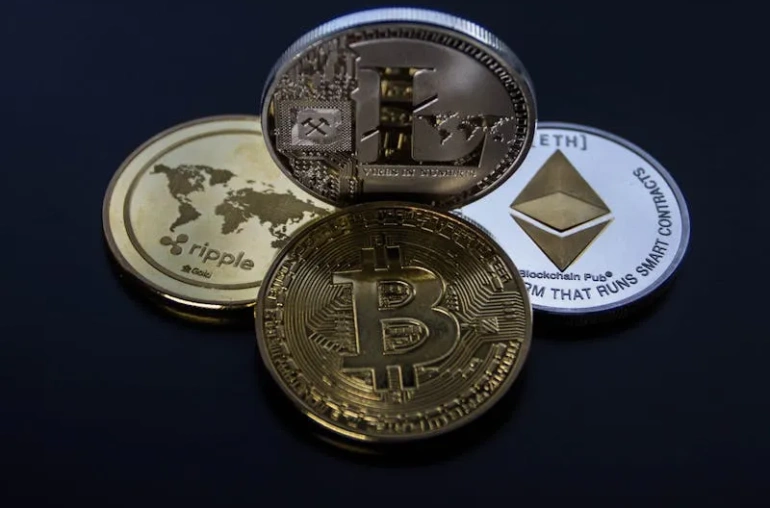
Bitcoin has long been described as “digital gold,” but that comparison is not perfect. Gold is physical, tangible, and centuries old. Bitcoin is digital, newer, and dependent on network security, software maintenance, and public trust in its protocol. Still, Bitcoin shares several monetary traits with gold: limited supply, global accessibility, divisibility, and resistance to arbitrary creation by a single authority.
The biggest difference is verifiability. Bitcoin’s supply is encoded in its protocol. The total supply is capped at 21 million coins, and the issuance schedule is transparent, deterministic, and publicly auditable. No government, corporation, or lab can quietly mint more Bitcoin without changing the rules in a way that the network would resist. In that sense, Bitcoin’s scarcity is not just a physical fact; it is a cryptographic and economic fact.
If gold’s physical scarcity becomes less absolute, Bitcoin’s protocol-defined scarcity may look more attractive by comparison. That does not mean Bitcoin becomes a “better” asset for everyone. It simply means that its core monetary argument becomes sharper: if you are seeking a scarce, non-sovereign store of value, Bitcoin offers a supply model that is easier to verify and harder to manipulate.
Scarcity becomes more valuable when it is in doubt
One of the most interesting dynamics in markets is that uncertainty about an asset’s supply can increase demand for assets with clearer supply rules. If investors begin to question whether gold can be produced more easily than previously believed, they may not abandon gold entirely, but they may allocate a larger share of their portfolio to assets with more predictable issuance.
That is where Bitcoin enters the conversation. Its issuance is not dependent on a physical breakthrough, a mine discovery, or a political decision. It is based on a fixed schedule that is already known. For some investors, that may be a compelling advantage, especially if the gold narrative begins to feel less stable than it once did.
The shift from physical trust to protocol trust
There is also a broader philosophical shift happening in modern finance. For centuries, people trusted institutions, metals, and physical assets because they were tangible and difficult to fake. Today, trust is increasingly mediated by mathematics, cryptography, and distributed networks. Bitcoin represents that shift.
If a fusion startup can transmute elements, it may also accelerate the idea that physical scarcity is not as immutable as people thought. In a world where physical constraints can be overcome by advanced technology, scarcity defined by code may become more meaningful. That is not a criticism of gold. It is a reflection of how monetary trust is evolving.
But gold is unlikely to lose its status quickly
Even if the claim is true, it would be a mistake to assume gold’s role in the global economy would collapse. Gold has deep cultural, financial, and institutional roots. Central banks hold it. Jewelry markets consume it. Industrial applications use it. Its price is not determined solely by monetary scarcity; it is also influenced by inflation fears, currency risk, geopolitical tensions, and investor sentiment.
In other words, gold has inertia. Even if its supply story changes, it would still remain a major asset class. The question is not whether gold becomes worthless. The more realistic question is whether its scarcity premium weakens enough to shift some demand toward alternative hard assets, particularly Bitcoin.
What investors should watch next
The next few developments will matter more than the initial claim. Investors should watch for independent verification of the transmutation process, the cost and scale of production, and whether the resulting gold is chemically and economically viable. If the process is expensive or limited in output, its macroeconomic impact may be modest. If it becomes scalable and cost-effective, the implications could be far larger.
Markets will also watch how the gold complex reacts. If gold producers, miners, and refiners begin repositioning their narratives around scarcity, that could signal that the industry itself sees a long-term shift. At the same time, Bitcoin’s price action may not immediately reflect the news. Crypto markets often react to liquidity, sentiment, regulation, and broader risk appetite before they fully price in a structural monetary argument.
Still, the narrative matters. In asset markets, stories shape expectations, and expectations shape allocation. A credible challenge to gold’s scarcity could make Bitcoin’s fixed supply more attractive, not because gold becomes a bad asset, but because the standard for what makes a monetary asset scarce may become clearer.
Bottom line
A U.S. fusion startup’s claim to have turned mercury into gold is extraordinary, and its real-world implications remain uncertain. But if it holds up, it could weaken one of the pillars of gold’s traditional monetary argument: the idea that its supply is inherently limited. That does not automatically make gold less valuable, but it could make scarcity more important as a monetary property. And in that environment, Bitcoin’s fixed, transparent, and protocol-enforced supply may become even more compelling.
In short, gold’s potential “infinite mint bug” may not destroy gold. But it could help clarify why Bitcoin exists. For investors looking for a scarce, non-sovereign store of value, the story may ultimately make Bitcoin look less like a speculative alternative and more like a rational response to a changing monetary landscape.
Related read: Binance Ether Reserves Face Estimated 6% Shortfall After Wallet Hack