The collapse of FTX is still one of the most defining moments in the history of digital assets. The exchange, once one of the largest names in cryptocurrency, filed for bankruptcy in November 2022 after a liquidity crisis rapidly turned into a full-blown insolvency. In the months that followed, the story became dominated by questions about missing funds, insider trading, executive conduct, and the fate of customer assets. But amid all the legal drama and financial fallout, one lesser-known detail has taken on new relevance: FTX had acquired a 20% stake in Genesis Digital Assets before its bankruptcy.
That investment may not have seemed especially important at the time. Crypto mining was already a crowded and capital-intensive field, and many companies were either expanding aggressively or struggling to stay profitable. Yet today, that same mining-linked infrastructure appears to be moving toward a very different purpose: supporting artificial intelligence workloads. In other words, a venture born in the world of cryptocurrency mining is now being reshaped around one of the fastest-growing technology markets of the decade.
A mining stake with a second life
Genesis Digital Assets was tied to the broader ecosystem of crypto mining and digital asset infrastructure. At the time of FTX’s investment, the company was positioned within a sector built around energy consumption, hardware deployment, and large-scale computing operations. Mining companies often operate facilities that are designed to handle intense computational demands, continuous power draw, and significant heat output. Those are not trivial requirements.
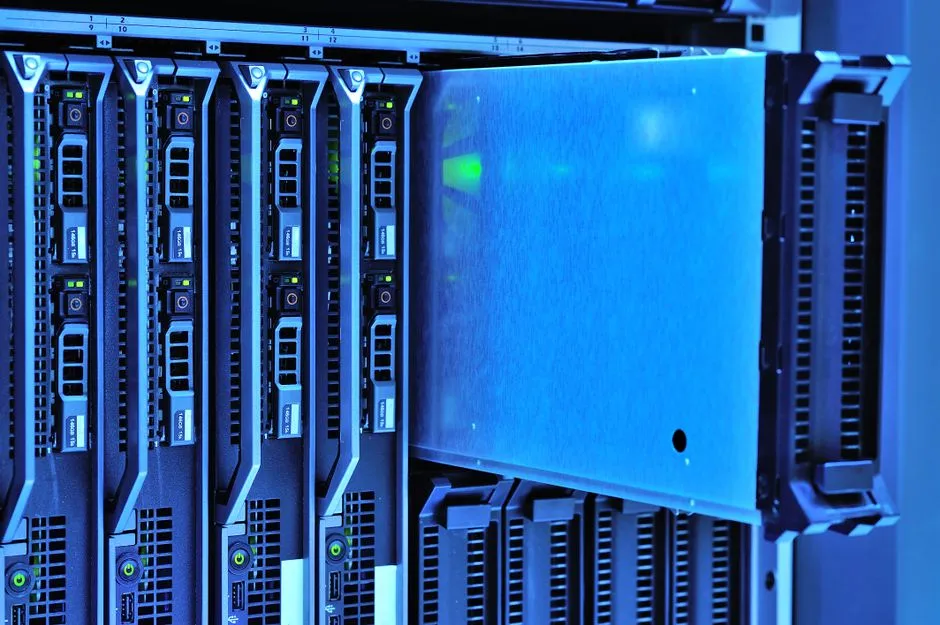
When a company builds infrastructure for mining, it is usually not just buying a few machines and plugging them into a warehouse. It is often constructing or leasing data-center-like environments. It is arranging power contracts, installing cooling systems, securing network connectivity, and managing hardware at scale. In some cases, the facilities are purpose-built for the specific workloads required by proof-of-work mining. In others, they are flexible enough to support other high-performance computing tasks.
That flexibility is what makes the pivot to AI so interesting. The physical layer that once supported crypto mining can, in many cases, be repurposed for machine learning training, model inference, distributed computing, and other AI-intensive applications. The underlying assets—real estate, power capacity, cooling systems, networking, and technical expertise—do not disappear just because the original use case changes. They can be redirected.
Why AI changed the economics of mining infrastructure
For much of the last decade, crypto mining was treated as a standalone industry. Its economics were closely tied to coin prices, network difficulty, energy costs, and hardware efficiency. A mining operation could thrive during a bull market and struggle during a downturn. Profitability was often narrow, and competition was fierce.
Artificial intelligence changed that equation. The explosive growth of AI has created massive demand for compute capacity. Training large language models, running generative AI systems, and serving inference requests all require serious processing power. Companies are competing for GPUs, high-bandwidth interconnects, reliable electricity, and facilities that can sustain long-duration workloads. In many regions, securing that kind of infrastructure is as difficult, if not more difficult, than securing the hardware itself.
This is where former mining assets begin to look valuable. A facility that was built to run mining rigs may already have the power redundancy, cooling capacity, and operational discipline needed for AI workloads. If the hardware mix can be updated or if the site can be reconfigured for GPU clusters, the transition becomes far more practical than starting from scratch. In a market where compute availability is a bottleneck, even partially repurposed infrastructure can be strategically important.
The FTX connection adds a layer of complexity
Of course, the FTX angle makes this story more complicated than a simple business pivot. When FTX went bankrupt, its holdings and investments became part of a larger legal and financial process. The estate, its administrators, creditors, and counterparties all had claims, interests, and obligations to navigate. Any value created by assets once associated with FTX does not exist in a vacuum. It is shaped by bankruptcy law, creditor recoveries, ongoing litigation, and the broader questions of how the estate’s holdings are managed or distributed.
That does not mean the repurposing is without significance. In fact, it may be one of the more practical examples of how distressed digital-asset assets can find new uses. Rather than simply being written off or liquidated under pressure, certain physical and operational assets may be better served by being adapted to a higher-demand market. If a mining-related stake or facility can be redirected toward AI, it may generate more value than it would have in its original context.
Still, the path is not clean. Ownership questions, contractual obligations, regulatory considerations, and the pace of asset recovery all matter. The fact that a former FTX-linked venture is now associated with AI does not automatically mean that value will flow smoothly to any particular party. It simply means the underlying assets are being evaluated in a new economic environment.
A broader trend: crypto’s physical layer is becoming AI infrastructure
The FTX-Genesis story is not an isolated case. It reflects a wider shift happening across the crypto industry. Many companies that built their operations around mining are now exploring AI-adjacent businesses. Some are moving into cloud compute. Others are positioning themselves as providers of decentralized computing capacity. Still others are simply adapting their facilities to serve enterprise clients who need high-performance hardware and reliable data-center operations.
This makes sense for several reasons. First, AI demand is global and growing. Second, crypto companies often already understand energy markets, hardware maintenance, and large-scale operations. Third, the stigma around mining has begun to shift in some regions, especially when facilities can be presented as part of a broader compute economy rather than solely tied to cryptocurrency price cycles.
In that sense, the transition from mining to AI is both a survival strategy and a business opportunity. It allows legacy crypto infrastructure to remain relevant in a market that is increasingly defined by data, models, and compute scarcity. For companies that can make the transition efficiently, it may be one of the most important pivots of the next several years.
What to watch next
Several factors will determine whether this kind of repurposing becomes a major theme or remains a niche development. The first is the legal and financial resolution of assets tied to collapsed platforms. The second is the availability of suitable facilities with the right power and cooling profiles. The third is the ongoing demand for AI compute, which could accelerate or slow depending on enterprise adoption, model efficiency, and investment cycles.
There is also the question of how these assets are perceived by investors and regulators. If former mining operations can be clearly repositioned as AI infrastructure providers, they may attract new funding and new customers. If they remain mired in legal uncertainty or outdated business models, the opportunity may be limited.
What is clear, however, is that the boundary between crypto infrastructure and AI infrastructure is becoming thinner. Hardware that once measured its success in hash rate is now increasingly measured by its ability to support machine learning workloads. And in that shift, even assets once tied to one of crypto’s most famous failures may be finding a new purpose.
Ultimately, the story of FTX’s mining stake is a reminder that the crypto industry is not just about software, tokens, or speculative trading. It also has a physical layer: power, land, cooling, hardware, and operational expertise. As AI demand continues to reshape the global compute economy, that physical layer is becoming more valuable than ever. What began as a crypto mining investment may now be better understood as an early bet on the infrastructure that underpins the next major technology cycle.
Related read: Crypto PACs Unveil $2.7M Ad Blitz for Pro-Crypto House Candidates as Midterms Loom