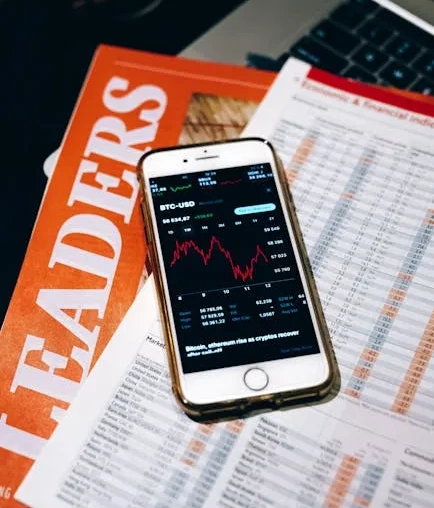
When Bitcoin surges back above major price levels, the headlines usually focus on traders, investors, and even mainstream media chasing the next big move. But behind the candles, there is a quieter group that is often more influential than most: market makers. These sophisticated trading firms are not necessarily trying to predict whether Bitcoin will go up or down. Instead, they are working to collect yield, manage risk, and profit from the volatility that comes with a fast-moving market.
As Bitcoin rallies, many participants assume that every trader is taking a directional position. In other words, they believe that market participants are either long because they expect the price to rise, or short because they expect it to fall. That is not always the case, especially for professional market makers. Their job is not to gamble on price direction. Their job is to provide liquidity, earn a spread, and manage inventory in a way that can remain profitable whether the market is trending upward, downward, or moving sideways.
What market makers actually do
At its simplest, a market maker helps keep trading efficient by standing ready to buy and sell assets. On an exchange, for example, a market maker may place buy orders below the current price and sell orders above it. When a retail trader or institutional buyer wants to sell, the market maker may be the one providing the buy order. When someone wants to buy, the market maker may be providing the sell order.
In return, the market maker earns the difference between the buy and sell prices, known as the spread. This may sound like a small edge, but when trading volume is high, those small differences can add up quickly. That is why large market-making firms can generate meaningful revenue even without taking a strong view on where the asset is heading next.
Why Bitcoin’s rally does not require a directional bet
Bitcoin’s move back above $80,000 has reignited interest across the crypto market. Higher prices often bring higher volume, more speculation, and more activity. For market makers, that is a favorable environment. More trading activity means more opportunities to capture spreads, rebalance books, and use structured strategies that profit from market movement rather than from a single price forecast.
The key point is that a rally does not automatically mean every participant is bullish. Some traders are certainly long, yes. But many sophisticated firms may be using options, futures, swaps, and other instruments to hedge their exposure. They may hold Bitcoin, but they may also be short futures or options to offset that exposure. The result can be a position that is less about “Bitcoin will go higher” and more about “the market is active enough for us to capture yield.”
Collecting yield instead of predicting price
This is one of the most misunderstood parts of institutional trading. A firm can be active in a rising market while remaining largely neutral on direction. It can earn from volatility, lending, funding rates, market-making fees, and structured options positions. In other words, the market maker is not trying to win the price war. It is trying to win the activity war.
That distinction matters because it changes how we should interpret market behavior. When Bitcoin rallies, it is easy to assume that smart money is piling in with aggressive directional bets. But often, the most sophisticated participants are not placing bold wagers on the next move. They are positioning themselves to benefit from the chaos, the order flow, and the imbalance between buyers and sellers.
How market makers profit in a Bitcoin rally
There are several ways market makers can benefit from a strong Bitcoin move without making a full long or short commitment.
- Spread capture: The most basic source of profit is buying low and selling high within a tight range. High volatility can create repeated opportunities to buy and sell as prices oscillate.
- Options and volatility strategies: Some firms sell options or use structured strategies that profit when volatility behaves in a certain way. These strategies can be designed to be less dependent on a single direction.
- Futures and basis trading: Market makers may trade the difference between spot Bitcoin and futures prices. This is not always a directional bet; it can be a way to capture the premium or discount between markets.
- Lending and funding rates: In some environments, holding assets can generate additional yield through lending or funding payments. This can help offset risk while still keeping a position in the market.
- Inventory management: Market makers constantly adjust their holdings to reduce risk. If they accumulate too much Bitcoin, they may hedge it with derivatives. If they accumulate too little, they may adjust their order flow to rebalance.
These strategies can look complex, but the underlying idea is simple: make money from the market’s structure, not just its direction.
What this means for the broader market
When market makers are active, they tend to improve liquidity. That means tighter spreads, faster execution, and smoother trading conditions. In a rally, this can make the market feel more efficient, even if the price action is still volatile. However, it can also create a subtle illusion. A market may look more stable than it really is because large firms are absorbing flow and managing risk in ways that are not immediately visible.
This is why it is important not to read every price move as a signal of universal conviction. A rally can be supported by retail enthusiasm, institutional allocation, and market-making activity all at the same time. Each of those participants has a different objective. Retail traders may be chasing momentum. Institutional investors may be rebalancing portfolios. Market makers may simply be earning yield while managing exposure.
The risk behind the calm
None of this means that market makers are immune to risk. In fact, their strategies can become dangerous if assumptions break down. A sudden gap, a liquidity vacuum, or a sharp reversal can force them to adjust quickly. If they hold inventory that moves against them faster than they can hedge, losses can occur. That is why these firms rely heavily on real-time data, automated systems, and strict risk controls.
They are not fearless. They are simply more disciplined. Their edge is not that they know the future. Their edge is that they can react faster, diversify their exposure, and monetize multiple sources of return at the same time.
Final take
Bitcoin’s rally above $80,000 is certainly eye-catching, but the most interesting story may be what is happening underneath. While many traders are focused on whether the next move is up or down, market makers are focused on something different: how to earn yield without being trapped by the market’s next headline. They are collecting spreads, managing volatility, and using structured strategies that allow them to stay active without making a bold directional commitment.
In a market this fast-moving, that approach may be more sustainable than trying to call every turn. The lesson is simple: not every participant in a rally is betting on the price. Some are betting on the process.
Related read: Bitcoin ETFs End 9-Day Inflow Streak as BTC Dips Below $78K