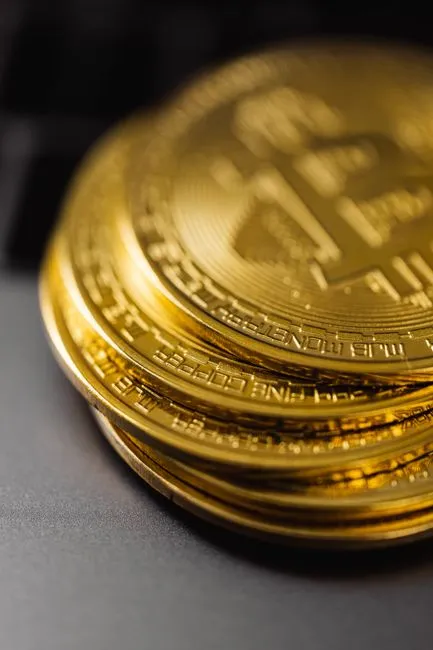
A US fusion startup has reportedly claimed that it can transform mercury into gold, raising an intriguing question for investors and cryptocurrency supporters: if technology eventually makes gold easier to produce, could Bitcoin become more valuable as a form of digital gold?
The idea sounds like something from science fiction. Gold has been prized for thousands of years partly because it is scarce, difficult to extract, and nearly impossible to manufacture economically. If a new process could reliably create gold from another element, it would challenge one of the central assumptions behind the precious metal’s value.
However, the claim also needs to be viewed carefully. Turning mercury into gold is not the same as producing inexpensive, investment-grade gold at commercial scale. The scientific process, energy requirements, operating costs, safety considerations, and purity of the resulting metal would all determine whether the technology is genuinely disruptive—or simply an interesting laboratory achievement.
Why Gold’s Scarcity Matters
Gold has maintained its monetary appeal because its supply grows slowly. New gold is added through mining, but extraction requires significant investment, specialized equipment, energy, and time. Even when prices rise, miners cannot instantly flood the market with new supply.
That limited supply has helped gold serve as a store of value and a hedge against inflation, currency weakness, and financial instability. Investors often treat it as a form of insurance, particularly when confidence in governments or financial institutions declines.
A commercially viable method of creating gold could weaken that scarcity premium. If producers could manufacture large quantities at a cost below the market price, gold prices would likely face pressure. The effect would depend on how quickly the technology could scale and whether the newly created gold could enter traditional markets.
What an “Infinite Mint Bug” Would Mean
The phrase “infinite mint bug” is borrowed from the world of software and video games. It describes a flaw that allows users to create an asset repeatedly without paying the normal cost. Applied to gold, the concept refers to the possibility that technology could bypass the natural and economic limitations that have historically restricted supply.
Yet there is an important distinction between theoretical abundance and practical abundance. Nuclear or fusion-based transmutation may require extraordinary amounts of energy and highly complex equipment. Mercury is also toxic, and handling it safely adds additional costs and regulatory challenges.
Even if gold atoms can be produced, the process may not be profitable. A scientific breakthrough becomes economically meaningful only when it can deliver a consistent product at a price competitive with mined gold. Until that happens, the threat to the gold market remains speculative.
Could Bitcoin Benefit?
Bitcoin supporters frequently describe the cryptocurrency as “digital gold.” Like gold, Bitcoin has a limited supply. Its protocol caps the total number of bitcoins at 21 million, while new coins are released according to a predetermined issuance schedule. Unlike gold production, that monetary policy cannot be changed by increasing mining activity or developing a new extraction method.
If confidence in gold’s scarcity declined, some investors might look for an alternative asset with a more predictable supply. Bitcoin could benefit from that narrative, especially among people who already view digital assets as a modern form of monetary protection.
Bitcoin also offers characteristics that physical gold cannot easily match. It can be transferred globally, divided into very small units, and stored without vaults or physical transportation. Ownership can be verified through a public blockchain, and the asset does not depend on the continued operation of a particular mine or refinery.
Why Bitcoin Would Not Automatically Replace Gold
A potential increase in gold supply would not guarantee higher Bitcoin prices. Gold and Bitcoin appeal to different investors and carry very different risks. Gold has a long history as a monetary asset, jewelry material, industrial commodity, and central-bank reserve. Bitcoin, by comparison, remains a relatively young and highly volatile technology.
Bitcoin’s fixed supply is also only one part of its investment case. Its value depends on adoption, network security, regulation, market liquidity, user demand, and confidence in the wider cryptocurrency ecosystem. A change in gold’s supply dynamics might improve Bitcoin’s marketing narrative, but it would not remove the risks associated with digital assets.
There is also no guarantee that investors would abandon gold if production became easier. Lower prices could make gold more accessible to consumers, manufacturers, and buyers in emerging markets. Central banks may continue holding it for diversification and geopolitical reasons even if its scarcity premium declines.
The Bigger Question: What Makes an Asset Valuable?
The debate highlights a broader issue in finance: scarcity alone does not create value. An asset also needs demand, utility, trust, liquidity, and a credible system for ownership. Gold’s value comes from its physical properties, cultural significance, history, and role in global markets. Bitcoin’s value comes from its decentralized network, digital portability, censorship resistance, and predetermined monetary policy.
If gold could be produced more easily, its investment profile might change. But Bitcoin would still need to prove that it can function as a durable store of value through market cycles, regulatory changes, technological challenges, and periods of intense volatility.
Final Thoughts
A successful method for converting mercury into gold could challenge one of the oldest assumptions in finance: that gold is valuable because its supply is inherently difficult to expand. For Bitcoin, that possibility could strengthen the argument that a mathematically limited digital asset is more predictable than a physical commodity whose production methods may evolve.
For now, the key issue is not whether gold transmutation is theoretically possible, but whether it can become safe, affordable, scalable, and economically competitive. Until those questions are answered, the “infinite mint bug” remains an intriguing thought experiment rather than a proven threat to gold. Bitcoin may gain attention from the debate, but its long-term value will ultimately depend on adoption and utility—not simply on the possibility that gold could become less scarce.
Related read: Binance Ether Reserves Face Estimated 6% Shortfall After Wallet Hack