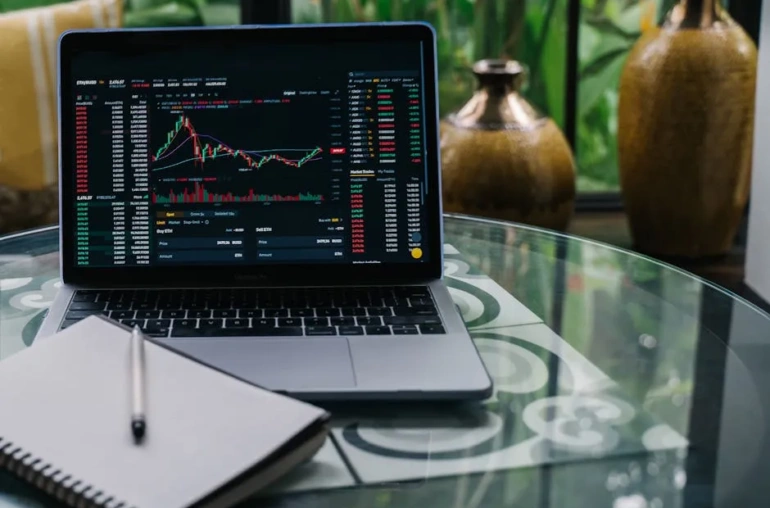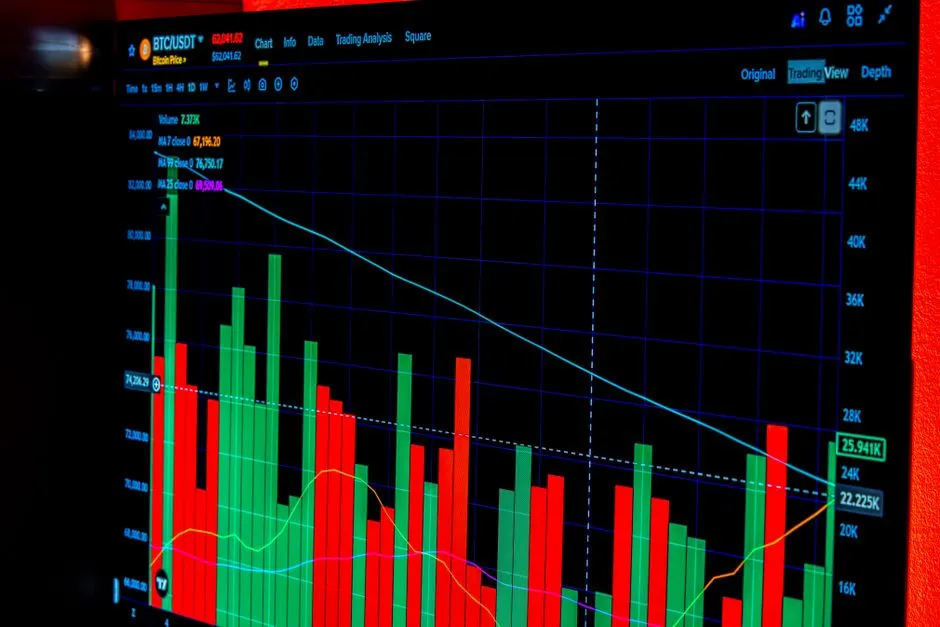
Bitcoin’s latest sell-off has once again put pressure on the entire crypto market, reminding investors that the sector remains highly sensitive to shifts in demand, leverage, and investor confidence. According to 21Shares, the downturn is being driven less by a single headline event and more by a combination of weak underlying demand and forced liquidations, a combination that can turn a normal correction into a sharper, more disordered decline.
For many traders, the recent move down felt abrupt. One day, the market may have been drifting lower in a controlled manner, and the next, leverage was unwinding quickly, pushing prices through key support levels. That is often what happens when demand is not strong enough to absorb selling pressure. In a healthy market, dips tend to attract buyers. In a weaker market, dips trigger stop-losses, margin calls, and forced exits, which in turn create additional selling and accelerate the decline.
Why forced liquidations are becoming a major market driver
Forced liquidations are one of the most important mechanics to understand when trying to make sense of crypto price action. When traders use leverage, they are borrowing money to increase the size of their positions. That can magnify gains, but it can also magnify losses. If the market moves against a leveraged position, exchanges or brokers may automatically close that position to limit further losses. When that happens, the liquidated position is sold into the market, often without regard for the current price.
That creates a feedback loop. As prices fall, more leveraged traders are forced out of their positions. Those forced sales push prices lower, which can trigger even more liquidations. In a thin market, where there are fewer active buyers at lower price levels, this cascade can happen quickly. That is why a sell-off that starts as a modest pullback can sometimes become a much deeper correction in a matter of hours.
21Shares’ observation that forced liquidations are part of the current pressure wave is significant because it suggests the market may still be working through excess leverage. In other words, the selling may not be over simply because a few support levels have been tested. Until the more vulnerable positions are flushed out, the market may remain vulnerable to further volatility, even if broader sentiment begins to improve.
Weak demand is the bigger concern
If liquidations are the immediate trigger, weak demand is the deeper issue. A market can survive short-term selling pressure if there is a steady flow of buyers willing to step in at lower prices. That is often what happens when institutional investors, long-term holders, and active traders are confident that the asset is undervalued. But when demand weakens, the market loses that cushion.
Weak demand can show up in several ways. Spot buying may slow, derivatives activity may become more cautious, and new money may stay on the sidelines while existing holders reduce risk. In that environment, even small increases in selling can move prices more than usual. The market becomes less about conviction and more about positioning, with participants focused on protecting capital rather than adding exposure.
This matters for Bitcoin because it is often treated as the bellwether for the broader crypto sector. When Bitcoin struggles to attract consistent demand, altcoins usually feel the impact even more strongly. Smaller and more speculative assets tend to rely heavily on risk appetite. If investors are not confident enough to hold Bitcoin, they are even less likely to take positions in higher-risk tokens. That is why weakness in Bitcoin can often lead to a broader pullback across the sector.
An uneven recovery across crypto sectors
One of the more important points in 21Shares’ warning is that any recovery may not be broad-based. Crypto markets have become increasingly segmented, with different sectors responding to different drivers. Some assets may recover quickly if they have strong product fundamentals, clear utility, or renewed institutional interest. Others may remain under pressure if they depend mostly on speculation, narrative momentum, or speculative leverage.
This uneven recovery could look different across several parts of the market. Payment-focused projects, for example, may benefit if transaction volumes or real-world usage improve. Layer-1 networks may see renewed interest if developer activity and ecosystem growth accelerate. DeFi protocols may depend heavily on liquidity conditions and interest-rate dynamics. Meanwhile, meme-driven or highly speculative tokens may struggle to recover unless risk appetite returns with force.
That means investors should not assume that a rebound in Bitcoin will automatically lift every part of the market. A stronger Bitcoin price can improve sentiment, but it does not guarantee that every sector will benefit equally. The recovery will likely be selective, favoring assets that have stronger fundamentals, clearer use cases, and less dependence on speculative positioning.
What investors should watch next
As the market works through this phase, there are several factors worth monitoring:
- Liquidation levels: A decline in forced liquidations can be an early sign that the market has cleared out weaker leverage and may be closer to finding a floor.
- Spot demand: The return of consistent spot buying is often a stronger signal than short-term price action, especially when it occurs without a spike in speculative leverage.
- Altcoin performance: If Bitcoin stabilizes but altcoins continue to lag, it may indicate that risk appetite is still cautious and the recovery is likely to remain uneven.
- Macro conditions: Broader financial conditions, liquidity, and investor risk tolerance can still influence crypto markets, even when the primary driver is sector-specific.
- Positioning and sentiment: Extreme caution can sometimes precede a recovery, but it can also persist if new demand fails to materialize.
Bottom line
Bitcoin’s current sell-off is a reminder that crypto markets do not move in a straight line, especially when leverage and weak demand are present. The immediate pressure may come from forced liquidations, but the longer-term question is whether demand returns. If buying interest remains cautious, the downturn could persist longer than many traders expect. If demand improves, however, the market may begin to stabilize, even if the recovery is uneven and favors certain sectors over others.
For investors, the most important takeaway is not to panic over every dip, but also not to ignore the warning signs. This market is still in a phase where positioning, leverage, and demand matter as much as price. Until those factors improve, volatility is likely to remain elevated, and the path to a broader recovery may be more gradual and selective than many hope.
Related read: South Korea Proposes Ending 2017 ICO Ban to Boost Jobs and Onshore Crypto Investment