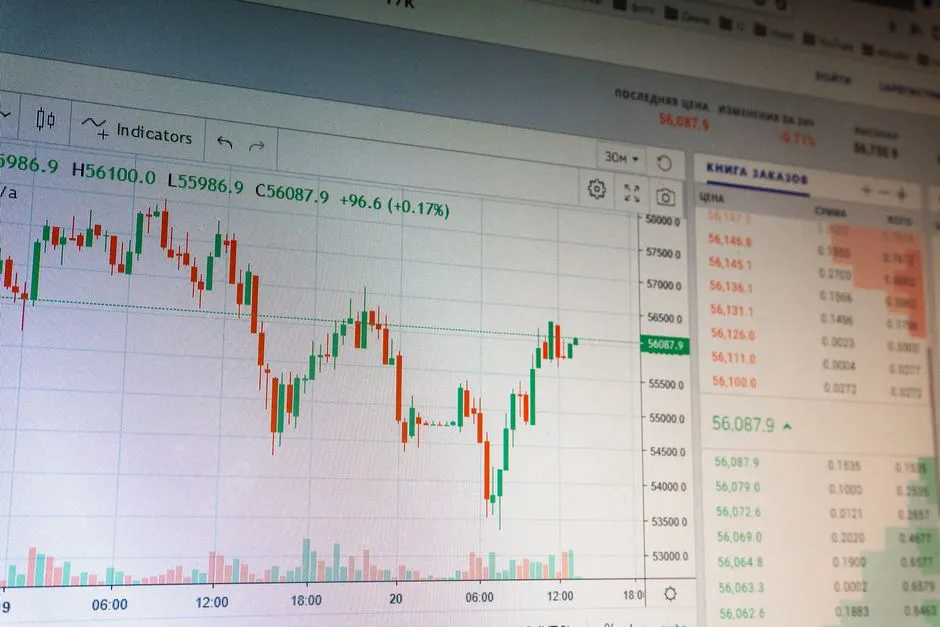
Bitcoin regained the $76,000 level on Friday after falling below that threshold during a sharp technology-led market sell-off on Thursday. The move highlights how closely digital assets remain connected to broader financial markets, particularly when investors quickly reduce exposure to riskier investments.
Although Bitcoin recovered some of its losses, the market remained under pressure after spot Bitcoin exchange-traded funds recorded approximately $430 million in net outflows. The withdrawals suggest that some investors used the wider market decline to reduce positions, secure profits, or limit risk while uncertainty surrounding technology stocks continued to weigh on sentiment.
Bitcoin Rebounds After a Volatile Session
Bitcoin’s move back above $76,000 offered some relief following Thursday’s decline. The cryptocurrency had slipped below that level as technology shares came under heavy selling pressure, creating a broader risk-off environment across financial markets.
Digital assets often trade around the clock, unlike traditional equity markets. That means cryptocurrency prices can react rapidly to changes in investor sentiment, movements in stock futures, bond yields, and expectations for interest rates. When traders become concerned about highly valued technology companies or economic conditions, cryptocurrencies can also experience selling pressure as investors reassess their exposure to volatile assets.
The recovery above $76,000 does not necessarily confirm that the market has fully stabilized. Instead, it shows that buyers were willing to step in after the initial decline. Whether that buying interest can continue may depend on ETF flows, developments in the technology sector, and the broader appetite for risk.
ETF Outflows Add to Market Pressure
The reported $430 million in outflows from Bitcoin ETFs represents an important part of the latest market story. Spot Bitcoin ETFs have become a major route for institutional and professional investors to gain exposure to Bitcoin through traditional financial markets. As a result, daily inflows and outflows are closely monitored as indicators of investor demand.
When ETFs experience sustained inflows, they can support Bitcoin prices by increasing demand for the underlying asset. Outflows can have the opposite effect, particularly when they occur during a period of broader market weakness. However, a single day of withdrawals should not automatically be interpreted as a long-term shift in investor conviction.
ETF activity can reflect several factors, including portfolio rebalancing, profit-taking, short-term hedging, and changes in market expectations. Some investors may also have been responding to the technology sell-off rather than making a fundamental judgment about Bitcoin itself.
Why Technology Stocks Matter to Crypto Investors
The connection between Bitcoin and technology stocks has become increasingly visible in recent years. Both markets are often viewed as growth-oriented or risk-sensitive areas, meaning they can react similarly to changes in interest-rate expectations, liquidity, and investor confidence.
When technology shares decline sharply, investors may become more cautious across their portfolios. This can lead to selling in cryptocurrencies, high-growth companies, and other assets whose valuations are particularly sensitive to borrowing costs and future growth expectations.
At the same time, Bitcoin’s market structure is different from that of equities. It trades continuously, has a distinct supply model, and is influenced by factors such as institutional adoption, network activity, regulation, and long-term demand. The correlation with technology stocks can therefore strengthen during periods of stress and weaken when crypto-specific factors regain influence.
Key Levels Traders May Watch
Holding above $76,000 could be important for short-term market confidence. Traders may view a sustained recovery above this level as evidence that buyers are defending the recent range. Conversely, another move below it could signal that sellers remain active and that the market has not yet absorbed the latest pressure.
Rather than focusing on one price point alone, investors may also watch trading volume, ETF flows, volatility, and the behavior of other major cryptocurrencies. A recovery supported by stronger demand and improving sentiment would generally be viewed as more durable than a brief rebound occurring on limited activity.
What Investors Should Consider Next
The latest price action reinforces the importance of taking a broader view of the cryptocurrency market. Bitcoin’s recovery is encouraging for bullish investors, but the ETF outflows show that demand is not moving in only one direction. Market participants will likely continue evaluating whether the decline was a temporary reaction to the technology sell-off or part of a deeper adjustment in risk appetite.
For long-term investors, daily price movements and individual ETF flow reports may be less important than their overall investment strategy, time horizon, and tolerance for volatility. Bitcoin remains capable of significant gains and losses in short periods, making position sizing and risk management essential considerations.
Bitcoin’s return above $76,000 marks a notable rebound after Thursday’s market disruption, but it is not yet a complete resolution of the recent volatility. With technology markets still influencing sentiment and hundreds of millions of dollars leaving Bitcoin ETFs, the next phase may depend on whether fresh buyers return and whether broader financial markets begin to stabilize.
Related read: Bitcoin Price Falls Below $75K as Strong Jobs Data Raises Rate-Hike Fears