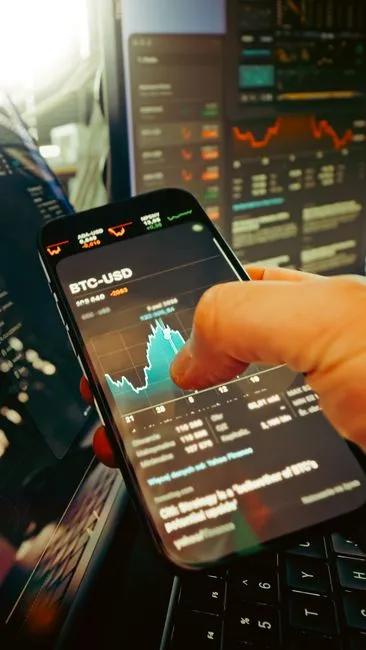
Bitcoin entered a period of consolidation after suffering a roughly 3% decline, as renewed concerns about artificial intelligence valuations put pressure on stock markets during Friday’s Asian trading session. The move highlighted the close relationship between cryptocurrency prices and broader investor sentiment, particularly when traders become more cautious about high-growth technology assets.
Rather than extending its decline sharply, Bitcoin’s price volatility appeared to cool as buyers and sellers reached a temporary balance. However, the pause does not necessarily signal that the market has found a firm bottom. With equities facing fresh weakness and investors reassessing risk across multiple asset classes, cryptocurrency traders remain focused on whether the latest pullback develops into a deeper correction or becomes a short-lived bout of profit-taking.
Bitcoin pauses after a sharp daily decline
Bitcoin’s approximately 3% drop was significant enough to attract attention, but it was not accompanied by the type of extreme volatility often associated with panic selling. After the initial decline, trading conditions became more measured, suggesting that market participants were waiting for clearer signals before committing to large new positions.
Periods of consolidation often follow abrupt price moves. Traders who bought at lower levels may take profits, while others may view the decline as an opportunity to enter the market at a more attractive price. At the same time, cautious investors may remain on the sidelines until Bitcoin demonstrates that it can recover important short-term levels.
This tug-of-war can produce relatively narrow price movements even when the broader market remains uncertain. Consolidation may eventually lead to a recovery, but it can also serve as a pause before another move lower if negative sentiment continues to spread through global markets.
Why AI concerns are affecting risk assets
The latest pressure on stocks was linked to resurgent concerns about artificial intelligence-related investments. AI has become one of the most powerful themes in financial markets, driving enthusiasm for technology companies, semiconductor manufacturers, cloud providers and businesses involved in data infrastructure.
That enthusiasm has also raised questions about valuations and expectations. Investors are increasingly examining whether the growth projected for AI companies can justify the substantial capital already flowing into the sector. When doubts emerge, even briefly, shares associated with the theme can experience rapid selling.
Concerns about AI valuations matter beyond the technology sector. Large technology companies represent a considerable portion of major stock-market indexes, meaning weakness in that group can influence the direction of the wider market. A decline in equities can then affect other risk-sensitive assets, including Bitcoin and smaller digital currencies.
Bitcoin continues to trade as a risk-sensitive asset
Although Bitcoin has its own market structure, adoption trends and network fundamentals, its price frequently responds to the same forces that influence stocks. Interest rates, liquidity conditions, institutional positioning and investor confidence can all affect both markets at the same time.
When sentiment is positive, traders may be willing to hold assets with higher potential returns, even when those assets carry substantial risk. Bitcoin can benefit from this environment as investors seek exposure to growth-oriented opportunities. Conversely, when uncertainty rises, market participants often reduce positions in volatile assets and move toward cash or more defensive investments.
The recent combination of stock-market weakness and a Bitcoin decline reflects this broader risk-management process. It does not necessarily mean that the long-term outlook for cryptocurrency has changed. Instead, it shows how quickly short-term trading conditions can shift when investors begin questioning crowded market themes.
Key factors traders are watching
Bitcoin traders are likely to monitor several developments as the market attempts to establish its next direction:
- Equity-market stability: A recovery in technology stocks could improve sentiment across risk assets, while continued weakness may create additional selling pressure for Bitcoin.
- Trading volume: A consolidation phase supported by healthy volume may indicate active participation. Lower volume could suggest that traders are waiting for a larger catalyst.
- Institutional positioning: Changes in demand from large investors can influence Bitcoin’s ability to recover after a sharp decline.
- Macroeconomic expectations: Interest-rate and liquidity forecasts remain important because tighter financial conditions generally make speculative assets less attractive.
- Market breadth: If weakness spreads from a few technology stocks to a wider range of sectors, concern about overall risk appetite could intensify.
Technical traders may also look for signs that Bitcoin is forming a higher low after the decline. A sustained rebound would suggest that buyers are regaining control, while repeated failures to recover could indicate that sellers remain active.
What consolidation means for investors
For investors, a period of cooling volatility can be useful because it provides time to reassess risk without the pressure of extremely rapid price swings. It also creates an opportunity to separate short-term market noise from longer-term investment objectives.
However, consolidation should not automatically be interpreted as a bullish signal. Prices can move sideways while traders wait for new information, but the eventual breakout may occur in either direction. Investors should therefore avoid relying on a single day’s performance or assuming that a modest stabilization has confirmed a trend reversal.
Risk management remains especially important during periods when Bitcoin is moving alongside volatile technology stocks. Position sizing, a clear investment horizon and an understanding of personal tolerance for losses can help investors navigate sudden changes in market sentiment. Short-term traders, meanwhile, may need to account for the possibility of rapid moves around economic news and shifts in equity-market direction.
The broader market outlook
The next phase of Bitcoin’s performance may depend partly on whether concerns surrounding AI investments remain temporary or develop into a broader reassessment of high-growth assets. If investors regain confidence in the technology sector, Bitcoin could benefit from renewed demand for risk assets. If skepticism continues, cryptocurrency markets may face further pressure as traders reduce exposure across their portfolios.
For now, Bitcoin’s consolidation suggests that the market is absorbing the recent decline rather than immediately accelerating in either direction. The pause offers limited certainty, but it does reinforce an important lesson: cryptocurrency prices do not operate in isolation. Global equity trends, valuation concerns and changes in investor confidence can quickly influence digital-asset markets.
As traders assess the fallout from renewed AI fears, Bitcoin’s ability to hold its recent range and attract buyers will be closely watched. A stable base could provide the foundation for a recovery, while persistent weakness in stocks may keep the cryptocurrency market defensive. Until clearer signals emerge, caution and disciplined risk management remain central to navigating the market.
Related read: Pentagon Restricts Military Personnel From Using Classified Information in Prediction Market Bets