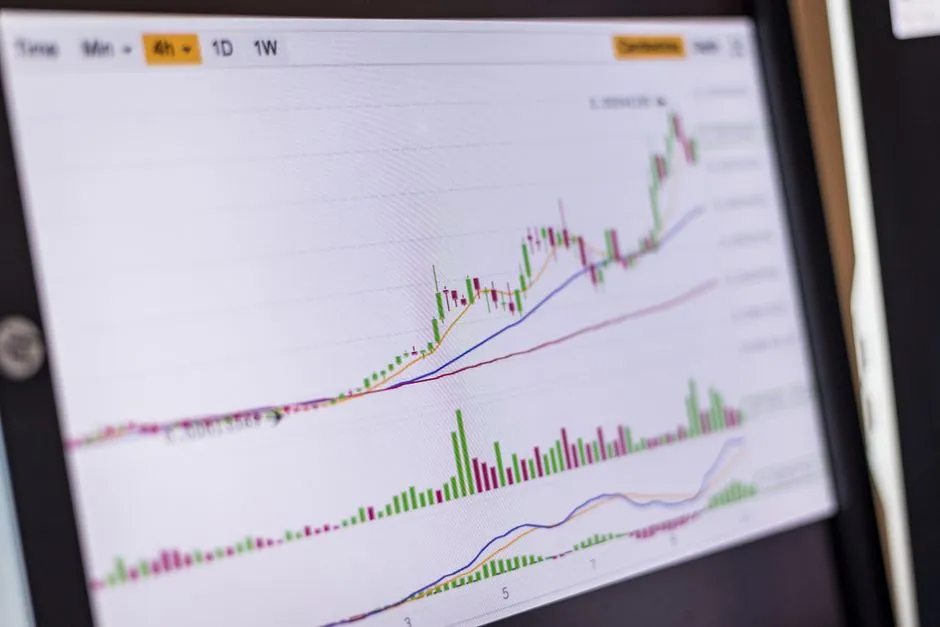
Bitcoin has recently slipped below the highly watched $60,000 mark, triggering a wave of caution across the cryptocurrency market. This move has placed the world’s largest digital asset in a make-or-break support zone hovering near $59,000. For traders and investors who have been tracking the charts closely, this level represents more than just a number on a screen. It marks a critical technical boundary that could either spark a swift recovery or open the door to a more extended correction.
The Psychological and Technical Weight of the $60K Barrier
Price levels in crypto markets are never arbitrary. The $60,000 threshold has served as a recurring battleground between buyers and sellers over the past few months. When an asset breaks through a well-established support zone, it often signals a shift in market sentiment. In this case, the breach was accompanied by the loss of a key Fibonacci retracement level that many analysts had flagged as the final major line of defense before a potential deeper downturn.
Understanding Fibonacci Levels in Crypto Trading
Fibonacci retracement tools are widely used by technical analysts to identify potential reversal points and support zones. When Bitcoin recently fell through this specific level, it effectively removed a layer of technical cushion that traders had been relying on. Without that buffer, the path of least resistance tilts downward, at least in the short term. The market is now watching to see whether buying pressure will emerge quickly enough to stabilize the price or if selling momentum will continue to push BTC into uncharted territory.
What’s Fueling the Recent Downward Pressure?
Market movements are rarely driven by a single factor. While technical breakdowns play a major role, broader macroeconomic conditions and liquidity shifts often act as the underlying catalysts. In recent weeks, a combination of profit-taking, regulatory uncertainty, and shifting institutional positioning has contributed to increased volatility. When large market participants adjust their exposure, it can trigger cascading effects across retail and algorithmic trading desks. Additionally, seasonal liquidity cycles and broader risk-off sentiment in traditional financial markets have historically influenced crypto price action, making it essential to look beyond the charts for context.
Liquidity and the Risk of Liquidations
One of the most immediate consequences of a sharp price drop is the liquidation of leveraged positions. As Bitcoin moved lower, traders who had borrowed funds to amplify their bets found themselves facing margin calls. These forced sales can accelerate downward momentum, creating a feedback loop that pushes prices even further from equilibrium. Market data has already shown significant liquidation events during this leg down, highlighting how tightly wound the derivatives market has become. Until open interest stabilizes and leverage is flushed out, price action is likely to remain choppy.
Can the Bulls Stage a Comeback?
Despite the recent weakness, the narrative around Bitcoin is far from over. Historical patterns suggest that sharp corrections often precede renewed accumulation phases, particularly when the underlying fundamentals remain intact. The question now is whether buyers will step in at the $59,000 zone or if the market needs to test lower levels before finding a floor. Strong hands typically use these periods of uncertainty to average down, while weaker hands capitulate, setting the stage for the next phase of the cycle.
Key Levels to Watch
- $59,000: The immediate support zone where early buyers may attempt to defend the trend and absorb selling pressure.
- $55,000: A deeper psychological and technical barrier that has historically acted as a strong bounce point during previous market cycles.
- $62,000: The resistance level that needs to be reclaimed with volume to confirm a short-term recovery and shift momentum back to the upside.
If buying volume accompanies a move back above $62,000, it could signal that institutional and retail buyers are regaining control. Conversely, a sustained break below $55,000 would likely trigger a reassessment of the broader market structure and potentially lead to a longer consolidation phase.
What Traders Should Focus On Moving Forward
Navigating volatile markets requires patience and a clear strategy. Rather than reacting emotionally to every candlestick, experienced traders focus on volume, order flow, and broader market context. Keeping position sizes manageable and maintaining a long-term perspective can help weather short-term turbulence. Additionally, monitoring on-chain metrics, exchange inflows, and macroeconomic indicators provides a more complete picture than price action alone. Understanding that crypto markets operate in cycles, not straight lines, helps investors avoid making impulsive decisions during periods of high uncertainty.
The current phase of the market is a reminder that cryptocurrency trading is as much about risk management as it is about identifying opportunities. While the loss of the $60,000 support level has raised eyebrows, it also presents a moment for disciplined investors to evaluate their positions and adjust their strategies accordingly. Whether this dip marks the beginning of a deeper correction or merely a healthy shakeout before the next leg up, one thing remains clear: the market will continue to reward those who stay informed, stay adaptable, and avoid letting short-term noise dictate long-term decisions.