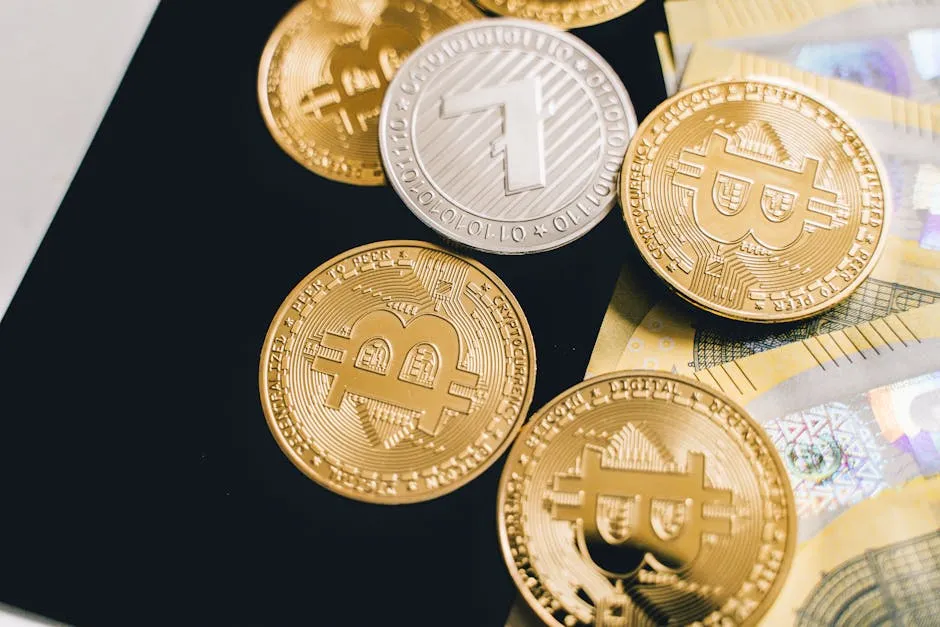
Bitcoin’s Pullback: A Signal of Doom or a Buying Opportunity?
The recent slide in Bitcoin’s price, pushing it below the psychologically significant $70,000 mark, has sent ripples of concern through the retail investor community. However, for large-scale institutional players, this dip might be music to their ears. According to Hunter Horsley, CEO of leading crypto asset manager Bitwise, this price action represents a “new crack of the apple” for major investors looking to build or increase their positions.
Navigating the Macro Tide
In a recent television interview, Horsley provided context for Bitcoin’s current trajectory. He suggested that the world’s premier cryptocurrency is currently “getting swept up” with broader macroeconomic assets. This means that movements in traditional markets, such as stocks and bonds, influenced by factors like interest rate expectations and geopolitical tensions, are having a pronounced effect on Bitcoin’s price.
This correlation can be frustrating for crypto purists who champion Bitcoin’s role as a non-correlated, decentralized asset. However, Horsley’s analysis points to a maturation of the market where Bitcoin is increasingly being treated as a serious macro asset by the global financial system.
Why Institutions See a Window of Opportunity
For institutional investors—think hedge funds, family offices, and corporate treasuries—timing and price are critical. The dramatic bull runs that send Bitcoin to new all-time highs are exciting, but they can be difficult to enter in a meaningful way without moving the market against themselves.
A period of consolidation or a bearish pullback, like the one we’re seeing, provides these large buyers with a more favorable environment. They can accumulate assets at what they perceive as a discount, building strategic positions without the frenzy of a parabolic rally. Horsley’s “new crack of the apple” metaphor perfectly captures this sentiment: a second (or third) chance to take a bite at a better price point.
The Bigger Picture for Bitcoin
It’s crucial to view these institutional maneuvers within the larger narrative of Bitcoin’s adoption. The approval of spot Bitcoin ETFs in the United States earlier this year opened a massive, regulated gateway for traditional finance to access crypto. These products have seen billions of dollars in net inflows, demonstrating sustained institutional interest.
A price dip, therefore, isn’t necessarily a sign of weakening fundamentals. Instead, it can be a healthy correction that shakes out short-term speculators and allows long-term believers—both retail and institutional—to strengthen their holdings. The underlying value propositions of Bitcoin, such as its fixed supply and its role as a digital store of value, remain unchanged.
What This Means for the Market
The growing presence of institutional capital brings both stability and volatility. It lends credibility and can reduce wild, retail-driven swings over the long term. However, as Horsley noted, it also means Bitcoin will be more susceptible to macro-economic trends in the near term.
For everyday investors, the message from industry leaders like Horsley is one of perspective. Short-term price movements, while nerve-wracking, are part of the journey. The strategic accumulation by institutions during these dips suggests that sophisticated money remains confident in Bitcoin’s long-term trajectory, viewing current prices not as a peak, but as a potential stepping stone.