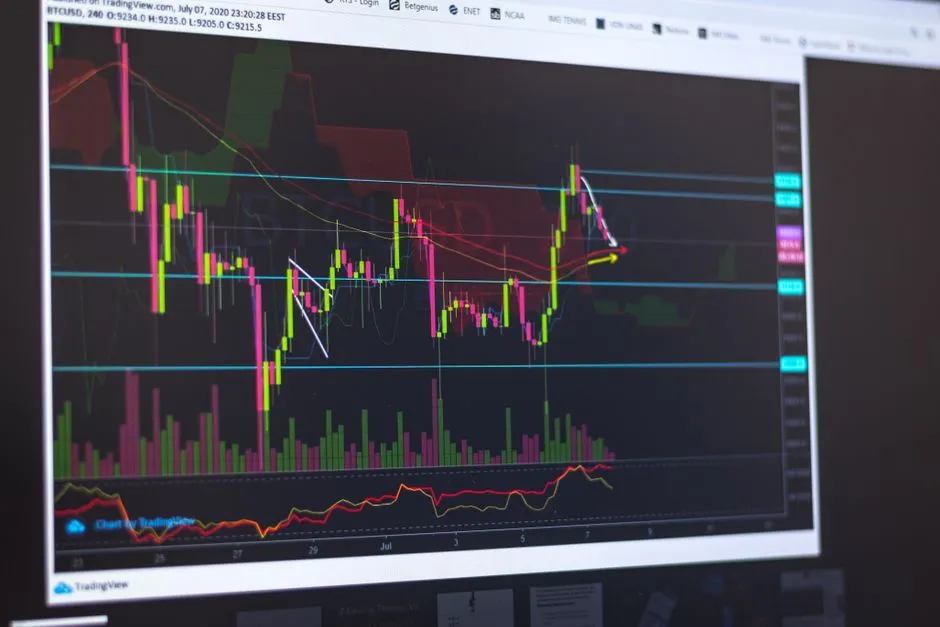
Bitcoin has given back much of its recent momentum, falling approximately 2.2% since midnight UTC to trade near $59,900. The decline reverses much of Monday’s Nvidia-driven advance and highlights the continued sensitivity of cryptocurrency markets to shifts in broader investor sentiment.
The pullback is notable because traditional stock markets have been attempting to recover from last week’s selloff. While equities have shown signs of stabilization, Bitcoin has struggled to maintain the same rebound, suggesting that crypto traders remain more cautious than investors in major stock indexes.
Bitcoin Loses Monday’s Gains
Monday’s Bitcoin rally was supported by renewed optimism across risk assets, with strength in technology stocks—particularly Nvidia—helping lift market sentiment. Nvidia has become an important barometer for appetite toward high-growth and speculative investments, and its performance often influences the broader technology sector.
That positive momentum did not last. Bitcoin’s move back toward $59,900 shows how quickly gains can fade in a market where leveraged positions and short-term trading play a significant role. Rather than extending Monday’s advance, buyers have stepped back, allowing sellers to regain control near a psychologically important price level.
A decline of 2.2% may appear modest compared with some of the larger daily moves seen in cryptocurrency, but the reversal carries broader significance. It demonstrates that Bitcoin remains vulnerable when traders reassess risk, especially after a sharp rally driven by external market catalysts rather than a major change in crypto-specific fundamentals.
Liquidations Add to Market Pressure
One of the most important developments accompanying the decline is the sharp increase in liquidations. Reported liquidations have tripled, indicating that a larger number of leveraged positions were forcibly closed as Bitcoin moved lower.
Liquidations occur when traders using borrowed funds no longer have enough collateral to support their positions. Exchanges automatically close those trades to limit potential losses. When many positions are liquidated at the same time, the resulting buying or selling can intensify the original market move.
In this case, the decline in Bitcoin appears to have placed pressure on leveraged long positions. As those positions were closed, additional selling may have contributed to the speed and scale of the retreat. This dynamic can create a feedback loop: falling prices trigger liquidations, liquidations add selling pressure, and that pressure causes prices to fall further.
Why Leverage Matters
Leverage can increase potential returns, but it also leaves traders with less room to withstand normal price fluctuations. Bitcoin frequently experiences rapid intraday swings, meaning even a relatively limited decline can produce substantial losses for traders who have taken on excessive exposure.
The jump in liquidations is therefore a warning that market positioning may have become too aggressive during Monday’s rally. Traders who entered near the highs may now be reducing risk, while others may be waiting for clearer evidence that Bitcoin can establish support before committing new capital.
Crypto Continues to Lag Equities
Bitcoin’s weakness compared with the stock market’s rebound raises questions about the relationship between cryptocurrency and traditional risk assets. Bitcoin often trades like a high-growth asset, benefiting when investors are willing to pursue risk and suffering when concerns about volatility or liquidity increase.
However, the correlation between Bitcoin and equities is not always consistent. Markets can move in the same direction for a period before diverging as crypto-specific factors, technical levels, derivatives positioning, or investor flows become more influential.
The current divergence suggests that stock-market optimism has not fully carried over into digital assets. Investors may still be concerned about Bitcoin’s ability to hold key support levels, while the rise in liquidations could make them reluctant to chase another rally immediately.
What Traders May Watch Next
Market participants will likely focus on whether Bitcoin can stabilize around the $59,900 area or whether continued selling pushes the asset lower. Trading volume, derivatives funding rates, open interest, and further liquidation data may provide clues about whether the move represents a temporary reset or the beginning of a deeper correction.
A sustained recovery would require buyers to absorb selling pressure and regain control above recent trading ranges. Conversely, a failure to establish support could encourage additional profit-taking and defensive positioning.
For now, Bitcoin’s retreat serves as a reminder that a strong one-day rally does not necessarily mark the start of a lasting trend. With liquidations tripling and crypto lagging the stock market’s rebound, traders may need to approach the market carefully, manage leverage, and wait for stronger confirmation before assuming that bullish momentum has returned.
Related read: Bitcoin’s $55,000 Slide Puts 11.6 Million BTC Underwater as Larger Holders Keep Accumulating