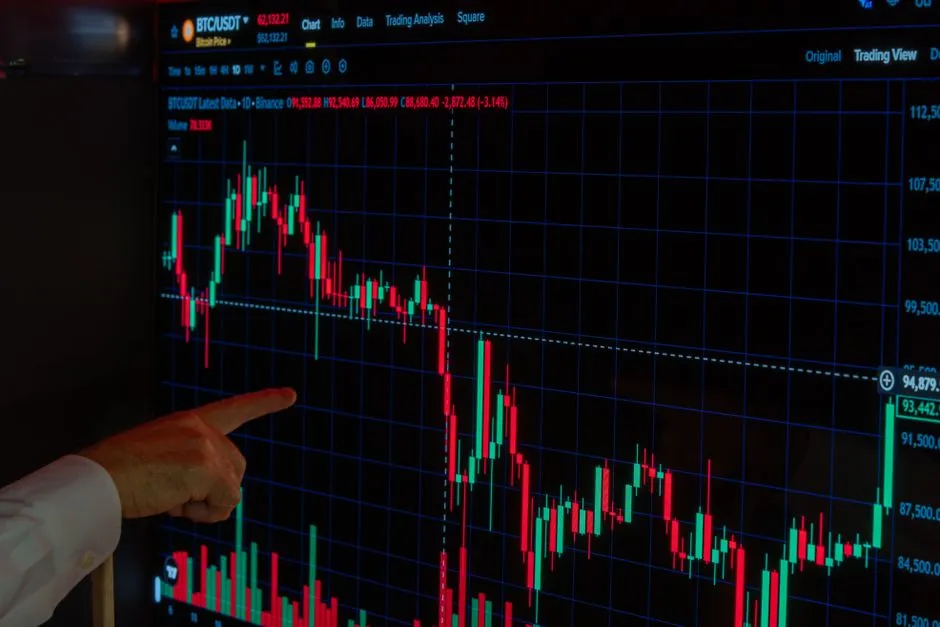
In the latest cross-asset market update, the biggest story was not in digital assets but in U.S. equities. The Nasdaq climbed about 6%, powered by a sharp rebound in Nvidia after the company’s board announced that Jensen Huang had been reinstated as president, chief executive officer, and director. The news triggered a powerful rally in the chipmaker, which was higher by 30%, and it lifted the broader tech-heavy index in a way that reminded investors how much weight Nvidia now carries in global market sentiment.
By comparison, Bitcoin’s move was far more muted. The leading cryptocurrency climbed modestly, suggesting that the day’s dominant risk trade was concentrated in equities, particularly AI-linked and semiconductor names. For crypto market watchers, the key takeaway was not panic or rejection of risk, but a clear hierarchy: equities absorbed the headline, while Bitcoin participated without leading the session.
A Nvidia headline with outsized market impact
Nvidia has become one of the most influential companies in the market because of its central role in the artificial intelligence buildout. Its graphics processing units are used in data centers, research clusters, and enterprise AI systems, and its performance is often treated as a proxy for investor confidence in the AI trade. That is why a leadership announcement involving Jensen Huang was enough to move the entire index.
The board’s announcement that Huang had been reinstated as president, CEO, and director provided a clear resolution to leadership uncertainty. In large-cap technology, clarity often matters more than the exact details of a corporate event. Investors tend to price in strategic continuity, especially for companies that are expected to drive growth in a fast-moving sector. Nvidia’s 30% gain reflected both the importance of the news and the degree to which the stock had been tied to broader market optimism about AI infrastructure.
Why Bitcoin’s gain looked modest
Bitcoin’s modest climb does not mean the asset was rejected. Rather, it suggests that the initial risk appetite was being directed toward the most direct beneficiary of the news: Nvidia and, by extension, the Nasdaq. When a single company can move the index by a meaningful margin, it can dominate price action and pull liquidity toward equities. In that environment, Bitcoin may rise, but it often trails the headline driver.
This is not unusual. Bitcoin has historically moved with risk assets, especially when investors are rotating between traditional and alternative markets. However, the size of the move matters. A modest Bitcoin gain alongside a 6% Nasdaq surge can indicate that traders are favoring the stock market’s stronger catalyst. It can also reflect positioning: some investors may have been more exposed to Nvidia and tech stocks, while crypto holders may have waited for confirmation before adding exposure.
The broader risk-on signal
The most important signal from the session was the tone of risk appetite. A 6% Nasdaq gain is not a small move, and it often points to a broader willingness to take on volatility. That kind of environment can be supportive for crypto over time, even if the asset does not lead the first move. When equities rally sharply, the overall market mood can improve, reducing defensive positioning and increasing interest in higher-beta assets, including Bitcoin and other digital assets.
At the same time, the divergence highlights how markets can price different narratives at different speeds. The equity rally was tied to a concrete corporate development with immediate implications for a dominant AI company. The Bitcoin move was more general, reflecting a softer but positive risk appetite rather than a specific catalyst of its own. In practical terms, that means traders may view the equity rally as the primary event and Bitcoin as a secondary beneficiary.
What to watch next
From here, the key question is whether Bitcoin can translate the improved risk environment into a stronger trend. If the Nasdaq rally continues and risk appetite remains elevated, Bitcoin may find additional support as investors broaden their exposure. If, however, the equity move proves short-lived or becomes concentrated in a small number of large-cap names, Bitcoin may continue to move in a range while traders wait for a clearer direction.
Analysts will likely focus on three factors: the durability of Nvidia’s rally, the extent to which the Nasdaq gain spreads beyond a handful of tech leaders, and whether Bitcoin shows increased participation from new buyers. A strong follow-through in equities could help Bitcoin move beyond a modest gain. A sharp reversal in tech stocks could remind the market that risk assets can diverge quickly when the primary catalyst loses momentum.
In the end, the session underscored a familiar dynamic: Bitcoin can be part of the risk-on trade,
Related read: Fidelity, Strive and eToro Join OKX-ICE Tokenized Securities Platform