Why Bitcoin Sold at a Deep Discount in Canadian Dollars
Bitcoin is often described as a single global market, but its price can vary significantly between exchanges, trading pairs, currencies, and time zones. A striking example emerged on Kraken’s Canadian dollar market, where Bitcoin traded at an average discount of 37.3% compared with a benchmark derived from the exchange’s U.S. dollar trades.
The difference lasted for more than 14 hours over a weekend, highlighting an important feature of digital-asset markets: the quoted price is only one part of the story. The amount of Bitcoin available at each price level, the number of active buyers and sellers, and the ability to move funds between markets can all have a major influence on the final execution price.
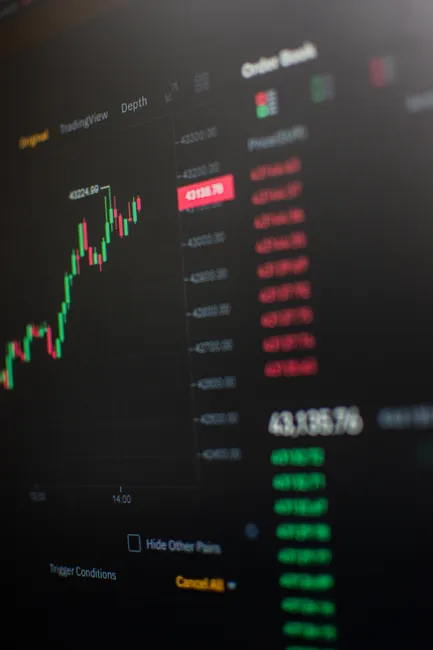
Market Depth Matters More Than the Headline Price
Market depth refers to the quantity of buy and sell orders waiting in an exchange’s order book. A deep market has a relatively large number of orders spread across multiple price levels. In that environment, a large trade can usually be completed without moving the price dramatically.
A shallow market works differently. If there are only a few buyers near the current price, a seller attempting to unload a substantial Bitcoin position may quickly consume those bids. The next available buyers may be willing to pay much less, causing the average execution price to fall well below the level shown at the top of the order book.
This distinction is crucial. A 37.3% discount does not necessarily mean every Bitcoin on the platform could be purchased at exactly 37.3% below the broader market price. It may instead reflect the weighted average price paid across a large transaction or a period in which available liquidity was unusually limited.
Why the Weekend May Have Amplified the Difference
Weekend trading often produces thinner liquidity across financial markets, including cryptocurrency. Professional traders, market makers, and institutional participants may reduce their activity outside regular business hours. Fewer participants can mean wider spreads, smaller order books, and greater price impact from individual trades.
Currency-specific markets can become even less active. Bitcoin may trade continuously against the U.S. dollar, while the Canadian dollar pair attracts a smaller pool of participants. If Canadian-dollar buyers are scarce during a period of heavy selling, the order book can become unbalanced quickly.
In such circumstances, the market can remain open while functioning with far less capacity than traders might expect. Orders may still be matched, but they can be executed at increasingly lower levels as available bids disappear.
What the 37.3% Gap Does—and Does Not—Tell Us
The gap is a clear warning about execution risk, but it should not automatically be interpreted as a permanent mispricing of Bitcoin in Canada. Several factors may contribute to a large difference between trading pairs:
- Limited liquidity: A small order book can magnify the impact of a large market sell.
- Order-book imbalance: A sudden increase in sellers may overwhelm available bids.
- Currency conversion effects: The Canadian-dollar benchmark may not perfectly reflect real-time foreign-exchange conditions.
- Transfer restrictions: Traders may be unable to move funds quickly enough to close the price gap.
- Weekend participation: Reduced activity can allow unusual spreads to persist for longer than they would during busier periods.
For this reason, headline comparisons between Bitcoin markets should always be examined alongside trading volume, order-book depth, spread size, and the precise calculation method used for the benchmark.
Lessons for Bitcoin Traders
The episode offers practical lessons for anyone trading cryptocurrency, particularly in less-liquid currency pairs. A market order prioritizes execution over price certainty. While it may fill quickly, it can also sweep through multiple levels of the order book and result in a surprisingly poor average price.
Limit orders can provide greater control, although they do not guarantee execution. Traders should also review the order book before placing a large trade, divide transactions into smaller portions when appropriate, and compare liquidity across several markets.
It is equally important to distinguish between a displayed price and an executable price. The best bid or ask may apply only to a small amount of Bitcoin. A much larger transaction can receive a materially different average price once it consumes the available liquidity.
A Broader Lesson About Crypto Market Structure
The Kraken Canadian-dollar episode illustrates why cryptocurrency prices should not be viewed as perfectly unified across the world. Bitcoin may be globally recognized, but trading remains fragmented among exchanges, currencies, jurisdictions, and pools of liquidity.
When market depth is strong, price differences are often narrowed by arbitrage traders. When liquidity is weak or transfers are delayed, those traders may not be able to act quickly enough. As a result, a local market can diverge sharply from a broader benchmark, even when the underlying asset has not fundamentally changed in value.
Ultimately, the 37.3% average discount serves as a reminder that liquidity is part of price. Traders are not simply buying or selling Bitcoin at an abstract global rate; they are interacting with a specific order book at a specific moment. Understanding that market structure is essential for evaluating unusual crypto prices and avoiding costly surprises during volatile or low-volume trading periods.
Related read: Wrapped Monero Token Plunges 99.8% After Suspected $13.5 Million Exploit