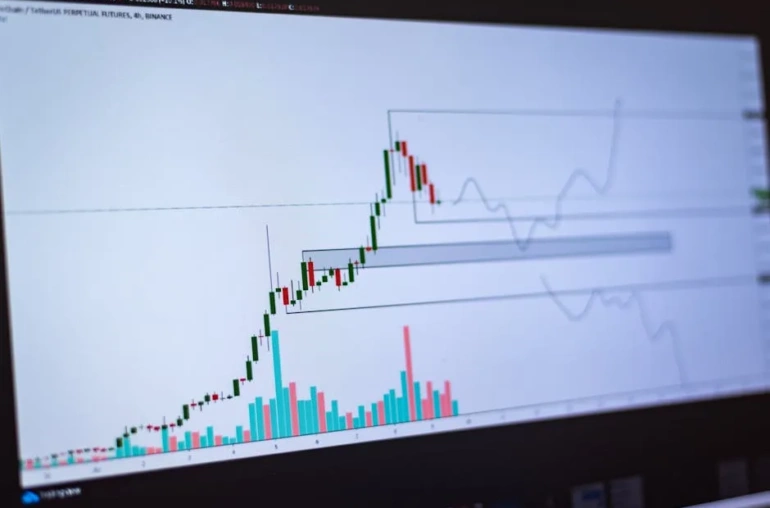
Bitcoin fell below the $60,000 mark for the first time since July as a broad market selloff spread across cryptocurrencies, technology stocks, and other risk-sensitive assets. The decline marked a sharp reversal for investors who had recently been watching Bitcoin trade at considerably higher levels and highlighted the close relationship between digital assets and broader financial markets.
Bitcoin Declines as Risk Assets Come Under Pressure
Bitcoin dropped nearly 6% during the selloff, extending losses across the cryptocurrency market. The move was not isolated to digital assets. U.S. stocks also moved lower, with the Nasdaq falling more than 2% as investors reduced exposure to technology and growth-oriented companies.
Shares of Anthropic reportedly fell almost 10%, adding to the pressure on the technology sector. Although a single company’s performance does not determine Bitcoin’s direction, sharp declines in high-growth stocks can influence market sentiment. When investors become more cautious, they often sell assets viewed as higher risk, including cryptocurrencies and speculative technology shares.
This type of synchronized decline is commonly described as a “risk-off” move. Rather than focusing on assets with the potential for the highest returns, investors tend to prioritize liquidity and capital preservation. Bitcoin, despite becoming more widely accepted over the years, can still experience significant selling during periods of uncertainty.
Why Bitcoin Often Moves Alongside Technology Stocks
Bitcoin was created as an alternative form of money and a decentralized financial network. However, its market behavior has frequently resembled that of other risk assets, particularly technology stocks. One reason is that both markets attract investors seeking long-term growth and are sensitive to changes in interest-rate expectations.
When borrowing costs are high or investors expect monetary policy to remain restrictive, future growth becomes less valuable in present-day terms. This can weigh on companies whose valuations depend on earnings expected years ahead. The same logic can affect Bitcoin, especially when traders are reducing positions in assets that do not generate traditional cash flows.
Market liquidity also plays an important role. During calm periods, investors may be willing to hold volatile assets and tolerate price fluctuations. When volatility rises, however, even profitable positions can be sold to raise cash or reduce portfolio risk. Because cryptocurrency markets operate around the clock, Bitcoin can sometimes react before traditional stock markets open or continue moving after they close.
The Importance of the $60,000 Level
Breaking below a widely watched price level can have both psychological and technical consequences. The $60,000 mark had become an important reference point for traders because round numbers often attract significant attention. A move below that level may lead some investors to reassess their expectations, while short-term traders may increase selling if other technical indicators also weaken.
Price levels should not be viewed as guarantees of support or resistance. Bitcoin’s market can move quickly, and a level that appears important one day may be broken the next. Still, round-number thresholds can influence behavior because they are easy for traders, analysts, and the broader public to monitor.
What Traders May Be Watching Next
Following a sharp decline, market participants will likely focus on several factors:
- Trading volume: Heavy volume during a decline may indicate broad participation in the selloff, while lighter volume could suggest a more limited pullback.
- U.S. equity performance: Continued weakness in the Nasdaq and other growth-focused indexes could keep pressure on Bitcoin and related assets.
- Interest-rate expectations: Shifting expectations around central-bank policy can influence demand for riskier investments.
- Market liquidity: Tighter financial conditions can make it more difficult for buyers to absorb large sell orders.
- Investor sentiment: Fear can intensify declines when traders rush to exit positions at the same time.
These factors do not provide a guaranteed forecast, but together they can help explain why Bitcoin’s price may remain volatile after an initial drop.
What the Selloff Means for Crypto Investors
For long-term Bitcoin holders, a decline below $60,000 may be viewed as part of the asset’s established pattern of sharp rallies and corrections. Bitcoin has historically experienced large price swings, even during broader long-term uptrends. That history does not eliminate risk, but it does show why investors need to prepare for significant drawdowns.
Short-term traders face a different challenge. Rapid price movements can create opportunities, but they also increase the risk of forced liquidations and poorly timed decisions. Investors using leverage may be particularly vulnerable because a relatively modest market decline can trigger automatic position closures.
A disciplined approach is essential during volatile conditions. Investors should consider their time horizon, risk tolerance, and portfolio exposure before making decisions. Diversification, position sizing, and avoiding excessive leverage can help reduce the impact of sudden market movements. No single price level can determine whether Bitcoin is fairly valued, and short-term market reactions are often shaped by emotion as much as by fundamentals.
Bitcoin Remains Closely Tied to the Broader Market
The latest drop demonstrates that Bitcoin is not trading in isolation. Its performance can be affected by stock-market weakness, changes in liquidity, investor confidence, and expectations for economic policy. As digital assets become more integrated into mainstream portfolios, their price movements may increasingly reflect developments in traditional financial markets.
Bitcoin’s fall below $60,000 is therefore more than a cryptocurrency headline. It is also a reminder that markets are interconnected and that risk sentiment can spread rapidly from one asset class to another. Whether the decline develops into a deeper correction or stabilizes near current levels will depend on the path of equities, interest rates, liquidity, and investor demand in the sessions ahead.
For now, caution remains important. Volatility is a defining feature of cryptocurrency markets, and investors should evaluate the broader market environment rather than reacting to a single day’s price movement.
Related read: Crypto Today: Key Market Trends, Bitcoin Moves, DeFi Developments, and Regulation to Watch