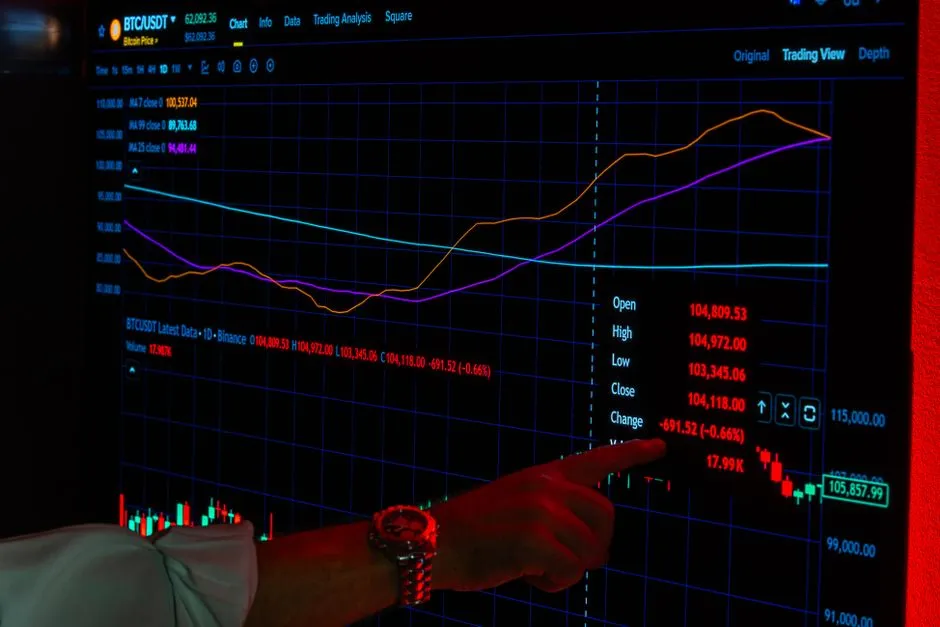
Bitcoin has fallen sharply toward the $68,000 level as investors reassess risk across financial markets. The decline comes amid growing excitement around a potential Anthropic initial public offering, with analysts suggesting that capital flowing toward the artificial intelligence company may be contributing to pressure on other speculative assets.
Although the timing has prompted comparisons between the cryptocurrency sell-off and weakness in technology stocks, market observers do not see a direct connection between Nvidia and Bitcoin’s decline. Instead, they point to a combination of shifting investor preferences, heightened uncertainty, and a broader move away from riskier assets.
Why Bitcoin Is Under Pressure
Bitcoin often reacts quickly when market sentiment changes. During periods of optimism, investors may be willing to allocate capital to cryptocurrencies, growth stocks, emerging technologies, and other assets with higher potential returns. However, when concerns rise, those same positions can become vulnerable to rapid selling.
The move toward $68,000 reflects this sensitivity. Bitcoin remains one of the most actively traded digital assets, and its price can be influenced by changes in institutional positioning, liquidity, and expectations for the wider economy. Even when there is no single negative event responsible for a decline, several smaller pressures can combine to create a substantial move.
In this case, the market appears to be responding to a broader risk-off environment. A risk-off move occurs when investors prioritize capital preservation and liquidity over aggressive growth opportunities. That can lead to selling in cryptocurrencies and other volatile investments, particularly when traders believe better opportunities may be emerging elsewhere.
Anthropic IPO Speculation Draws Investor Attention
One factor attracting attention is the growing market enthusiasm surrounding Anthropic. The artificial intelligence company has become a major focus for investors who want exposure to the rapid expansion of generative AI and related technologies. Expectations surrounding a possible IPO can intensify that interest, particularly if investors anticipate strong demand for shares.
When a high-profile company prepares to enter public markets, investors may reposition their portfolios in advance. Some market participants could sell existing holdings to free up capital for a potential allocation. In a crowded investment landscape, this type of repositioning can affect assets that are not directly connected to the company involved.
That does not mean Anthropic’s possible IPO is the sole cause of Bitcoin’s decline. Rather, it may be one part of a larger capital rotation. Investors may be comparing the potential returns and perceived risks of digital assets with the opportunity to participate in a major AI listing. The result can be reduced demand for speculative positions, even without a fundamental change in the long-term outlook for Bitcoin.
No Clear Direct Link to Nvidia
Bitcoin’s decline has also been discussed alongside movements in Nvidia and the broader technology sector. Nvidia is closely associated with the artificial intelligence boom because of its role in supplying advanced chips used for computing and machine learning. However, analysts do not identify a direct Nvidia-specific explanation for the cryptocurrency’s weakness.
The connection is more likely to be related to overall market sentiment. Technology stocks, AI companies, and cryptocurrencies are often grouped together as growth-oriented or higher-risk investments. When investors reduce exposure to that part of the market, several asset classes may weaken at the same time. This can create the appearance of a direct relationship even when the underlying cause is a shared response to changing risk appetite.
What the Move Means for Crypto Investors
For cryptocurrency investors, the latest decline highlights the importance of understanding market correlations and liquidity conditions. Bitcoin is frequently viewed as an independent asset, but its price can still respond to developments in equities, venture capital, interest-rate expectations, and institutional portfolio decisions.
A falling price does not automatically confirm that Bitcoin’s long-term investment case has changed. At the same time, short-term volatility should not be dismissed. Investors who enter the market during periods of enthusiasm may face significant fluctuations if capital begins moving into other opportunities.
Several factors may influence Bitcoin’s next move, including demand from institutional investors, broader economic sentiment, developments in the technology sector, and expectations surrounding future market liquidity. Traders will also be watching whether the price stabilizes near current levels or whether further selling develops.
A Market Driven by Capital Rotation
The latest sell-off illustrates how quickly investor attention can shift. Capital may move from cryptocurrencies into technology stocks, private companies, IPO opportunities, or cash when market participants believe the balance between risk and reward has changed.
For now, the decline toward $68,000 appears to reflect a combination of Anthropic IPO enthusiasm and a wider risk-off mood rather than a single event involving Nvidia or Bitcoin itself. As markets continue to respond to the competition for investment capital, volatility is likely to remain an important feature of the crypto landscape.
Bitcoin’s ability to recover will depend not only on cryptocurrency-specific developments but also on whether investors regain confidence in higher-risk assets more broadly. Until that happens, market participants should expect sentiment, liquidity, and capital rotation to remain key forces shaping Bitcoin’s price.
Related read: Bitcoin Treasury Firm Nakamoto Faces $165 Million Kraken Debt as BTC Holdings Lose Value