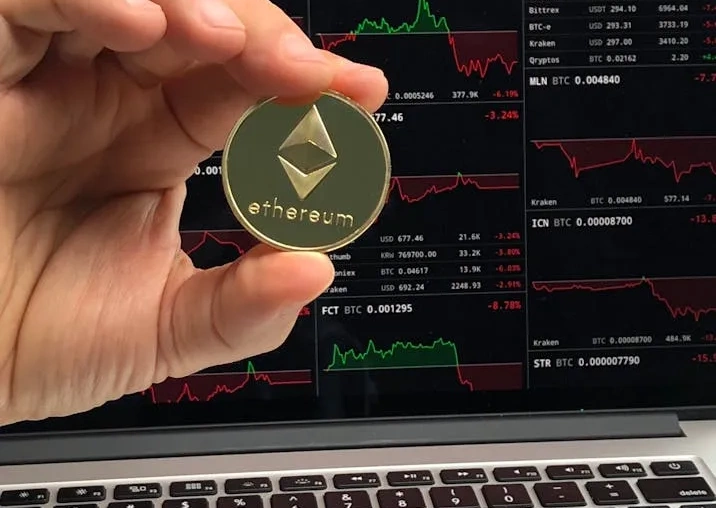
Bitcoin has spent the latest session consolidating near the $86,000 level, signaling a pause after a period of strong momentum. The move suggests that while the broader crypto market remains bullish, the pace of the rally is beginning to narrow. Traders appear to be taking a measured approach, with price action shifting from aggressive upside expansion to a more cautious consolidation phase.
At the same time, oil prices have moved to the other side of the market, with Brent crude slipping below the psychologically important $100 mark. That development adds another layer of context to the broader risk backdrop. When energy prices retreat, it can ease inflation concerns and reduce the urgency for central banks to keep monetary policy tight. For risk assets, including cryptocurrencies, that kind of macro shift can be constructive over time, but in the short term, it often leads to mixed and choppy price action.
Bitcoin’s Consolidation Near $86,000 Signals Caution After a Strong Run
When a major asset like Bitcoin moves into consolidation after a rally, it is often a sign that the market is digesting recent gains. Instead of continuing to push higher in a straight line, price is trading in a tighter range as buyers and sellers find temporary equilibrium. In this case, the focus has been on Bitcoin’s ability to hold near the $86,000 area, a level that has become a key reference point for traders.
Consolidation can serve two important purposes. First, it allows momentum to reset. After a rapid advance, markets often need time for positions to rebalance and for weaker hands to exit. That process helps build a stronger base for future upside if demand remains firm. Second, consolidation can act as a warning sign if the market loses interest too quickly. If price fails to break higher and begins drifting lower, it may indicate that the rally was losing conviction.
For now, the tone appears more neutral than bearish. The fact that Bitcoin is holding near an elevated level rather than breaking sharply lower suggests that institutional and speculative interest has not disappeared. Instead, the market seems to be waiting for the next catalyst. That could come from macroeconomic data, shifts in risk sentiment, or further developments in the broader crypto ecosystem.
CoinDesk 100 Breadth Weakens as Altcoins Lag
One of the more telling details from the session is the performance across the broader market. According to the source material, 38 of the 100 CoinDesk 100 constituents were lower during the day. That is an important signal because it shows that the rally is not being driven uniformly across the sector.
When Bitcoin leads while many altcoins decline, it often reflects a market that is becoming more selective. Investors may be rotating into the largest and most liquid assets, or they may be reducing exposure to riskier tokens after an extended run. This kind of divergence is common in later phases of a rally, when participants start favoring safety, liquidity, and names with deeper institutional interest.
The broader weakness in the CoinDesk 100 also suggests that the market is not in a broad-based euphoria phase. In other words, the rally is still alive, but it is not a blanket bid across all digital assets. That makes the next move even more important. If Bitcoin can stabilize and eventually break higher, it may encourage a recovery in altcoin breadth. If it fails to do so, the weaker constituents could come under additional pressure.
Bitcoin Cash Stands Out With a Sharp Spike Tied to CME Futures Listing
Amid the broader softness, Bitcoin Cash was one of the notable outliers. The token rose 32% over 24 hours, a dramatic move that drew attention away from the otherwise muted market tone. The rally was linked to a CME futures listing, which often has a significant impact on a digital asset’s price and liquidity profile.
Why does a futures listing matter so much? In many cases, it improves access for institutional traders who may prefer regulated exchange-traded products over spot markets. It can also increase visibility, bring in new participant types, and add a formal reference point for pricing. For a token like Bitcoin Cash, that kind of development can be powerful because it may attract attention from traders who had not previously been active in the asset.
That said, listing-driven rallies can sometimes be short-lived. The initial excitement may lead to a strong pop in price, but the longer-term sustainability of the move often depends on whether there is underlying demand beyond the event itself. If the token can maintain interest after the first wave of buying fades, the move may prove more meaningful. If not, it could turn into a quick spike followed by a pullback.
Brent Below $100 Adds a Macro Dimension to the Crypto Move
The simultaneous drop in Brent crude below $100 is worth noting because energy prices are closely tied to global risk appetite. Crude oil often functions as an inflation-sensitive barometer. When it falls, it can suggest that supply conditions are improving, demand may be softening, or that the market is pricing in slower economic growth. Any of those factors can influence how investors position themselves across equities, bonds, commodities, and crypto.
For crypto markets, lower oil prices can be a double-edged sword. On one hand, they may ease inflation worries and reduce the pressure on central banks to maintain very restrictive policy. That can be supportive for long-duration, high-beta assets like Bitcoin. On the other hand, a meaningful drop in energy prices can also raise questions about global demand, which may make some investors more cautious about broader risk positioning.
In this environment, Bitcoin’s consolidation makes sense. The market has a positive backdrop, but not a uniformly bullish one. The result is a price action that reflects optimism tempered by caution.
What Traders Should Watch Next
The next few sessions will likely hinge on a few key factors. First, traders will watch whether Bitcoin can hold its ground near $86,000 or if it begins to lose momentum. A successful defense of this area could keep the broader rally intact, while a clear break lower may trigger further risk reduction across the sector.
Second, the market will look for signs of improving breadth. If the CoinDesk 100 begins to recover, it would suggest that the consolidation is healthy and that risk appetite is returning. If weakness persists, it could indicate that the rally is becoming more top-heavy and dependent on Bitcoin alone.
Finally, the Bitcoin Cash move will be closely watched. Whether the token can sustain its gains after the CME-related spike could provide a useful gauge of how the market is responding to new institutional access points. A lasting bid would suggest that listing-driven interest is translating into broader demand, while a fade would show that the move was more event-driven than structural.
Conclusion
All things considered, the latest price action points to a market that is still constructive but no longer in full-throttle rally mode. Bitcoin’s consolidation near $86,000 reflects a desire to stabilize after a strong run, while the broader weakness across many CoinDesk 100 constituents shows that the market is becoming more selective. The standout Bitcoin Cash move, tied to a CME futures listing, adds a bullish exception to an otherwise mixed session. Meanwhile, Brent crude slipping below $100 reminds investors that crypto does not move in a vacuum; it remains closely linked to the wider macro and energy landscape. In the near term, the market is likely to stay cautious until price action gives a clearer signal about whether the next move is upward or corrective.
Related read: Raiffeisen Expands Crypto Trading to 11 European Markets With Bitpanda Partnership