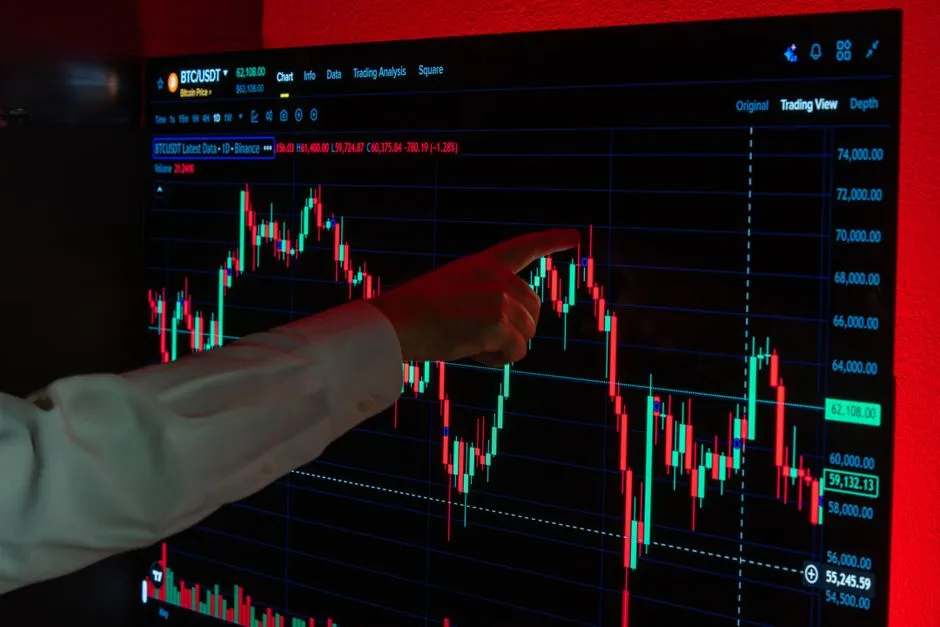
In one of the more significant moves for UK retail investing this year, Hargreaves Lansdown has opened access to crypto exchange-traded notes, or ETNs, following the Financial Conduct Authority’s decision to lift its retail ban on crypto ETPs. For many investors, this marks a meaningful shift: a major UK investment platform that had previously signaled caution is now making a regulated form of crypto exposure available to a much wider audience.
The move does not mean that crypto is suddenly being treated like a mainstream savings product. It does, however, show that the boundary between traditional investment platforms and digital-asset exposure is continuing to blur. For UK investors who have followed crypto for years, the practical effect is simple: access to a crypto-linked product can now happen through a familiar brokerage-style interface rather than through a separate exchange, wallet, or specialist platform.
What changed at Hargreaves Lansdown
Hargreaves Lansdown is widely recognized as one of the UK’s largest retail investment platforms, and its decision to list crypto ETNs is significant because of the size of its customer base. Many investors already use the platform for shares, funds, and other mainstream assets. Bringing crypto-linked products into that same environment lowers the friction involved in gaining exposure to the sector.
The regulatory change is the backdrop to this move. After the FCA lifted its retail ban on crypto ETPs in October, UK-based platforms gained the ability to offer certain structured crypto products to retail customers. Hargreaves Lansdown’s decision to open access to crypto ETNs reflects that new regulatory reality. It also suggests that the platform sees enough demand to make the products commercially viable.
Importantly, this is not the same as the platform simply “adding crypto” in the way exchanges add tokens. The product being offered is a listed security that tracks the performance of an underlying crypto asset or basket of assets. That distinction matters, because it changes the risk profile, the mechanics of the investment, and the type of investor for whom the product may be most suitable.
What crypto ETNs actually are
At a basic level, a crypto ETN is an exchange-traded note that aims to mirror the price movement of a reference crypto asset, such as Bitcoin or Ethereum, or a broader basket of digital assets. It is issued by a financial institution and trades on an exchange, which means it can be bought and sold much like a stock during market hours.
This structure offers a few practical advantages for retail investors:
- Convenience: Investors can trade the product through a familiar investment platform rather than setting up a separate crypto exchange account.
- No direct custody: Investors do not need to manage private keys, wallets, or seed phrases directly.
- Exchange trading: The note can be traded during normal market sessions, which is useful for those who prefer a more traditional trading experience.
- Portfolio integration: It may be easier to track a crypto-linked holding alongside other listed investments in a single account.
However, convenience should not be confused with simplicity. An ETN is still a derivative-like exposure to an underlying asset, and it comes with its own set of risks that direct crypto holders generally do not face in the same way.
The risks that still matter
The most important risk to understand is that a crypto ETN is not the same thing as owning the underlying crypto asset. When you buy an ETN, you are typically holding a claim on the issuer, not a private key or a direct token. That means the investor is exposed not only to the volatility of the underlying crypto market, but also to the creditworthiness and operational integrity of the issuing financial institution.
There are also practical risks that can be easy to underestimate:
- Issuer risk: If the issuer fails or becomes unable to honor the note, investors may not recover the full value of the product.
- Tracking and structure risk: The note may not perfectly replicate the underlying asset, and the product terms can affect how performance is delivered.
- Liquidity and spread risk: Even if the product trades on an exchange, bid-ask spreads and liquidity can vary.
- Market volatility: The underlying crypto asset remains highly volatile, and price swings can be sharp in both directions.
This is why the product may suit some investors well and others poorly. A long-term saver looking for the simplest possible exposure may find direct self-custody or other products more appropriate. A retail investor who values platform convenience, exchange trading hours, and a familiar brokerage experience may find the ETN route more practical.
Why this matters for the UK market
The broader significance of Hargreaves Lansdown entering this space lies in normalization. Crypto has long existed at the edges of mainstream investing: accessible, but often separated from the platforms people use for everyday portfolio management. By making crypto ETNs available through a major UK retail platform, the sector is moving closer to being treated as another asset class that investors can evaluate, allocate, and manage within a broader strategy.
That does not mean the sector has been de-risked. It has not. Crypto remains one of the more volatile corners of global finance, and the regulatory environment is still evolving. What has changed is access. The removal of the retail ban on crypto ETPs has made a regulated route to crypto exposure more realistic for UK investors, and Hargreaves Lansdown’s response shows that demand is strong enough for a major platform to act.
For investors, the key takeaway is to treat this as a new option, not a default recommendation. The product may be useful for those who want exposure without direct custody, but it should still be evaluated carefully. Understanding what the ETN tracks, who the issuer is, and how the product differs from holding crypto directly is essential before making any allocation.
In short, Hargreaves Lansdown’s move is a clear signal that crypto-linked investing is becoming more embedded in the UK retail market. It is a step toward broader access and greater convenience, but it also reinforces an important point: convenience does not remove risk. For UK investors, the opportunity is real, but so is the need for caution.
Related read: QuFi Launches Post-Quantum Verification Platform With Bitcoin Testnet Proof