Cardano’s enterprise story has gained another meaningful example, with a major retail group reportedly deploying blockchain verification infrastructure built around the network’s technology. While blockchain has long been associated with speculation, trading, and decentralized finance, this kind of development points to a different direction: practical, business-focused use cases that can create measurable value for large organizations.
For Cardano, this is especially interesting because the project has often positioned itself as more than a cryptocurrency. It has emphasized research-driven development, formal verification, and long-term infrastructure thinking. Seeing those ideas move closer to real-world enterprise deployment—particularly in a sector as complex as retail—helps broaden the conversation around what the network can do beyond token speculation.
Why Retail Is a Natural Testing Ground for Blockchain Verification
Retail supply chains are among the most complicated in the modern economy. A single product may pass through suppliers, manufacturers, warehouses, distributors, logistics providers, and stores before it reaches a customer. Along the way, information changes hands, documentation gets fragmented, and trust becomes harder to verify.
Blockchain verification can help address some of these problems by creating a shared, tamper-resistant record of key supply chain events. In a retail context, that might include proof of origin, batch or lot tracking, compliance documentation, quality checks, or confirmation that a product moved from one verified point to another without being altered.
This does not mean every piece of supply chain data needs to be placed on a public ledger. In most enterprise deployments, the blockchain is used to verify critical data points—such as hashes, identifiers, or event confirmations—while more sensitive operational details remain within private systems. That approach helps balance transparency with privacy, which is one of the biggest concerns for large retailers.
What Makes Cardano Attractive for Enterprise Use
Several aspects of Cardano may make it appealing for organizations looking for a more structured blockchain environment. The network has long emphasized a methodical development process, academic research, and a focus on security. For enterprises, those traits can matter because they reduce some of the uncertainty that comes with adopting emerging technology.
- Predictable development approach: Cardano’s research-first model can be attractive to organizations that want infrastructure with a clear path for upgrades and governance.
- Smart contract capability: Supply chain verification often requires programmable logic, automated confirmations, or rule-based checks. A smart contract platform can support those workflows.
- Energy efficiency: For large enterprises, sustainability and operational efficiency are increasingly important. Cardano’s proof-of-stake design is often cited in this context.
- Developer ecosystem: A broader developer community can help enterprises build integrations, tools, and applications around the network.
- Institutional relevance: As more businesses evaluate blockchain beyond finance, networks with strong technical foundations may become more competitive for real-world deployments.
How a Retail Supply Chain Verification Deployment Could Work
From sourcing to store shelves
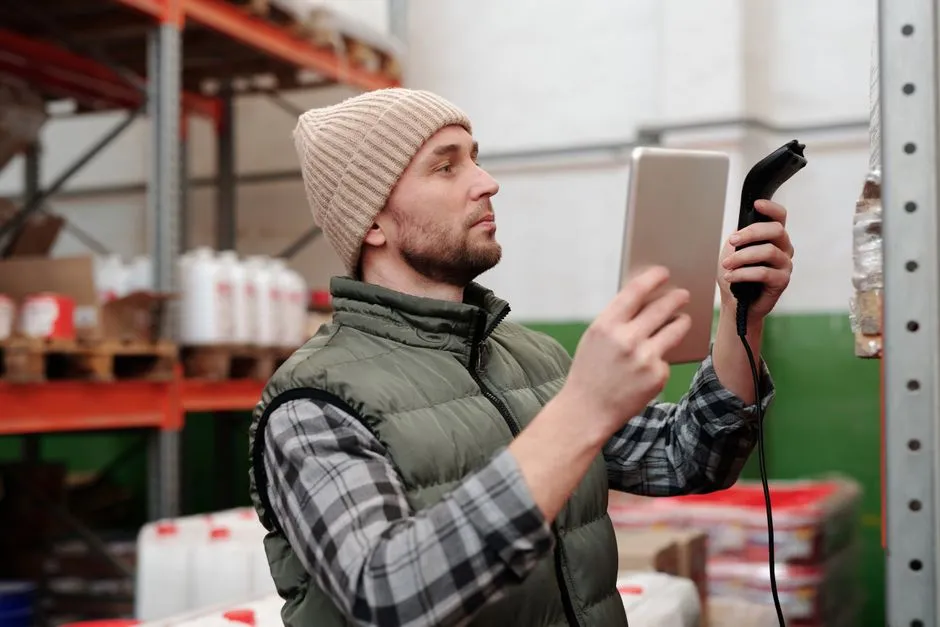
In a practical retail setting, blockchain verification could be used to track a product’s journey from supplier to customer. For example, a manufacturer might record that a batch of goods was produced, tested, and shipped. A logistics provider could then confirm receipt, transit, and delivery. A retailer could verify that the product arrived as expected and was placed into inventory according to policy.
Each of these steps could be represented as a verified event on the blockchain. The result is not necessarily a fully public history of every transaction, but a reliable chain of confirmations that can be checked by participants who need it.
Reducing fraud and improving trust
One of the strongest arguments for blockchain in supply chains is anti-counterfeiting. When consumers pay a premium for branded, certified, or ethically sourced products, they often want assurance that what they are buying is genuine. A verification layer can help retailers, brands, and customers confirm that a product has not been substituted, duplicated, or mislabeled.
This is especially relevant in categories such as fashion, electronics, cosmetics, food, and luxury goods, where authenticity and provenance can directly affect brand value.
The Bigger Signal: Enterprise Adoption Is Expanding Beyond Finance
The most important part of this development may not be the specific retail deployment itself, but what it suggests about the direction of blockchain adoption. For years, much of the narrative around digital assets has revolved around price action, token launches, and speculative markets. But enterprise blockchain is increasingly about operational efficiency, verification, compliance, and trust.
Retail is a particularly powerful sector for this shift because it sits directly between producers and consumers. If a major retail group adopts blockchain-based verification, it signals that the technology is becoming relevant to everyday commercial operations, not just niche financial applications. That can help normalize blockchain as a business tool rather than an experimental concept.
What to Watch Next
As more companies explore blockchain verification, the next phase will depend on practical execution. Several factors will determine whether these early deployments scale into broader industry standards.
- Integration with existing systems: Enterprises will need to connect blockchain workflows with legacy ERP, inventory, and logistics platforms.
- Interoperability: Different suppliers, brands, and retailers may use different systems. The ability to exchange verified data across networks will be critical.
- Cost and efficiency: For adoption to spread, the infrastructure must be cost-effective at scale.
- Regulatory clarity: As supply chain verification becomes more common, questions around data governance, privacy, and compliance will become more important.
- User experience: The technology must be easy enough for businesses to use without requiring every participant to understand blockchain deeply.
Conclusion
Cardano’s growing presence in enterprise adoption, particularly through retail supply chain verification, adds another layer to its long-term story. The network may not be defined by a single product or a single headline deployment, but by its ability to support practical infrastructure that businesses can build on. Retail is a compelling example because it combines complexity, consumer trust, and operational scale. If blockchain verification can help retailers improve accuracy, reduce fraud, and strengthen supply chain transparency, then the technology is moving closer to the kind of real-world utility that has long been part of Cardano’s broader vision.
Related read: Kalshi Bans George Santos for Life in First Insider-Betting Enforcement Case