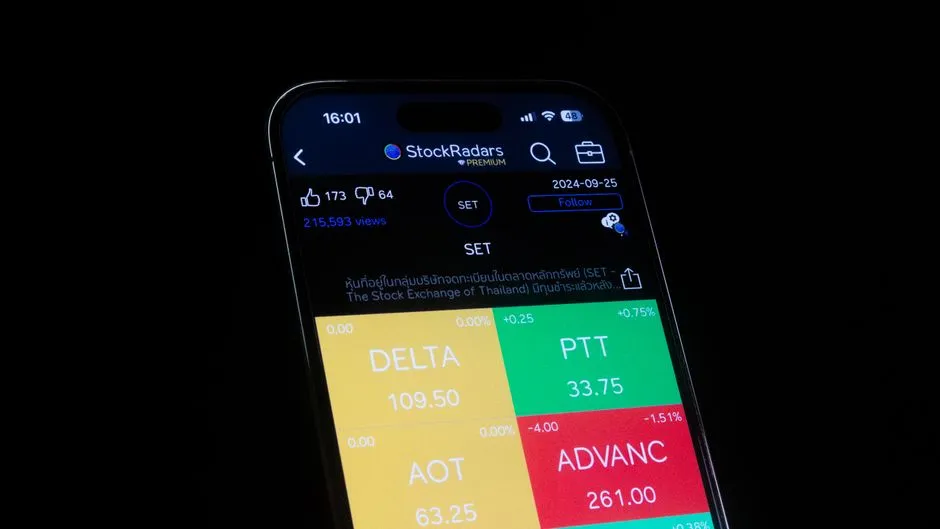
Tokenized equities have moved from a niche experiment to one of the fastest-moving corners of crypto in a remarkably short time. Demand for on-chain exposure to stocks and equity-like instruments is accelerating, and the scale of that growth is hard to ignore. In a recent Crypto Long & Short piece, CoinDesk’s Joshua DeVos highlights how activity tied to tokenized equity exposure has surged from roughly $16 billion to more than $590 billion in perpetual futures within a single year. On the surface, that sounds like a breakout moment for real-world assets in digital markets.
But the headline growth hides a more important question: what exactly are you buying? Two tokens can trade under the same ticker, sit on the same exchange, and even look almost identical in a trading interface, yet they may grant holders entirely different rights. The structure underneath the trade matters. It determines whether you are holding something closer to genuine ownership, a synthetic claim, a derivative, or a custodial wrapper around an asset that may never be delivered to you in any meaningful way.
The impressive growth story
The rise of tokenized equities is not an accident. It reflects a broader shift in how investors think about digital assets, yield, liquidity, and access to traditional markets. For years, tokenization was often treated as a futuristic concept with limited practical use. That has changed. Investors now want 24/7 access to equity exposure, fractional ownership, faster settlement, and the ability to combine traditional-market exposure with on-chain tools such as lending, collateralization, and perpetual futures.
Perpetual futures have become one of the main engines of this growth. They allow traders to gain long or short exposure without necessarily owning the underlying tokenized security. That is convenient, especially for markets that are not open around the clock. But convenience can also obscure the legal and economic substance of what is being traded. When a token is used as the basis for a perp, the underlying instrument may be a tokenized stock, a wrapper, a synthetic representation, or a claim issued by a specific platform. The difference can be significant, even if the candlestick chart looks the same.
Why the ticker alone is misleading
In traditional markets, a ticker symbol usually points to a specific security with a defined set of rights. In tokenized markets, the same symbol can mask a much more complicated reality. One token may represent a direct claim on an underlying equity, whether through a custodial structure, a security token, or a regulated wrapper. Another token with the same name may be nothing more than a synthetic instrument whose value is derived from an index, a price feed, or a promise made by an issuer or exchange.
This distinction matters because it changes the risk profile of the position. A holder of a token with real ownership rights may have certain protections, including entitlements tied to dividends, voting rights, or legal claims against a custodian or issuer. A holder of a synthetic token may have none of those rights. Their exposure may depend entirely on the performance of the underlying price, the reliability of the oracle, the solvency of the counterparty, and the willingness of the issuer to honor the instrument.
Real ownership versus synthetic exposure
At one end of the spectrum, a tokenized equity may be designed to mirror ownership in a traditional stock. In that case, the token may be linked to a custodied share, a security token, or a regulated wrapper that gives the holder a legal claim to the underlying asset. The holder may be able to receive dividends, participate in corporate actions, or, in theory, redeem the token for the actual equity under certain conditions.
At the other end, a token may be purely synthetic. It may trade based on a price feed, an index, or a model, but it does not give the holder any ownership in the company. In that case, the holder is not a shareholder. They are a creditor of the system, a participant in a derivative market, or a counterparty to a smart contract. The token’s value may track the stock, but the rights are fundamentally different.
What changes when the structure is different
The structure determines what happens in stress scenarios. If the issuer fails, what are you owed? If the custodian freezes withdrawals, what legal recourse do you have? If the underlying stock is delisted, acquired, or suspended, how is the token adjusted? If the market becomes illiquid, can you exit without suffering a wide spread? If the token is used as collateral in a DeFi protocol, does the protocol recognize the same rights you believe you have?
These questions may seem abstract until something goes wrong. In crypto, the gap between the interface and the legal reality can be surprisingly wide. A user may see a familiar ticker, a clean chart, and a trading pair that looks like any other market. Behind the scenes, the token may be a derivative, a wrapped asset, a synthetic claim, or a platform-specific instrument with its own set of rules. The more complex the structure, the more important it is to understand what you actually control.
Risks that matter before you trade
When evaluating tokenized equities, investors should not focus only on price action or trading volume. The following factors often matter more:
- Ownership rights: Does the token give you legal or contractual rights to the underlying equity, or only a price-linked exposure?
- Custody and redemption: Can the token be redeemed, and if so, through what process? Is the underlying asset held by a reputable custodian?
- Issuer risk: Who is responsible for maintaining the token, honoring claims, and servicing holders? What happens if the issuer becomes insolvent?
- Regulatory status: Is the token treated as a security, a commodity, a derivative, or something else? How does that affect investor protection?
- Market structure: Is the token traded on a decentralized order book, a centralized exchange, or a synthetic derivatives venue? Each structure carries different risks.
- Correlation risk: Even if the token tracks the stock, the basis between the token price and the underlying equity can widen during volatility, liquidity stress, or funding-rate spikes.
- Smart contract risk: If the token is integrated into DeFi, bugs, exploits, or faulty logic can create losses that have nothing to do with the underlying stock price.
These risks are not unique to tokenized equities, but they are amplified by the speed and opacity of on-chain markets. A trader can move from a familiar stock ticker to a leveraged perpetual position in seconds, without fully understanding whether the instrument is a security, a synthetic, or a platform-specific wrapper.
What investors should ask before entering
Before trading a tokenized equity, it helps to ask a few simple but essential questions. First, what legal claim does the token represent? Second, who holds the underlying asset, and under what terms? Third, what happens if the issuer, custodian, or exchange fails? Fourth, is the token redeemable, and if so, what are the conditions? Fifth, how is the price determined, and who controls the oracle or index? Sixth, what rights do you have in a corporate action, such as a merger, spin-off, dividend, or delisting?
The answers may not be immediately obvious. In many cases, the documentation may be thin, the legal structure may be complex, or the rights may be jurisdiction-dependent. That is not a reason to avoid tokenized equities, but it is a reason to be more careful. The growth of this market is exciting, but excitement can lead to complacency. The faster the market expands, the more important it becomes to separate marketing language from legal and economic substance.
The bottom line
The surge in tokenized equity activity is a meaningful development. It shows that investors are increasingly comfortable using digital rails to access traditional-market exposure, and that perpetual futures have become a powerful tool for trading that exposure. But growth alone does not make an instrument safe or straightforward. The most important question is not whether the token is moving with the stock; it is what the token actually represents.
Two tokens can share the same ticker, the same chart, and the same market narrative while offering holders very different levels of protection, ownership, and risk. Real ownership and synthetic exposure may look similar in a trading terminal, but they can diverge sharply when markets stress, legal claims matter, or the system behind the token is tested. In tokenized equities, the model underneath the trade is not a detail. It is the trade.
Related read: Tokenized Equities: The Hidden Structure Behind the Trade