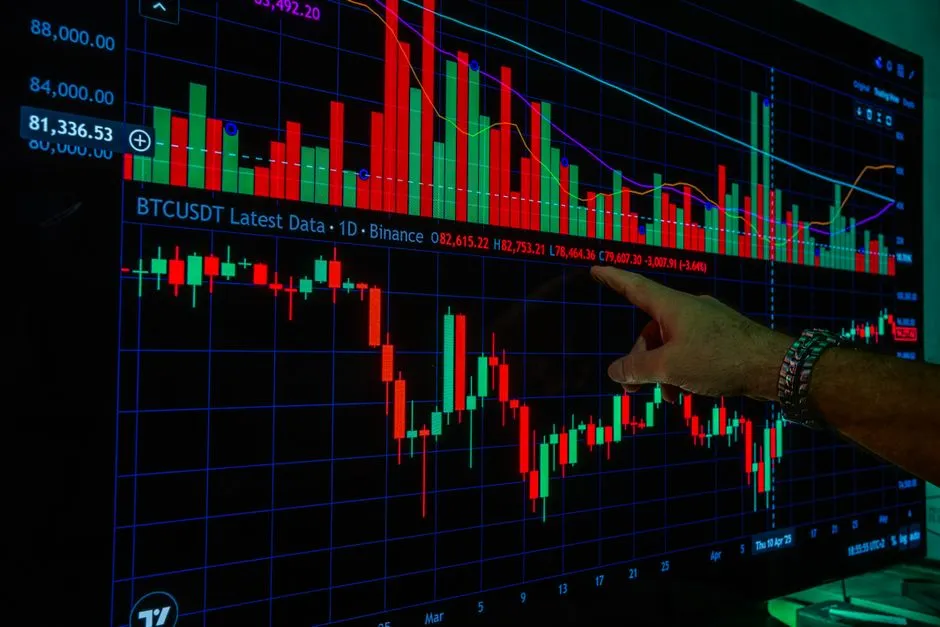
Bitcoin’s Short Squeeze Reshapes the Futures Market
Bitcoin’s latest rally has delivered more than a rise in price. It has also triggered a dramatic reset across the futures market, with open interest falling sharply as leveraged short positions are forced to close. The result is a classic short squeeze—one that may be significant not only because of its scale, but also because of what it says about the health of the broader market.
At first glance, a decline in futures open interest during a price rally may appear confusing. Normally, traders associate rising prices with increasing market participation and growing leverage. However, when prices climb while open interest contracts, it often means the rally is being driven by short sellers covering their positions rather than by traders aggressively adding new leverage.
That distinction matters. A rally powered by forced short covering can be fast and volatile, but it can also reduce some of the excess leverage that has built up in the market. In this case, falling open interest and relatively subdued funding rates suggest that Bitcoin’s advance may be structurally healthier than a heavily leveraged surge.
What Is a Bitcoin Short Squeeze?
A short squeeze occurs when traders who have bet on falling prices are forced to buy the asset back as the market moves against them. In Bitcoin futures, traders can open short positions using borrowed capital or leverage. If Bitcoin rises sharply, those positions begin to lose money. Once losses reach a certain level, exchanges may automatically liquidate the trades.
Liquidations require the short seller’s position to be closed. In practice, that often means buying Bitcoin futures, creating additional upward pressure on price. As more short positions are liquidated, the buying pressure can intensify, pushing prices higher and forcing even more bearish traders to exit.
This creates a feedback loop:
- Bitcoin begins to rise.
- Short positions move into losses.
- Leveraged traders face margin pressure or liquidation.
- Shorts are closed through forced buying.
- The additional buying sends prices higher, triggering further liquidations.
When this process takes place on a large scale, the market can experience a powerful and rapid move known as a short squeeze.
Why Falling Open Interest Matters
Open interest measures the total number of outstanding futures contracts that remain active. It does not represent the number of traders or the total volume exchanged. Instead, it shows how much capital remains committed to open futures positions.
A sharp decline in open interest during a Bitcoin rally generally indicates that positions are being closed rather than that new contracts are being created. If the decline is primarily caused by short liquidations, it can remove bearish pressure from the market.
This is important because excessive leverage can make a market fragile. When too many traders use borrowed funds, even a relatively modest price move can trigger widespread liquidations. Those forced trades can exaggerate both rallies and sell-offs. By reducing open interest, the market may be clearing out some of that leverage and becoming less vulnerable to an immediate cascade in the opposite direction.
In other words, Bitcoin’s price strength may be accompanied by a healthier derivatives structure. Rather than being supported by an ever-growing pile of speculative contracts, the move appears to be forcing weak positions out of the system.
Subdued Funding Rates Offer Another Positive Signal
Funding rates provide additional insight into the balance between bullish and bearish traders in perpetual futures markets. These contracts do not have a traditional expiration date, so funding payments are periodically exchanged between long and short traders to help keep the contract price aligned with the spot market.
When funding rates are strongly positive, long traders are paying short traders. This typically indicates that bullish positioning is crowded and that traders are willing to pay a premium to maintain leveraged long exposure. While positive funding is not automatically bearish, extremely elevated rates can signal overheating.
By contrast, subdued funding rates suggest that traders are not aggressively piling into leveraged long positions. This can make a rally less vulnerable to a sudden long squeeze, in which falling prices force overextended bullish traders to liquidate.
The combination of falling open interest and moderate funding rates therefore presents a constructive picture. Bitcoin may be rising while speculative leverage is being reduced, rather than accumulating. That does not eliminate risk, but it suggests the market is not yet displaying the most obvious signs of excessive bullish euphoria.
Short-Term Momentum Versus Long-Term Strength
It is important to distinguish between the immediate mechanics of a short squeeze and the longer-term sustainability of a trend. Forced short covering can create powerful momentum, but it does not by itself guarantee that Bitcoin will continue rising indefinitely. Once the majority of trapped short positions have been closed, that source of buying pressure may fade.
For the rally to develop into a more durable advance, fresh demand must eventually replace the forced buying generated by liquidations. Traders may therefore watch several indicators closely, including spot-market volume, exchange inflows and outflows, open interest stabilization, and the behavior of funding rates after the squeeze has passed.
If Bitcoin continues to hold its gains while open interest rebuilds gradually and funding remains controlled, that could indicate that new positions are entering the market in a more balanced manner. On the other hand, a rapid return of high leverage and overheated funding could suggest that traders are once again taking excessive risks.
What Traders Should Watch Next
Open Interest Stabilization
After a major liquidation event, open interest may stabilize at a lower level before new positions begin to develop. A measured increase would generally be less concerning than a sudden surge that occurs alongside extreme price gains.
Funding Rate Changes
Funding rates can help reveal whether the next phase of the rally is becoming dominated by leveraged longs. Moderate rates may support a healthier market structure, while unusually high rates could warn that bullish positioning is becoming crowded.
Spot Market Demand
Futures activity tells only part of the story. Sustained spot buying is often viewed as a stronger foundation for a rally because it involves direct ownership of Bitcoin rather than purely leveraged exposure. If spot demand remains firm after the short squeeze, the move may have greater staying power.
Volatility and Liquidation Levels
Bitcoin remains a volatile asset, and large liquidation clusters can still produce abrupt price swings in either direction. Traders should avoid assuming that a structurally healthier rally is the same as a risk-free rally. Position sizing, disciplined risk management, and awareness of leverage remain essential.
Conclusion
Bitcoin’s latest move appears to have delivered a short squeeze for the ages, clearing out a significant amount of bearish futures positioning as prices advanced. The sharp fall in open interest, combined with relatively subdued funding rates, suggests that the rally has not yet been driven by an uncontrolled buildup of leveraged long exposure.
That market structure is encouraging, but it is not a guarantee of continued gains. The next test will be whether genuine spot demand can maintain momentum after forced short covering subsides. For now, the derivatives data point to a market that may be resetting rather than overheating—a development that could give Bitcoin’s rally a stronger foundation if leverage remains under control.
Related read: Arcus Brings Tokenized Perpetual Positions to Robinhood Chain