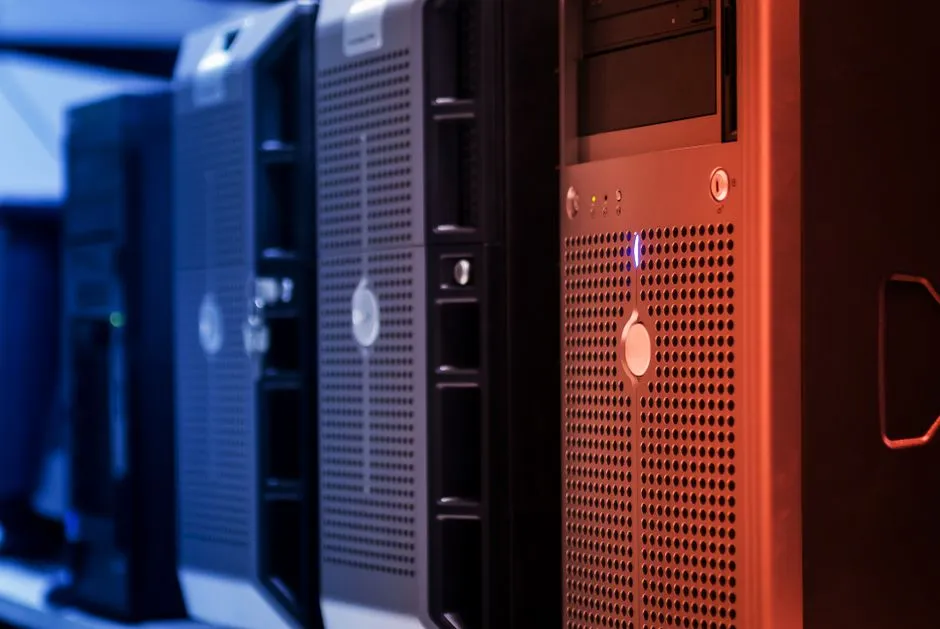
Keel Infrastructure has officially shut down all of its US Bitcoin mining sites, marking a decisive move away from cryptocurrency mining and toward artificial intelligence and high-performance computing workloads. Instead of selling the properties or leaving them idle, the company is repurposing existing data center locations to host AI-related infrastructure. The decision highlights a broader shift in the industry: companies that once built facilities around Bitcoin mining are now evaluating whether those assets can support the much faster-growing demand for AI compute.
A Clear Pivot From Hashing to AI Workloads
The move is not just a small operational adjustment. It represents a full strategic repositioning. Bitcoin mining requires enormous amounts of electricity, but it also depends heavily on mining hardware, energy pricing, network difficulty, and the overall price of Bitcoin. Those variables can make revenue streams uneven over time. AI data centers, by contrast, are increasingly tied to enterprise demand, cloud contracts, and long-term compute needs. For infrastructure operators, that can offer a more predictable and potentially higher-value use of their facilities.
Keel’s decision also reflects the fact that the best Bitcoin mining sites are not just any old buildings. They are often located near stable power sources, with strong electrical capacity, cooling systems, land space, and access to fiber networks. Those same attributes are highly valuable for AI and high-performance computing. In other words, Keel is not abandoning its infrastructure; it is upgrading the economic logic behind it.
Why AI Data Centers Are Becoming More Attractive
The demand for AI compute has surged as companies race to build, train, and deploy large language models, recommendation engines, robotics systems, and other advanced applications. These workloads require dense server racks, low-latency networking, and sophisticated cooling systems. That makes traditional data center locations more valuable than ever, especially in regions where power is available and the permitting process is already underway.
For many infrastructure firms, the question is no longer whether AI demand will grow, but how quickly they can convert existing assets into facilities that can support it. Keel’s shutdown of its US Bitcoin mining sites suggests that the company sees a clearer path to monetization by hosting AI workloads. The shift also points to a wider trend: crypto mining hardware and facilities are increasingly being viewed as transitional assets in a new computing economy.
What This Means for Bitcoin Mining
The closure does not mean Bitcoin mining is disappearing. It remains a major industry, especially in regions with inexpensive power and suitable facilities. However, Keel’s decision shows that not every mining operator is committed to staying in the space long term. When a company controls valuable real estate and power infrastructure, it may eventually conclude that AI workloads offer better margins, stronger demand, and less exposure to crypto market volatility.
This could also influence how investors view mining sites in the future. A facility that once housed rows of ASIC miners may now be marketed as an AI-ready campus, a high-performance computing hub, or a flexible data center platform. The hardware inside the building may change completely, but the underlying value of power, cooling, and connectivity remains. In that sense, Keel is not leaving the data center business; it is moving up the value chain.
The Infrastructure Advantage
One of the most interesting aspects of this transition is how easily some mining sites can be retooled. Bitcoin mining operations often occupy large industrial spaces with redundant power feeds, ventilation systems, and security infrastructure. While AI workloads may require additional upgrades, the base assets are often already in place. That reduces development timelines compared with building a data center from scratch, which can take years due to permitting, construction, and utility connections.
For Keel, the advantage is speed. In a market where AI demand is growing rapidly, being able to repurpose existing sites faster than competitors can be a major edge. The company can potentially convert its facilities into revenue-generating AI infrastructure without waiting for a full ground-up build. That kind of agility is becoming a key competitive factor in the data center industry.
Broader Industry Implications
Keel’s move may also encourage other infrastructure companies to rethink their crypto exposure. Some mining operators may continue to focus on Bitcoin if they have low-cost power and strong hash-rate economics. Others may begin exploring hybrid models, where a facility supports both mining and AI workloads depending on demand. Still others may fully transition, just as Keel has.
The result could be a more diversified infrastructure sector. Instead of viewing Bitcoin mining as a permanent endpoint, companies may treat it as one phase in the life of a data center. That perspective matters because the computing needs of the economy are changing rapidly. AI is no longer a niche technology; it is becoming a core driver of enterprise investment, cloud spending, and public infrastructure planning.
Conclusion: A Signal of Where Data Center Value Is Heading
Keel Infrastructure’s decision to close its US Bitcoin mining sites and repurpose them for AI and high-performance computing is a clear signal that the data center industry is being reshaped by the AI boom. The company is betting that its existing infrastructure is better suited to serving the next wave of compute demand. For the mining industry, the move underscores a growing reality: power and location are becoming the most valuable assets, while the workloads hosted inside those facilities may continue to evolve. In many ways, Keel’s pivot is less about leaving Bitcoin and more about positioning its data centers for the future of enterprise computing.
Related read: Keel Infrastructure Ends US Bitcoin Mining Operations to Build AI Data Center Capacity