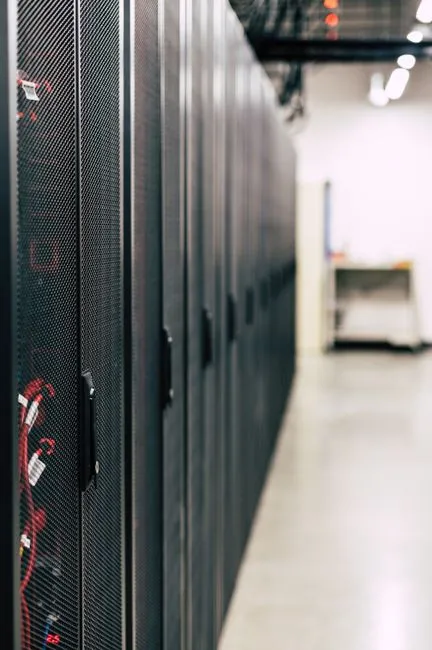
Keel Infrastructure has made a major strategic pivot by shutting down all of its U.S. Bitcoin mining sites. The company is not simply stepping away from the crypto space. Instead, it is repurposing the same facilities for artificial intelligence and high-performance computing workloads. In practical terms, Keel is moving from one form of data-intensive computing to another, but one that it appears to view as more aligned with the next wave of digital infrastructure demand.
What the Move Means in Practice
Bitcoin mining has long been treated as a power-hungry business. Miners need large amounts of electricity, reliable cooling, and physical space that can support dense hardware. For years, the economics of mining depended heavily on the price of Bitcoin, the cost of power, and the efficiency of mining equipment. That model can work, but it is also exposed to market volatility and shifting energy costs.
By contrast, AI and high-performance computing are attracting sustained enterprise interest. These workloads are not just speculative or tied to a single digital asset. They are being driven by cloud providers, research institutions, software companies, and enterprises that need massive computational capacity to train models, run simulations, and process large data sets. For a company like Keel, converting existing sites into facilities built for AI and HPC may offer a more predictable demand profile, especially if those facilities can be leased or operated under longer-term contracts.
Why Existing Mining Sites Can Be Attractive for AI
One of the most interesting parts of this transition is that the locations Keel already controls may be well suited for the new use case. Data-intensive workloads, whether Bitcoin mining or AI training, often benefit from similar infrastructure traits: strong power delivery, efficient cooling systems, physical security, and space that can accommodate high-density equipment.
Power Availability Remains the Key Advantage
Electricity is one of the most critical factors in both Bitcoin mining and AI data centers. AI workloads, particularly large-scale model training, can consume enormous amounts of energy. A site that was already prepared to run mining hardware at scale may have the electrical capacity, grid access, or backup power systems needed to support next-generation computing equipment. In many markets, finding power is harder than finding server racks.
Cooling and Capacity Planning Matter
Cooling is another shared requirement. High-performance servers generate significant heat, and inefficient cooling can reduce performance and increase operating costs. If Keel’s U.S. sites were designed with industrial-grade cooling in mind, repurposing them for AI and HPC workloads could be a natural step rather than a complete rebuild. That kind of infrastructure reuse can shorten deployment timelines and reduce capital costs compared with building a new data center from scratch.
A Broader Shift in the Data Center Market
Keel’s decision does not appear to be an isolated case. It reflects a broader trend in which infrastructure providers are repositioning themselves around AI demand. Over the past few years, the conversation in the data center industry has shifted from traditional cloud hosting and storage toward GPU-intensive computing, machine learning, and advanced analytics. Companies that previously focused on cryptocurrency mining are increasingly exploring how to monetize their power-heavy real estate in ways that appeal to enterprise customers.
This shift also highlights a changing relationship between crypto mining and the wider tech sector. Bitcoin mining was once seen as a niche industry, but it helped drive investment in remote power sites, high-density hardware, and 24/7 operations. Now, as AI workloads grow, some of the same capabilities are becoming valuable for a completely different set of customers. In that sense, the transition from mining to AI infrastructure is not just a change in workload. It is a change in positioning, from a market tied to digital asset prices to one tied to enterprise computing demand.
What This Could Signal for the Future
The decision to decommission U.S. Bitcoin mining sites and repurpose them for AI and high-performance computing suggests that Keel is betting on demand for advanced computing capacity. It may also suggest that the company sees greater long-term stability in serving businesses that need scalable, high-performance infrastructure rather than relying on the rewards associated with mining.
That does not mean Bitcoin mining has disappeared or that it is no longer viable. Mining remains an active part of the crypto ecosystem. But for infrastructure operators, the opportunity to convert existing sites into AI-ready data centers may offer a compelling alternative, especially in a market where energy, cooling, and site readiness are major bottlenecks. By leveraging the physical assets it already owns, Keel is positioning itself to participate in one of the most important technology shifts of the decade.
In the end, Keel Infrastructure’s move is less about abandoning computing and more about upgrading its role in the computing economy. The company is exchanging one form of data-intensive work for another, but one that may open the door to a broader customer base, stronger infrastructure demand, and a more future-oriented business model.
Related read: Gen Z Favors ETFs and Trades Less: What Binance Data Reveals About the Next Generation of Investors