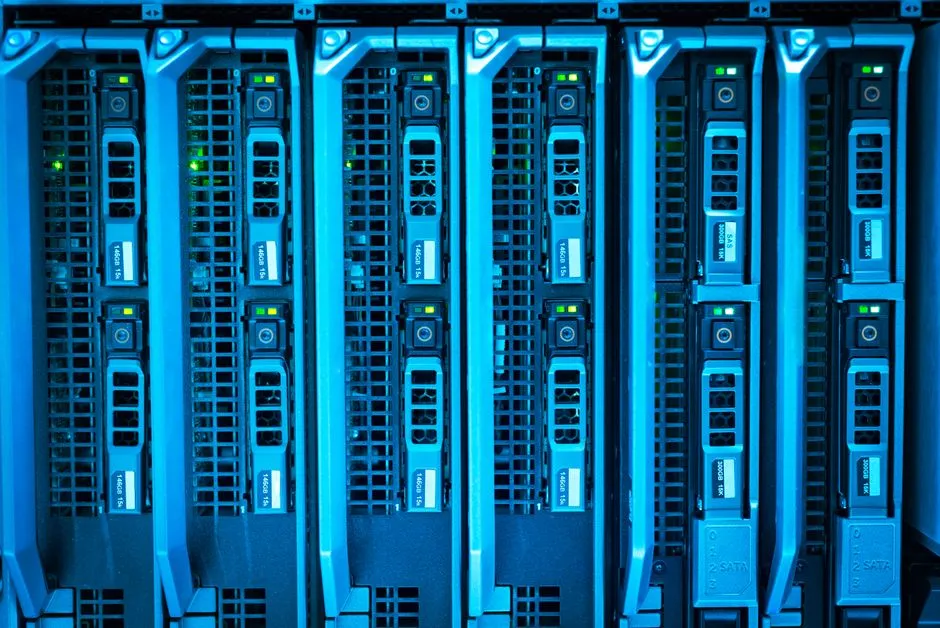
Keel Infrastructure has made a major strategic shift by shutting down all of its Bitcoin mining sites in the United States. Instead of continuing to focus on cryptocurrency mining, the company is repurposing those locations for AI and high-performance computing workloads. The move is a clear signal that some of the infrastructure once built around Bitcoin is now being redirected toward one of the fastest-growing technology sectors in the world.
What Is Happening With Keel Infrastructure?
According to the latest developments, Keel Infrastructure has decommissioned every one of its US-based Bitcoin mining sites. Rather than leaving those facilities idle, the company is converting them into data centers designed to support artificial intelligence and high-performance computing. This is not a small adjustment. It represents a full-scale pivot away from Bitcoin mining toward enterprise-grade compute infrastructure.
The timing of the decision is significant. Over the past few years, Bitcoin mining has evolved from an early-stage, often decentralized activity into a highly industrialized business. Companies have built or leased large sites, installed powerful hardware, optimized energy use, and developed cooling systems capable of handling heavy workloads. That same infrastructure, with its power capacity, land, network access, and physical security, is also well suited for AI workloads.
By repurposing existing sites, Keel Infrastructure can avoid some of the most difficult parts of building a new data center from scratch. Securing power, obtaining permits, constructing facilities, and deploying networking equipment can take a long time. A site that is already operational for mining may have a head start when it comes to hosting AI servers and high-performance computing clusters.
Why AI Data Centers Are Attracting So Much Attention
The rise of artificial intelligence has created enormous demand for computing power. Training large language models, running generative AI tools, and powering advanced analytics all require large amounts of processing capacity. Unlike many traditional cloud workloads, AI workloads can be extremely compute-intensive and energy-hungry. That makes data center capacity one of the most valuable assets in the technology industry right now.
For companies looking to enter the AI infrastructure market, speed matters. There is a strong incentive to secure space and power quickly because demand is growing faster than many operators can build. Existing mining facilities can offer a shortcut. They often already have:
- Large-scale power availability
- Industrial-grade cooling systems
- Secure physical locations
- High-capacity network connectivity
- Proven operational frameworks
Those are exactly the things AI data center operators need. In many cases, the hardware may need to be replaced or upgraded, but the core site infrastructure can still provide a strong foundation.
What This Suggests About Bitcoin Mining
The move by Keel Infrastructure is not surprising in the broader context of the crypto industry. Bitcoin mining has always been sensitive to energy costs, hardware efficiency, network difficulty, and market conditions. When those variables shift, miners often need to rethink their operations.
Some operators have treated Bitcoin mining as a long-term strategic business. Others have viewed it as a flexible income stream that can be scaled up or down depending on profitability. In some cases, mining hardware and facilities have been used as a way to generate revenue while waiting for better opportunities. That makes it easier for companies to repurpose their assets when another sector offers stronger demand or more stable returns.
There is also a broader trend in the industry. Data centers and energy assets are becoming highly competitive resources. Companies that control power, space, and compute capacity may choose to serve the customer that offers the best long-term value. If AI workloads are commanding premium pricing or attracting more enterprise interest, that can make the shift from Bitcoin mining to AI infrastructure an attractive option.
The Bigger Picture: Compute Is the New Land Rush
What makes this story interesting is not just that one company left Bitcoin mining. It is what that move reveals about the changing value of data center infrastructure. A few years ago, the main narrative around these facilities was often crypto-focused. Today, AI is pushing the conversation in a different direction.
As enterprises race to deploy AI tools, cloud providers and infrastructure operators are competing for the same resources. That competition is driving interest in every type of available compute capacity. Existing facilities, even those originally built for mining, can become valuable assets if they can be converted efficiently.
This does not mean Bitcoin mining is losing its importance. Mining continues to play a critical role in securing the Bitcoin network. However, the industry is becoming increasingly intertwined with the broader data center and energy economy. Companies are no longer thinking only about mining efficiency. They are thinking about total infrastructure value, energy procurement, site utilization, and long-term revenue diversification.
What Comes Next
For Keel Infrastructure, the next step will be to execute the transition. That means upgrading hardware, configuring systems for AI and high-performance computing, securing clients, and ensuring the facilities can meet enterprise standards. The company will also need to manage the operational complexity of moving from one type of workload to another.
For the wider market, the development is another reminder that the line between crypto infrastructure and AI infrastructure is becoming thinner. The same sites, power grids, cooling systems, and networking assets can support very different uses depending on market demand. As AI continues to expand, we may see more companies make similar decisions, especially if they already own or operate large-scale facilities in the US.
In the end, Keel Infrastructure’s shift highlights a simple reality: in today’s technology landscape, compute capacity is one of the most important assets a company can own. Whether that compute is used to mine Bitcoin or to power AI workloads, the underlying value lies in the ability to turn energy, space, and infrastructure into reliable, high-performance capacity. For Keel, at least for now, AI appears to be where that value is headed.
Related read: Paul Tudor Jones’ Investment Firm Adds to BlackRock Bitcoin ETF Stake After a Year of Selling