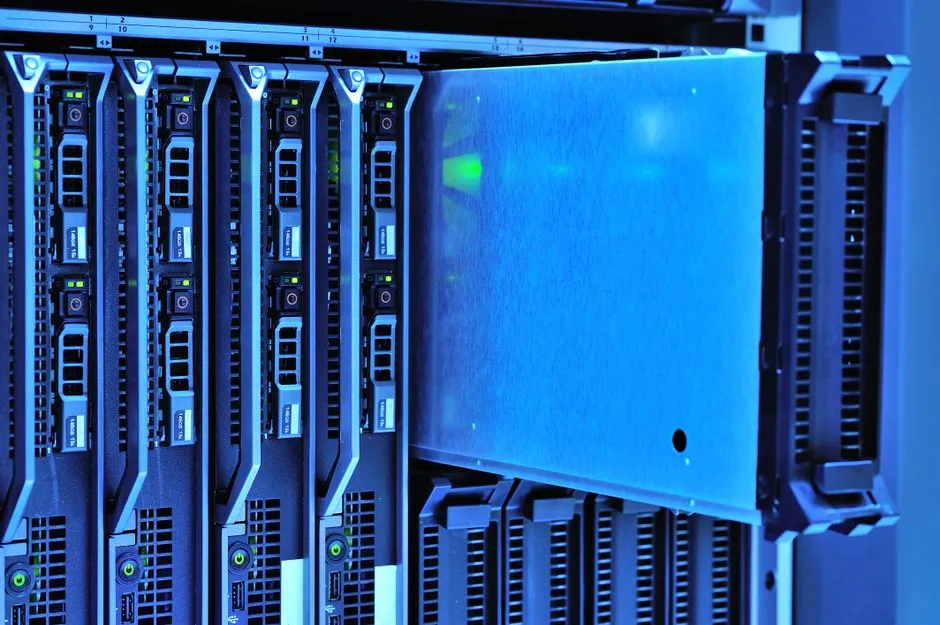
Keel Infrastructure has made a significant strategic move by shutting down all of its US Bitcoin mining sites and redirecting those locations toward artificial intelligence and high-performance computing workloads. The decision marks a notable shift in how some energy-intensive operators are thinking about their infrastructure. Instead of continuing to focus on mining Bitcoin, the company is repurposing its existing facilities for a different kind of computing demand: one that many in the industry believe could be more lucrative, more stable, and more attractive to investors in the current market.
What Keel Infrastructure Is Doing
At its core, Keel Infrastructure is decommissioning its US-based Bitcoin mining operations and converting those sites for AI and high-performance computing use. In practical terms, this means the company is moving away from running mining hardware and toward hosting or supporting workloads that require advanced computing power, such as AI model training, inference, simulation, and other data-heavy processes.
This is not simply a case of turning off mining rigs and walking away. The company appears to be leveraging the infrastructure it already has in place. Many Bitcoin mining sites are built with strong power delivery, cooling systems, land access, and operational experience in managing energy-intensive hardware. Those same traits can be useful for AI and high-performance computing facilities, which also depend heavily on reliable electricity, efficient cooling, and continuous uptime.
By repurposing existing locations, Keel may be able to reduce the time and cost normally required to build new data centers from scratch. That can be a meaningful advantage in a market where demand for AI infrastructure is growing quickly and where construction, permitting, and power availability can all become bottlenecks.
Why Bitcoin Mining Is Losing Ground to AI Workloads
The move by Keel Infrastructure reflects a broader trend in the energy and computing sectors. Bitcoin mining has long been one of the most visible uses of large amounts of electricity, but the economics of mining can be volatile. Revenue is closely tied to the price of Bitcoin, network difficulty, energy costs, and hardware efficiency. When those variables shift, margins can compress quickly, and operators may need to rethink their business model.
AI and high-performance computing, by contrast, often come with different revenue dynamics. These workloads can be tied to long-term contracts, enterprise customers, cloud providers, or specialized compute platforms. In many cases, data center operators can generate higher revenue per megawatt of power than they would from mining, especially when the customer is paying for sustained, high-level computing capacity.
That difference matters. A mining facility is essentially selling a commodity-linked output: newly mined Bitcoin. An AI or HPC facility, on the other hand, can sell access to compute resources, storage, networking, and specialized infrastructure. For some operators, that creates a more predictable and potentially more profitable business structure.
There is also a timing element. AI infrastructure demand has accelerated in recent years as companies, governments, and research institutions race to build, train, and deploy large models. That has created a strong pull on available power capacity, skilled labor, and suitable real estate. Existing mining sites that already have power infrastructure in place are naturally attractive candidates for conversion.
What This Means for the Crypto and Mining Ecosystem
For the Bitcoin ecosystem, the news may look like a setback at first glance. One fewer operator focusing on US-based mining could reduce incremental mining capacity in the region. However, the bigger picture is more nuanced. Keel is not necessarily leaving the computing business. It is changing the type of computing it wants to support.
This kind of pivot has become increasingly common among miners and data center developers. Some operators are treating their facilities as flexible platforms that can host different workloads depending on market conditions. Today, that may mean Bitcoin mining. Tomorrow, it may mean AI inference, HPC, colocation, or hybrid compute services.
That flexibility could actually make parts of the crypto infrastructure sector more resilient. If mining prices fall or energy costs rise, operators with repurposable sites may be better positioned to adapt. They do not have to abandon their assets or face prolonged periods of low profitability. Instead, they can shift toward workloads that offer better pricing or stronger demand.
It may also influence how investors view mining companies. In the past, many miners were judged primarily on hash rate, energy cost, and Bitcoin exposure. Now, some are being evaluated on their ability to become broader data center operators. That shift in perception could change the valuation framework for certain companies, especially those with strong power access, land, and operational expertise.
The Bigger Trend: From Hashpower to Compute Power
Keel Infrastructure’s decision fits into a larger conversation about what kind of compute infrastructure the world will need next. Bitcoin mining has always been about hashpower: the ability to perform repeated calculations efficiently. AI and high-performance computing, however, are about a different mix of resources: GPUs, accelerators, high-speed networking, low-latency connections, storage, and advanced cooling.
That does not mean mining facilities are useless. On the contrary, some of the physical foundations of a mining site—high-voltage power, large land parcels, experienced operations teams, and established utility relationships—can be extremely valuable. The challenge is upgrading those sites to meet the more demanding requirements of AI workloads. That may mean adding higher-capacity power systems, improving cooling, upgrading networking, and potentially bringing in specialized hardware.
In other words, the value is not disappearing. It is changing shape. The most important asset may no longer be the mining rig itself, but the ability to host and manage energy-intensive computing at scale.
What Investors and Industry Watchers Should Watch
Several factors will determine whether this type of pivot becomes a successful playbook.
- Power availability and cost: AI and HPC workloads are extremely power-hungry. If a site cannot support the required load at a competitive cost, the economics may not work.
- Tenant demand: Repurposing a site is easier in theory than in practice. Operators need customers who are willing to commit to long-term compute capacity.
- Hardware and networking upgrades: AI infrastructure is not just about power. It also requires advanced accelerators, high-speed interconnects, and robust storage.
- Permitting and local regulations: Data centers can face zoning, environmental, and community-related challenges, especially in areas not previously zoned for large-scale compute facilities.
- Financing and execution risk: Converting mining sites into AI-ready data centers can be capital-intensive. The success of the strategy will depend on the company’s ability to fund and execute the transition.
Why This Matters for the Future of Data Centers
The most interesting takeaway from Keel Infrastructure’s move is that it highlights a possible convergence between crypto mining and the broader data center industry. For years, these two sectors operated in somewhat separate lanes. Mining companies focused on Bitcoin, while data center developers focused on cloud, enterprise, and hyperscale customers. Now, the lines are blurring.
Some mining sites may become AI data centers. Some AI data centers may use surplus power for mining when conditions are favorable. Some operators may run hybrid facilities that support multiple workloads depending on demand, pricing, and energy availability. This kind of flexibility could become a major advantage in a market where technology and customer demand can change quickly.
It also suggests that the future of energy-intensive computing may not be defined by a single use case. The sites that succeed may be the ones that can adapt, scale, and serve the workloads that are most valuable at any given time.
Conclusion
Keel Infrastructure’s decision to shut down its US Bitcoin mining sites and repurpose them for AI and high-performance computing is a clear signal of how the industry is evolving. Bitcoin mining remains an important part of the crypto ecosystem, but it is no longer the only compelling use for large-scale, energy-intensive infrastructure. AI and HPC workloads are creating a powerful alternative, especially for operators with existing power access, land, and operational experience.
This move does not necessarily mean that Bitcoin mining is on the decline. Rather, it shows that the most valuable asset in this space may be the ability to host and manage compute at scale. For Keel Infrastructure, the pivot is less about leaving the business of computing and more about choosing the type of computing it wants to support going forward. If executed well, this transition could serve as a meaningful example for other miners and data center operators looking to future-proof their infrastructure in a rapidly changing market.
Related read: Bitcoin Slides to $62,500 as Traders Warn a Weak Weekly Close Could Trigger Further Losses