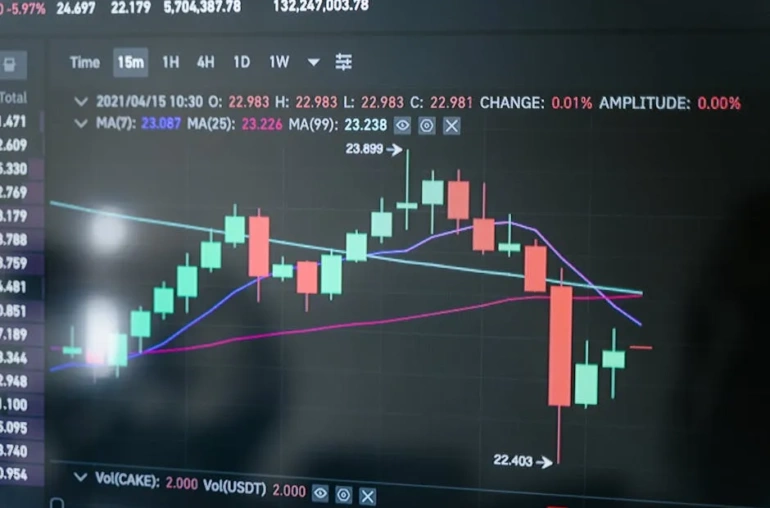
Etherum (ETH) has found itself in a precarious position over the last 24 hours. While many traders were hoping for a breakout above key resistance levels, the asset managed to stabilize around the $1,750 mark. According to recent data from crypto.news, Ethereum traded at approximately $1,756, showing resilience despite significant external pressures. However, this stability comes with an air of caution as global geopolitical events continue to ripple through financial markets.
Understanding the Current Market Sentiment
The primary driver behind Ethereum’s recent stagnation is not necessarily a lack of fundamental value, but rather a shift in overall market sentiment. The term “risk-off” describes exactly what is happening right now. When tensions rise in major geopolitical regions, such as the Middle East, investors tend to pull their capital away from volatile assets like cryptocurrencies and move them into safer havens, such as gold or government bonds.
Why does this happen?
- Risk Aversion: Investors become fearful of sudden losses in unstable markets.
- Liquidity Flows: Capital leaves high-risk assets to preserve value.
- Currency Fluctuations: Traditional currencies often strengthen during times of global uncertainty.
In this environment, Ethereum’s price action becomes more defensive. Sellers are stepping in aggressively whenever the price attempts to climb higher, effectively capping the upside potential.
The Significance of the $1,800 Resistance Level
From a technical analysis perspective, the battle for Ethereum is being fought around the $1,800 level. This zone acts as a crucial resistance barrier. Throughout recent trading sessions, sellers have been able to defend this area multiple times, preventing the price from breaking through to new highs.
What does holding at $1,750 mean for traders?
If Ethereum continues to trade between $1,750 and $1,800, it indicates a period of consolidation. Consolidation often precedes a significant move in either direction. For bullish traders, the inability to break $1,800 could be seen as a temporary hurdle rather than a signal to sell. Conversely, bearish traders might interpret repeated failures at this level as evidence that the broader market structure is weakening.
The psychological aspect of the round number $1,800 cannot be overstated. It serves as a mental checkpoint for many algorithms and retail investors alike. Breaking above it would likely trigger a cascade of buy orders from traders who have been waiting for confirmation of higher support levels.
Macro Factors Influencing Crypto Prices
Crypto markets are increasingly correlated with traditional finance sectors, meaning global news plays a larger role than in the past. The ongoing tensions in the Middle East serve as a stark reminder that external events can override technical indicators.
When uncertainty dominates the headlines, market liquidity often dries up. This lack of liquidity makes it harder for large buy orders to push prices up without significant volatility. Consequently, Ethereum remains pinned near its current support levels while traders wait for clarity on geopolitical developments.
It is also worth noting that Bitcoin, often referred to as the “digital gold,” is showing similar defensive patterns. Since Bitcoin and Ethereum usually move in tandem during macro-driven events, this correlation reinforces the idea that the entire sector is feeling the pressure from traditional financial markets.
What Should Investors Do Next?
For those holding long-term positions, the current dip near $1,750 might be viewed as an opportunity to accumulate assets at a lower price point, provided they can stomach short-term volatility. However, for active traders, the lack of clear directional momentum suggests caution.
Key Takeaways:
- Avoid over-leveraging during high-volatility geopolitical events.
- Watch the $1,800 level closely; a breakdown could target lower support zones.
- Keep an eye on macroeconomic news headlines that may influence risk sentiment.
Conclusion
Ethereum’s ability to hold around $1,756 demonstrates the resilience of the asset class even during turbulent times. While the immediate path upward is blocked by sellers defending the $1,800 wall, the broader market remains dependent on external geopolitical factors. Until those tensions subside or market sentiment shifts back toward risk-on, Ethereum will likely continue to oscillate within this range. Investors are advised to remain patient and focus on long-term strategies rather than reacting to every minor price fluctuation.