Bitcoin Surges Past $72,500 as Global Markets Grapple with Geopolitical News
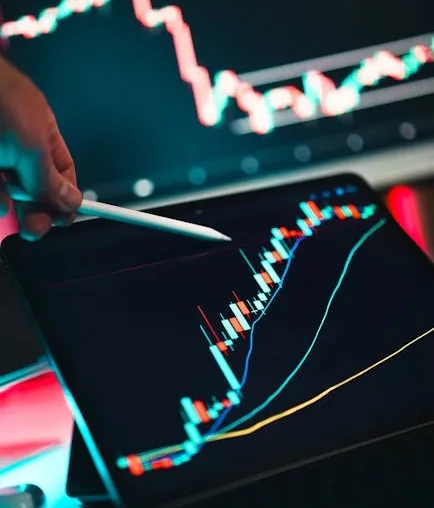
The cryptocurrency market has once again demonstrated its sensitivity to global geopolitical events. In a significant move, Bitcoin rallied to touch the $72,500 mark. This price action occurred amidst reports that the United States is exploring options to blockade the Strait of Hormuz. While the initial reaction from the broader market was positive, pushing Bitcoin higher, seasoned traders are quickly sounding alarms. They are warning that despite the impressive rebound, the risk of a price correction remains very high. This situation highlights the complex relationship between traditional macroeconomics, energy security, and digital asset valuations.
The Connection Between Energy Security and Crypto
To understand why Bitcoin reacted this way, one must look at the strategic importance of the Strait of Hormuz. This narrow waterway is a critical choke point for global trade, accounting for approximately 20% of the world’s oil consumption. When there is talk of a blockade, it immediately raises fears regarding energy supply chains and inflation. Historically, when energy prices spike due to geopolitical tension, inflation expectations rise, which often leads investors to seek alternative stores of value. Bitcoin has frequently been categorized as a “digital gold” or a hedge against economic instability.
However, the mechanics of this trade are not always straightforward. Sometimes, when traditional markets like US stocks react positively to a specific narrative—such as a potential blockade leading to energy independence or supply shifts—Bitcoin can ride that wave. In this instance, the US stock market reacted to the news, and Bitcoin mirrored that sentiment, climbing to $72,500. This suggests a temporary correlation between the crypto market and traditional equity sentiment during times of high volatility.
Traders Warn of an Imminent Correction
Despite the headline-grabbing rally to $72,500, the community is not entirely optimistic. Many traders are cautious about the sustainability of this price level. The consensus among veteran market participants is that such spikes are often driven by fear-driven trading rather than fundamental value appreciation. If the geopolitical situation stabilizes quickly, or if energy prices do not actually surge as predicted, the catalyst for the rally could vanish overnight.
- Profit Taking: Investors who accumulated positions during the dip may be eager to sell at the top, leading to downward pressure.
- Lack of Fundamental Support: The price increase is largely reactive to news, not driven by new institutional adoption or technological upgrades.
- Market Liquidity: In times of uncertainty, liquidity can dry up quickly, making the market prone to sharp drops if the buying volume isn’t maintained.
These factors suggest that the current price might be a local peak rather than a new floor. The warning from traders is clear: do not chase the rally without a solid strategy, as a correction could wipe out significant gains in a very short timeframe.
What Does This Mean for Investors?
For investors and traders watching the Bitcoin market, this event serves as a reminder of the importance of risk management. Relying solely on geopolitical news to drive price action is a dangerous strategy. The crypto market is highly volatile and often overreacts to news headlines. While the rally to $72,500 is significant, it is essential to look at the broader picture of market health.
Investors should focus on long-term fundamentals rather than short-term spikes triggered by international conflicts. The volatility caused by events like the Strait of Hormuz blockade is a feature, not a bug, of the current market environment. It is crucial to maintain a balanced portfolio and avoid overexposure to assets that are too sensitive to external shocks. If the blockade does not materialize or if the US stock market sentiment changes, Bitcoin could follow suit, potentially retreating from these levels.
Conclusion
The recent movement of Bitcoin to $72,500 illustrates the interconnectedness of the global financial system. Crypto assets are no longer isolated from the news cycle; they are deeply embedded in the fabric of economic and political events. While the news regarding the Strait of Hormuz provided a temporary boost, the underlying message from traders is one of caution. As we navigate this period of geopolitical uncertainty, the market will likely continue to oscillate. Investors must remain vigilant, understanding that today’s rally does not guarantee tomorrow’s stability. Keeping a close eye on both the geopolitical landscape and the on-chain data will be key to navigating the next phase of this market cycle.