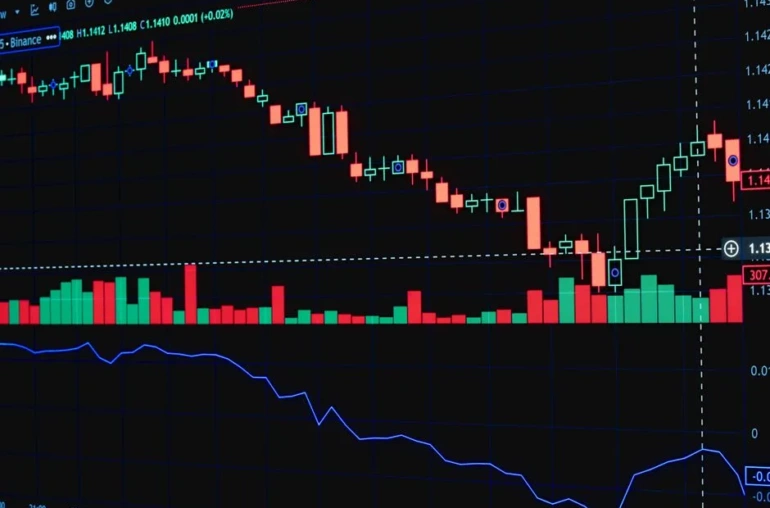
Bitcoin has been the center of attention for the crypto community and the broader financial world this week. The digital asset demonstrated remarkable resilience and strength, climbing steadily and nearly overtaking the significant psychological milestone of $74,000. For many long-holders, seeing the price hover in this range feels like a major victory, a signal that the long winter of the crypto market might finally be thawing.
The Paradox of Price and Data
However, just as the price chart looks bullish, the underlying data tells a more complex story. While the asset price is moving up, several key indicators suggest that the broader market dynamics have not fully shifted out of bearish territory. This divergence between price action and market structure is a critical concept for any investor to understand. In the stock market, we often see this same phenomenon where a single asset rips higher, but the broader sector or economy remains in a downturn.
Correlation with Tech Stocks
One of the most telling metrics right now is Bitcoin’s correlation with traditional technology stocks. Historically, Bitcoin has often moved with its own unique rhythm, especially in the early stages of its lifecycle. Recently, however, BTC has begun to show a strong correlation with the Nasdaq and other tech-heavy indices. While this can be seen as a sign of maturity—Bitcoin is becoming accepted as a standard asset class—it can also be a warning sign. If Bitcoin is simply moving in lockstep with tech stocks that are currently volatile or facing headwinds, the strength in price might be borrowed strength rather than organic demand.
This sensitivity means that if the tech sector corrects, Bitcoin could follow suit quickly. Investors need to be wary of mistaking a correlation-driven rally for a fundamental breakout. The health of the cryptocurrency market is often judged by its ability to decouple from traditional risk assets. Until that decoupling is robust, the market remains sensitive to macroeconomic shocks that affect the broader economy.
The Story Behind Spot ETF Flows
Another crucial piece of the puzzle lies in the reactive spot ETF flows. Exchange-Traded Funds (ETFs) have become the primary gateway for traditional institutional money entering the crypto space. In a healthy bull market, we expect to see consistent, proactive inflows into these funds, driven by long-term conviction. What we are seeing recently, however, is described as “reactive” flows.
Reactive flows imply that capital is entering or leaving based on short-term price momentum or news headlines rather than fundamental shifts in the market’s valuation. When investors buy into spot ETFs simply because the price dipped and then rallied, they are often “catching a falling knife” or joining a momentum trade rather than investing for the long haul. This behavior tends to sustain prices temporarily but does not typically build a sustainable bull market foundation. If the inflows dry up when the price stabilizes at $74K, that suggests the buying pressure is artificial and fragile.
Is The Bear Market Over?
So, does this mean the bear market is over? The consensus among analysts looking at the data suggests “not yet.” A true end to a bear market usually requires a combination of sustained price appreciation, strong institutional inflows, and lower correlation with the traditional stock market. Currently, Bitcoin is showing strength in price but lacking the structural support in ETF flows and market independence required to declare the winter truly over.
This distinction is vital. It is easy to get excited when the price of Bitcoin ticks up, but true market cycles are defined by more than just the spot price. The “bear market” label might be premature, but the “bull market” has also not officially begun.
What Should Investors Do?
For those holding Bitcoin (HODLers), this data serves as a reminder to remain cautious. While the price action is encouraging, the data signals that volatility will likely persist. For new investors, this is an opportunity to understand that timing the market requires looking beyond the green candles. It requires understanding the flow of money and where it is coming from.
Ultimately, the current environment is a classic example of a “recovery phase” rather than a full “bull run.” The market is testing its resolve. Can it hold $70,000+ without massive volume? Can it decouple from tech stocks? The next few weeks will provide the answers. Until then, investors should expect the volatility that characterizes the transition between a bear and a bull market, and should remain prepared to navigate the ups and downs that come with this specific type of market behavior.
In the world of finance, patience is often the most valuable asset. While the price of Bitcoin is a great indicator of sentiment, the data behind the scenes provides the roadmap for the actual direction of the market. As the market continues to evolve, keeping a close eye on these underlying metrics will be just as important as watching the price ticker.